The Reason Mortgage Rates Are Projected to Increase and What It Means for You
|
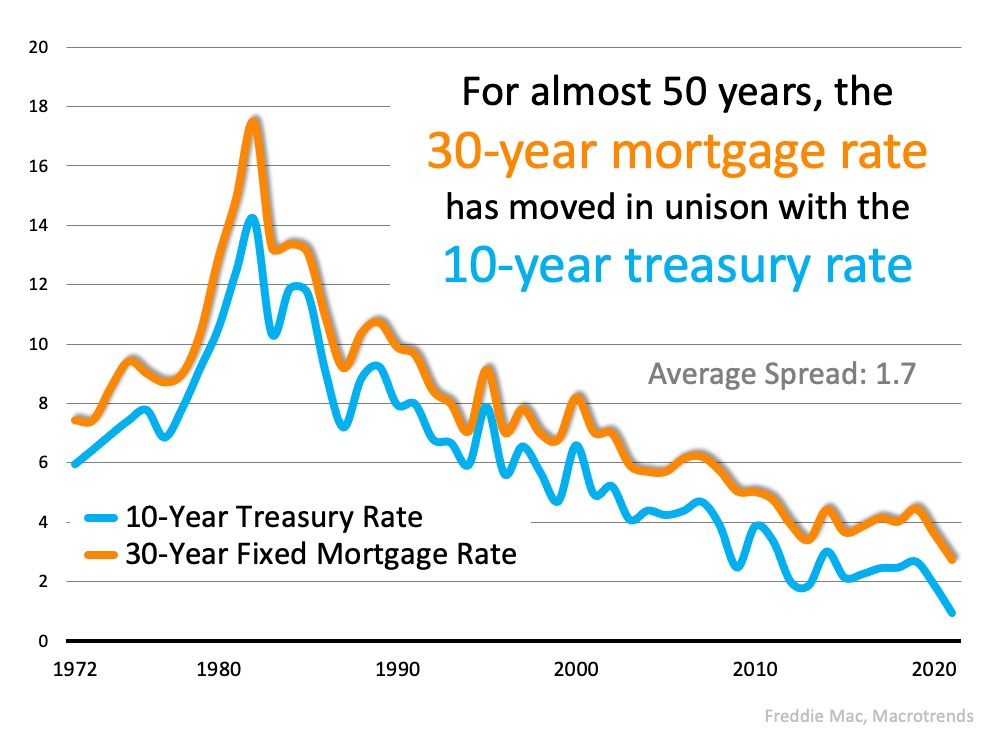
We're currently experiencing historically low mortgage rates. Over the last fifty years, the average on a Freddie Mac 30-year fixed-rate mortgage has been 7.76%. Today, that rate is 2.81%. Flocks of homebuyers have been taking advantage of these remarkably low rates over the last twelve months. However, there's no guarantee rates will remain this low much longer. Whenever we try to forecast mortgage rates, we should consider the advice of Mark Fleming, Chief Economist at First American:
Many things impact mortgage rates. The economy, inflation, and Fed policy, just to name a few. That makes forecasting rates difficult. However, there's one metric that has held up over the last fifty years – the relationship between mortgage rates and the 10-year treasury rate. Here's a graph detailing this relationship since Freddie Mac started keeping mortgage rate records in 1972:
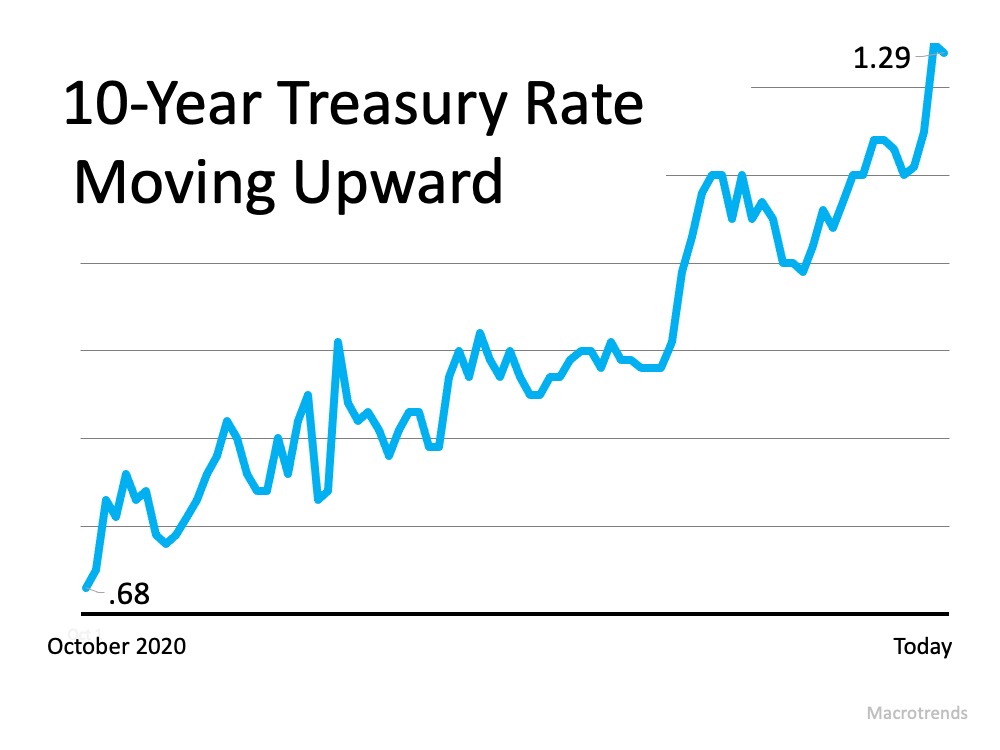
How high might they go in 2021?No one knows for sure. Sam Khater, Chief Economist for Freddie Mac, recently suggested:
What does this mean for you?Whether you're a first-time buyer or you've purchased a home before, even an increase of half a point in mortgage rate (2.81 to 3.31%) makes a big difference. On a $300,000 mortgage, that difference (including principal and interest) is $82 a month, $984 a year, or a total of $29,520 over the life of the home loan. Bottom LineBased on the 50-year symbiotic relationship between treasury rates and mortgage rates, it appears mortgage rates could be headed up this year. It may make sense to buy now rather than wait.
|