That House That’s Been Sitting Could Be Your Best Shot at a Deal

BLOGJune 22, 2026


Open up a home search and you'll see them. Listings that have been on the market for two months. Three. Some longer.

Most buyers scroll right past them, assuming something’s wrong with the house. But that instinct could be costing you, since the longer a home sits, the more motivated the seller usually gets.

Where Some Buyers Are Finding Better Deals

If affordability has been your #1 hurdle to buying, here’s a surprisingly simple strategy that could help you finally get your foot in the door. Start with the homes that have been sitting the longest. That’s often where the best deals are.

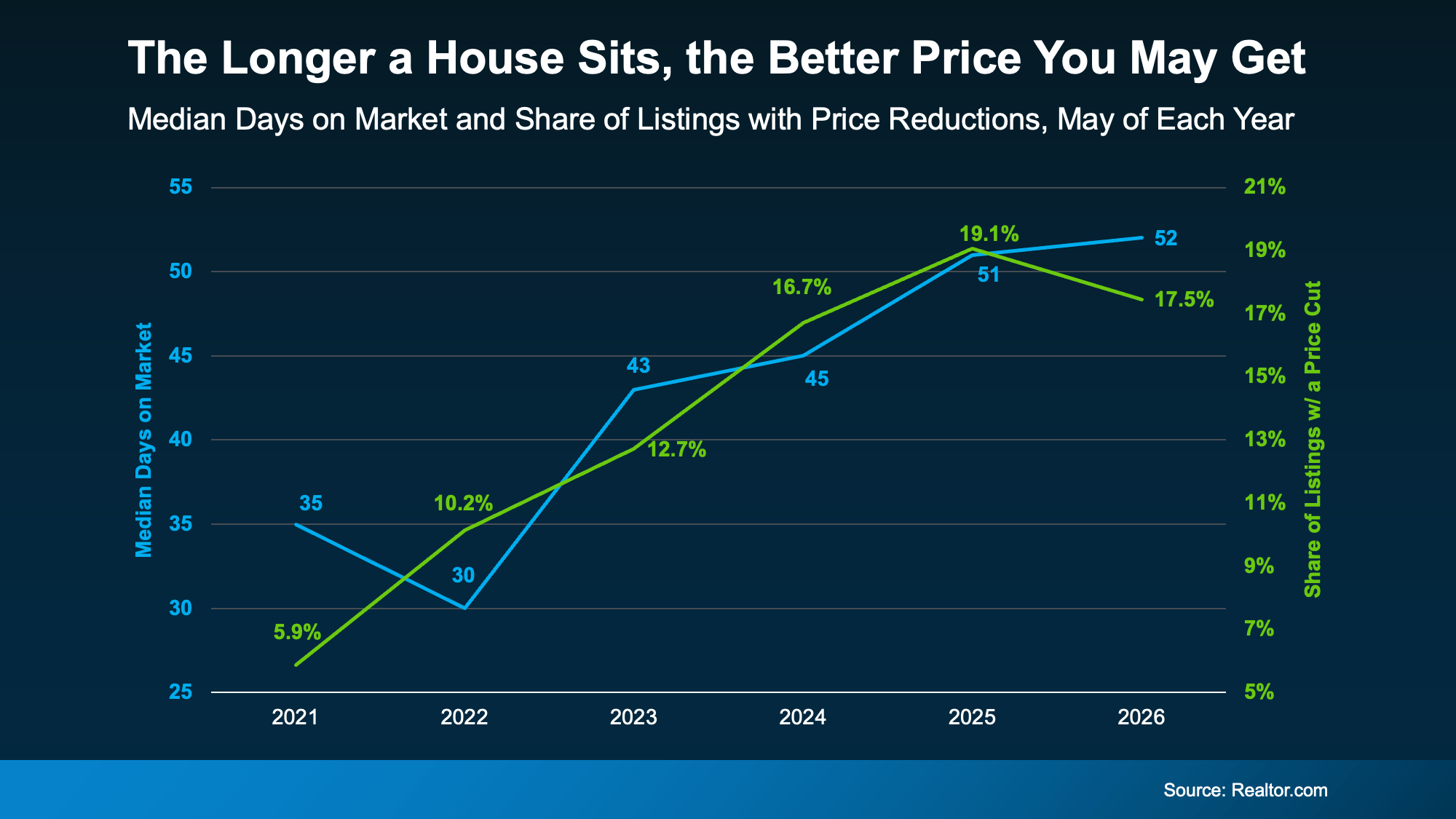
Here’s why. Data from Realtor.com shows there’s a connection between longer time on the market and lower sales prices. Basically, the longer a house sits, the more likely it is that the seller will reduce the price (see graph below):

a graph with numbers and lines

The blue line tracks how long homes stay on the market, while the green line tracks the share of homes getting a price reduction. As one climbs, so does the other.  

And if you focus on these homes that are just sitting and waiting, the opportunity for you is bigger than you may think right now.

Redfin data shows there’s $347 billion worth of stale listings on the market right now – more than ever before for this time of year. So, ask your agent to filter listings for you from oldest to newest. The home that fits your budget might already be there. Just further down the list than you thought.

Lingering Doesn’t Always Mean Something’s Wrong 

Let’s say you do that and something catches your eye. Still, you might be questioning why the home has been sitting in the first place. Just remember, sometimes it has nothing to do with the home itself.

According to Redfin, common causes are:

  • The asking price was set too high to start

  • The home didn’t show well online

  • There are a lot of homes for sale in the area, so it just got buried

So, nothing that’s necessarily a dealbreaker, or even anything that’s wrong with the home itself. If there’s a real issue, a thorough inspection will surface it. And that’s information you can use to negotiate. Not a reason to assume it’s a house worth skipping over.

How To Turn a Lingering Listing into a Win

So how do you capitalize on a lingering listing? According to USA Today, you have two main levers to pull.

The first is price. Work with your agent to study what comparable homes recently sold for, then build an offer around that. Coming in below asking price is fair game when a home has been sitting.

The second is concessions. If a seller won’t budge much on price, they may still help in other ways, like covering some closing costs, repair credits, or even a mortgage rate buydown that lowers your monthly payment.

A local agent has the context to tell which homes are the real opportunities and which are skippable.

Bottom Line

A house sitting on the market isn’t always a glaring red flag. In today’s market, it may be your best opportunity yet.

For help deciding which lingering listings are actually worth a second look, let’s connect.

The information contained, and the opinions expressed, in this article are not intended to be construed as investment advice. Keeping Current Matters, Inc. does not guarantee or warrant the accuracy or completeness of the information or opinions contained herein. Nothing herein should be construed as investment advice. You should always conduct your own research and due diligence and obtain professional advice before making any investment decision. Keeping Current Matters, Inc. will not be liable for any loss or damage caused by your reliance on the information or opinions contained herein.

June 13, 2022

More Americans Choose Real Estate as the Best Investment Than Ever Before?

More Americans Choose Real Estate as the Best Investment Than Ever Before

More Americans Choose Real
Estate as the Best Investment Than Ever Before | MyKCM

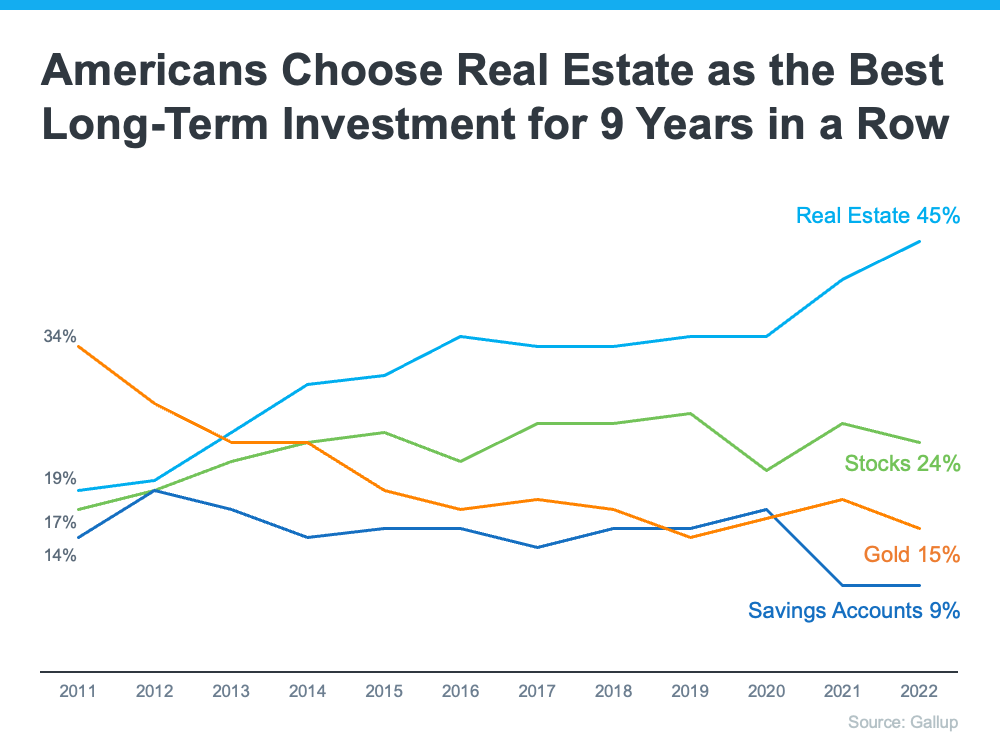
Americans' opinion on the value of real estate as an investment is climbing. That's according to an annual survey from Gallup. Not only is real estate viewed as the best investment for the ninth year in a row, but more Americans selected it than ever before.

The graph below shows the results of the survey since Gallup began asking the question in 2011. As the trend lines indicate, real estate has been gaining ground as the clear favorite for almost a decade now:

More
Americans Choose Real Estate as the Best Investment Than Ever Before | MyKCM

If you're thinking about purchasing a home, let this poll reassure you. Even when inflation is high like today, Americans recognize owning a home is a powerful financial decision.

How an Investment in Real Estate Can Benefit You During High Inflation

Because inflation reached its highest level in 40 years recently, it's more important than ever to understand the financial benefits of homeownership. Rising inflation means prices are increasing across the board, and that includes goods, services, housing costs, and more. When you purchase your home, you lock in your monthly housing payments, effectively shielding yourself from increases on one of your biggest budgetary items each month.

If you're a renter, you don't have that same benefit, and you aren't protected from these increases, especially as rents rise. As Danielle Hale, Chief Economist at realtor.com, notes:

Rising rents, which continue to climb at double-digit pace . . . and the prospect of locking in a monthly housing cost in a market with widespread inflation are motivating today's first-time homebuyers.

When Inflation Has Risen in the Past, Home Prices Have Too

Your house is also an asset that typically increases in value over time, even during inflation. That‘s because as prices rise, the value of your home does too. Mark Cussen, Financial Writer for Investopedia, puts it like this:

There are many advantages to investing in real estate. . . . It often acts as a good inflation hedge since there will always be a demand for homes, regardless of the economic climate, and because as inflation rises, so do property values. . . .

And since rising home values help increase your equity, and by extension your net worth, homeownership is historically a good hedge against inflation.

Bottom Line

Buying a home is a powerful decision. It's no wonder why so many people view it as the best long-term investment, even when inflation is high. When you buy, you help shield yourself from increases in your housing costs and you own an asset that typically gains value with time. If you want to better understand how buying a home could be a great investment for you, let's connect today.


Posted in Market Updates
June 10, 2022

The Top Reasons To Own Your Home [INFOGRAPHIC]?

The Top Reasons To Own Your Home [INFOGRAPHIC]

The Top Reasons To Own Your
Home [INFOGRAPHIC] | MyKCM

Some Highlights

  • June is National Homeownership Month, and it's a great time to consider the benefits of owning your own home.
  • If you're considering homeownership, know that it can give you privacy, comfort, and a place to express yourself. It can also provide financial stability and help you grow your net worth.
  • Are you ready to experience all the great benefits that come from purchasing a home? Let's connect to begin the process today.
  •  
Posted in Market Updates
June 9, 2022

Luxury Homes Are in High Demand?

Luxury Homes Are in High Demand

Luxury Homes Are in High
Demand | MyKCM

As people realize their needs are changing, some are turning to luxury housing to find their dream home. Investopedia helps define what pushes a home into this category. In a recent article, they point out that a luxury home isn't only defined by its price. Location is also an important factor. It could be a condo at a desirable city address, a spacious home on the water, or one with access to luxury activities like arts and entertainment, high-end shopping and dining, and more. The home itself will also boast some of the finest features available.

According to the Luxury Market Report from the Institute for Luxury Home Marketingthere's been a substantial increase in how many buyers are purchasing luxury homes over the past two years. It says:

. . . North America recorded the fastest growth of demand during the first year of the pandemic. Also, demand has . . . consistently increased, and even in April 2022, we saw a higher volume of sales compared to 2021.

If you own a luxury home, it could be a great time to list your house today while demand is so high. But first, let's understand where the demand is coming from.

What's Driving the Heightened Buyer Demand for High-End Homes?

The same report says more people have reached a certain net-worth threshold, and that's contributing to the increased interest in luxury housing:

In 2020, we saw a 2.2% growth in the number of individuals with wealth of over $5 million in net value, but in 2021 that number grew by an outstanding 19.8%.

This total increase has resulted in the introduction of over 660,000 new individuals into the high net-worth bracket, which, combined with the existing affluent looking to both diversify and add new properties to their portfolio, provides a true insight into why the demand for luxury properties skyrocketed during 2021 and into 2022.

So, if you're looking to make changes to your real estate portfolio or are looking to sell your current house, it may be a great time to list and benefit from the high demand for luxury homes today.

Bottom Line

If you own a luxury home and want to know how strong demand is in your area, let’s connect so you can capitalize on current market conditions while buyer demand for upscale homes is so high.


Posted in Market Updates
June 8, 2022

What Are the Best Options for Today's First-Time Homebuyers??

What Are the Best Options for Today's First-Time Homebuyers?

What Are the Best Options for
Today's First-Time Homebuyers? | MyKCM

If you're looking to buy your first home, you're likely balancing several factors. Because both mortgage rates and home prices have risen this year, it costs more to buy a home than it did even just a few months ago. But that doesn't mean you have to put your plans on hold.

If you partner with a trusted real estate advisor and hone your strategy, you can navigate today's market and find the home you're looking for. Here are two tips to help you get started.

Work with a Professional To Prioritize Your Wish List

If you're having trouble finding a home in your budget that checks all the boxes, it may be worth taking another look at your lists of what you want and what you really need. According to the latest First-Time Homebuyer Metro Affordability Report from NerdWallet, your wish list can have as much impact on your search as your finances:

Your budget isn't all that you need to be concerned about; your wish list and desired location may carry just as much weight.

It's all about prioritization. If you're serious about purchasing your first home soon, be flexible in what you’re looking for to open up your pool of options. Partner with a local real estate professional to better understand what's available in today's market and reprioritize your wish list. Remember, making a concession now doesn't mean you'll never have everything on your list. After you've moved in, you can always add certain features to make the home your own.

Increase Your Search Radius To Consider More Locations

Some areas may have more homes within your target price range than others, but it may require you to be flexible on your location. For example, if you're a remote worker, you may be able to expand your search radius. As Fannie Mae explains:

. . . continued remote work flexibility is likely giving many the ability to live farther away in more affordable areas.”

The decision to search in places with a lower cost of living could help you find a home that fits your budget and checks the most boxes off your wish list.

Bottom Line

If you're serious about purchasing your first home this year, revisiting your wish list and desired location can help. Let's connect to explore all the options in our local market – and beyond – so you can achieve your homeownership dreams.


Posted in Market Updates
June 7, 2022

Why the Growing Number of Homes for Sale Is Good for Your Move Up?

Why the Growing Number of Homes for Sale Is Good for Your Move Up

Why the Growing Number of
Homes for Sale Is Good for Your Move Up | MyKCM

Are you thinking about selling your current home? If so, the biggest question on your mind may be: if I sell now, where will I go? If this resonates with you, there's something you should know. The number of homes coming onto the market is increasing and that could make it easier for you to move up this summer.

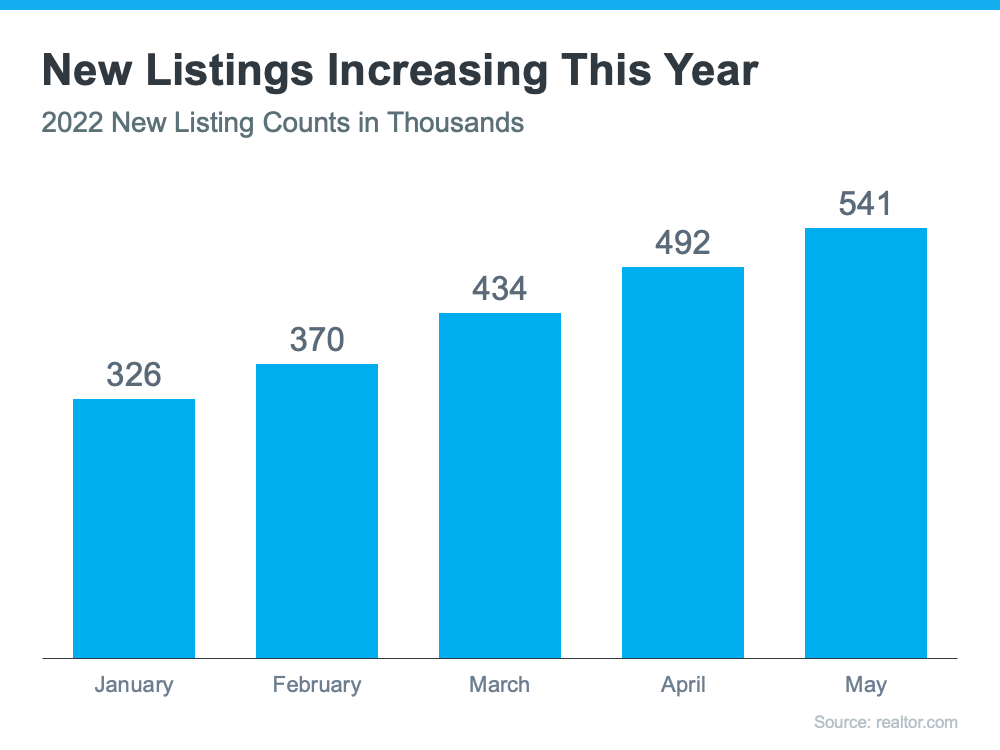
According to the latest data from realtor.com, the number of homes being listed for sale, known as new listings, has increased consistently this year (see graph below):

Why
the Growing Number of Homes for Sale Is Good for Your Move Up | MyKCM

While this news has clear benefits for buyers who are craving more options for their home search, what does that mean for current homeowners like you? It gives you two distinct opportunities in today's housing market.

Opportunity #1: Take Advantage of More Options for Your Move Up

If your current house no longer meets your needs or lacks the space and features you want, this gives you even more opportunity to sell and move up into the home of your dreams. As more options come to market, you'll have more to choose from when you search for your next home.

Partnering with a local real estate professional can help make sure you see these listings as soon as they come onto the market. And when you do find the one, that professional can advise you on how to write a winning offer to seal the deal.

Opportunity #2: Sell Before You Have More Competition

Just know that, in order to make sure your house shines above the rest, it may make sense to put your home up for sale before your neighbors do the same, creating more competition in your area. The increase in the number of homes being listed for sale is expected to continue, and a recent study from realtor.com says two-thirds of homeowners looking to sell say they'll do so by August.

A real estate professional can advise you on what you need to tackle to get your house ready to list so they can put that for sale sign up in your yard sooner rather than later. That's because the process of getting a home ready to sell isn't taking as long as you may think. As a result, you can capitalize on today's sellers' market and get ahead of the competition.

Bottom Line

If you're a current homeowner looking to sell, let’s connect to begin the process. You have a unique opportunity to benefit from the additional homes being listed today and sell before your house has more competition.


Posted in Market Updates
June 3, 2022

History Proves Recession Doesn't Equal a Housing Crisis [INFOGRAPHIC]?

History Proves Recession Doesn't Equal a Housing Crisis [INFOGRAPHIC]

History Proves Recession
Doesn't Equal a Housing Crisis [INFOGRAPHIC] | MyKCM

Some Highlights

  • It's important to understand history proves an economic slowdown does not equal a housing crisis.
  • In 4 of the last 6 recessions, home prices actually appreciated. Home prices only fell twice – minimally in the early 90s and then by nearly 20% during the housing crash in 2008.
  • If you have questions, let's connect to discuss why today's housing market is nothing like 2008.
  •  
Posted in Market Updates
May 18, 2022

Why Rising Mortgage Rates Push Buyers off the Fence?

Why Rising Mortgage Rates Push Buyers off the Fence

Why Rising Mortgage Rates
Push Buyers off the Fence | MyKCM

If you're thinking about buying a home, you've probably heard mortgage rates are rising and have wondered what that means for you. Since mortgage rates have increased over two percentage points this year, it's natural to think about how this will impact your homeownership plans.

Today, buyers are reacting in one of two ways: they're either making the decision to buy now before rates climb higher or they're waiting it out in hopes rates will fall. Let's look at some context that can help you understand why so many buyers are jumping off the fence and into action rather than waiting to buy.

A Look Back: How the Current Mortgage Rate Compares to Historical Data

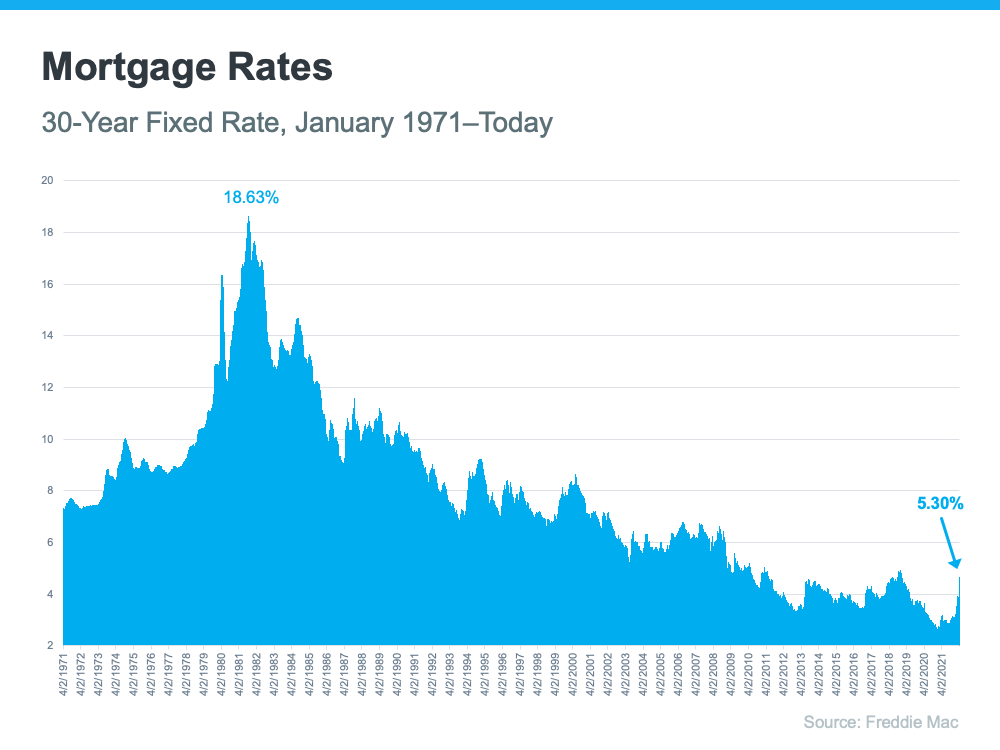
One factor that could help you make your decision to buy now is how today's mortgage rates compare to historical data. While higher than the average 30-year fixed rate in recent years, the latest rates are still comparatively low when you look at the bigger picture of where rates have been since 1971 (see graph below):

Why
Rising Mortgage Rates Push Buyers off the Fence | MyKCM

Mark Fleming, Chief Economist at First Americanexplains it like this:

. . . historical context is important. An average 30-year, fixed mortgage rate of 5.5 percent is still well below the historical average of nearly 8 percent.

If you're deciding whether to buy now or wait, this is important context to have. Today's mortgage rate still gives you a window of opportunity to lock in a rate that's comparatively lower than decades past.

A Look Ahead: What Happens if Rates Climb Further

The buyers who are springing into action now are also motivated to make their move because they know rates have risen steadily this year, and they're eager to get ahead of any further increases.

Why? When mortgage rates climb, they impact the monthly mortgage payment you'll have on the home you're buying. Basically, it'll likely cost you more to buy a home if you wait. Experts say mortgage rates will rise (although more moderately) in the months ahead. Odeta Kushi, Deputy Chief Economist at First Americanexplains:

. . . ongoing inflationary pressure remains likely to push mortgage rates even higher in the months to come.

So, if you're ready and financially able to buy now, it may make more sense to get off the fence and make your purchase sooner rather than later. As Nadia Evangelou, Senior Economist at the National Association of Realtors (NAR), says:

With even higher interest rates on the horizon, I don't see any reason to hold off from purchasing a home right now. If you feel financially secure, you should start looking for a home.

At the end of the day, there is no perfect advice on when to buy a home. What you should do depends on your goals, your finances, and your personal situation. Use this information with the help of local real estate professionals to make an informed decision on what's best for you. Bill McBride of Calculated Risk sums it up best:

. . . if you're on the fence about whether to buy now or wait for a better deal, buying sooner rather than later might be wise. That said, home buying is always a personal decision. Whether you should buy in 2022 depends on your financial situation and the local housing market where you live.

Bottom Line

For many buyers, rising mortgage rates are motivating them to act now and make a purchase before rates rise higher. To decide what move is best for you, let's connect so you have expert advice on your side.

Posted in Market Updates
May 16, 2022

If You're a Homeowner, You Have Incredible Leverage When You Sell Today?

If You're a Homeowner, You Have Incredible Leverage When You Sell Today

If You're a Homeowner, You
Have Incredible Leverage When You Sell Today | MyKCM

In today's housing market, homeowners have a great opportunity to sell their house and receive the best terms for their personal situation. That's because there's a limited number of homes for sale, which is creating competition among buyers. Right now, homebuyers want three things:

These buyer needs give you an amazing advantage – also known as leverage – when you sell.

What Does This Mean for Sellers Today?

You might already realize this enables you to sell at a good price, but you're also in a great position to get the best terms to suit your needs.

According to the latest Realtors Confidence Index from the National Association of Realtors (NAR), the average home sold is receiving 4.8 offers. That's why there's a good chance you'll get offers from multiple buyers who are willing to compete for your house. When you do, you should look closely at the terms of each offer to find out which one has the best options for you.

And if you have questions at any point in the process, remember your trusted real estate advisor can help. They're experts who understand the fine print, know how to compare the terms of various offers, and will help you select the best one for your situation.

Bottom Line

If you're thinking of selling your home, know buyer demand in today's market gives you a great opportunity to get the best terms and price when you sell your house. Let's connect today to discuss how much leverage you have as a seller in today's market.


Posted in Market Updates
May 13, 2022

Should You Update Your House Before Selling? Ask a Real Estate Professional. [INFOGRAPHIC]?

Should You Update Your House Before Selling? Ask a Real Estate Professional. [INFOGRAPHIC]

Should You Update Your House
Before Selling? Ask a Real Estate Professional. [INFOGRAPHIC] | MyKCM

Some Highlights

  • If you're deciding whether you should make updates before you sell your house, lean on your trusted real estate advisor to be your guide.
  • In today's sellers' market, buyers have limited options and may be more willing to take on repairs themselves.
  • If you're thinking about selling your house, let's connect so you have expert advice that's customized to your home and our local area.
  •  
Posted in Market Updates
May 12, 2022

What You Actually Need To Know About the Number of Foreclosures in Today's Housing Market?

What You Actually Need To Know About the Number of Foreclosures in Today's Housing Market

What You Actually Need To
Know About the Number of Foreclosures in Today's Housing Market | MyKCM

While you may have seen recent stories about the volume of foreclosures today, context is important. During the pandemic, many homeowners were able to pause their mortgage payments using the forbearance program. The goal was to help homeowners financially during the uncertainty created by the health crisis.

When the forbearance program began, many experts were concerned it would result in a wave of foreclosures coming to the market, as there was after the housing crash in 2008. Here's a look at why the number of foreclosures we're seeing today is nothing like the last time.

1. There Are Fewer Homeowners in Trouble

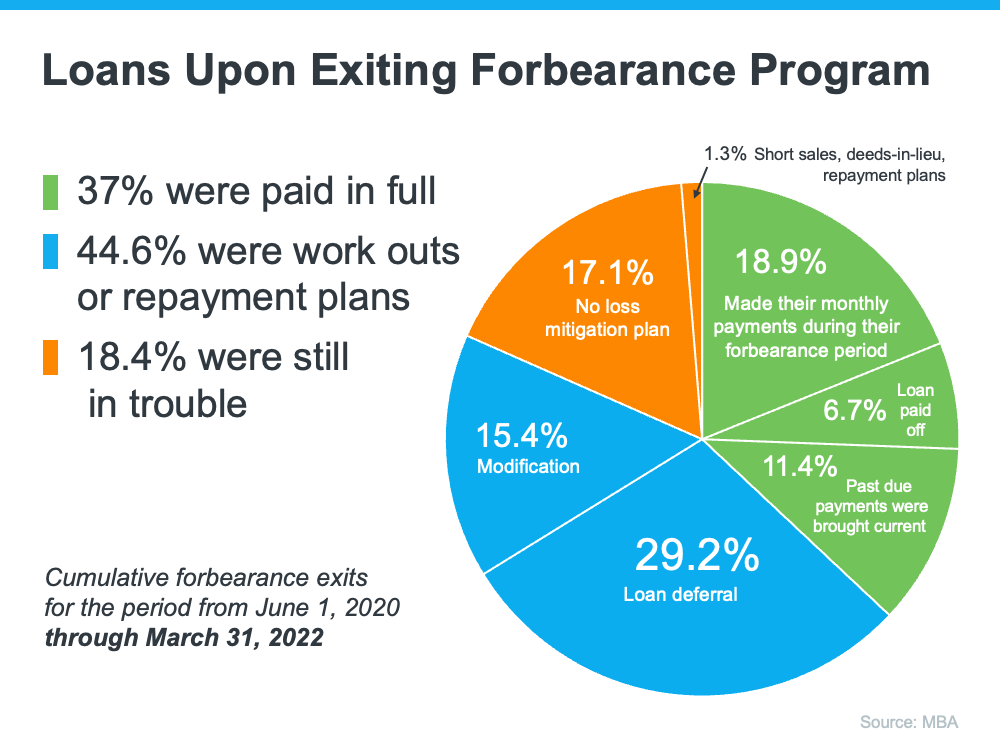
Today's data shows that most homeowners are exiting their forbearance plan either fully caught up on payments or with a plan from the bank that restructured their loan in a way that allowed them to start making payments again. The graph below depicts those findings from the Mortgage Bankers Association (MBA):

What
You Actually Need To Know About the Number of Foreclosures in Today's Housing
Market | MyKCM

The same MBA report mentioned above estimates there are approximately 525,000 homeowners who remain in forbearance today. Thankfully, those people still have the chance to work out a suitable repayment plan with the servicing company that represents their lender.

2. Most Homeowners Have Enough Equity To Sell Their Homes

For those who are exiting the forbearance program without a plan in place, many will have enough equity to sell their homes instead of facing foreclosures. Due to rapidly rising home prices over the last two years, the average homeowner has gained record amounts of equity in their home.

Marina Walsh, CMB, Vice President of Industry Analysis at MBA, says:

Given the nation's limited housing inventory and the variety of home retention and foreclosure alternatives on the table across various loan types, . . . Borrowers have more choices today to either stay in their homes or sell without resorting to a foreclosure.

3. There Have Been Fewer Foreclosures over the Last Two Years

One of the seldom-reported benefits of the forbearance program was it gave homeowners facing difficulties an extra two years to get their finances in order and work out a plan with their lender. That helped prevent the foreclosures that normally would have come to the market had the new forbearance program not been available.

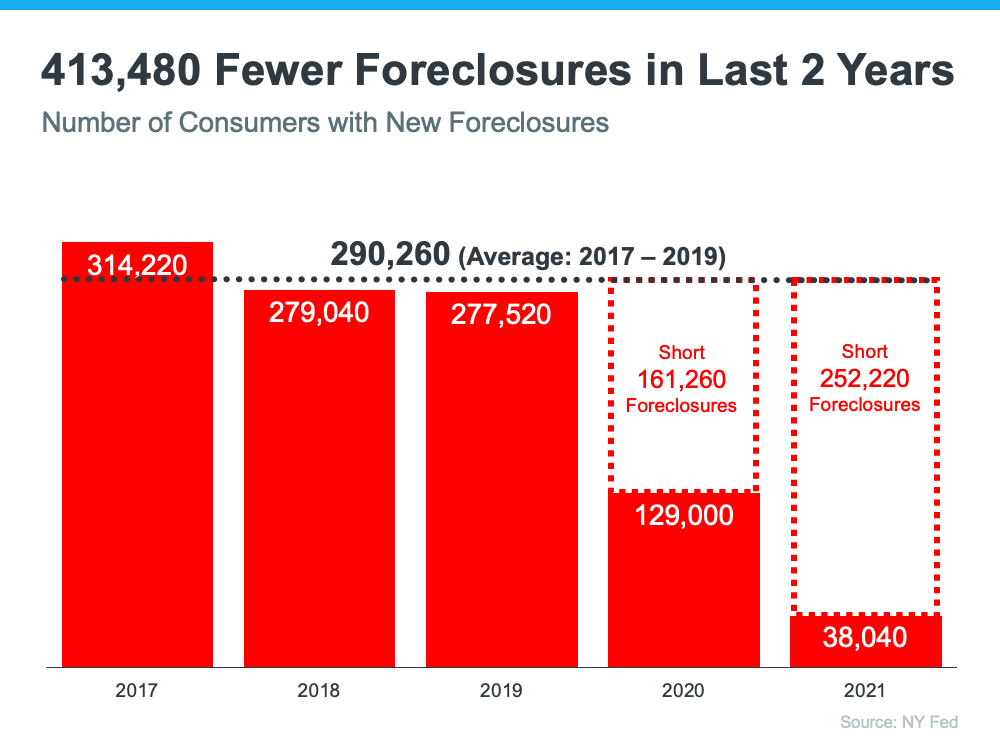
Even as people leave the forbearance program, there are still fewer foreclosures happening today than before the pandemic. That means, while there are more foreclosures now compared to last year (when foreclosures were paused), the number is still well below what the housing market has seen in a more typical year, like 2017-2019 (see graph below):

What
You Actually Need To Know About the Number of Foreclosures in Today's Housing
Market | MyKCM

4. The Current Market Can Easily Absorb New Listings

When the foreclosures in 2008 hit the market, they added to the oversupply of houses that were already for sale. It's exactly the opposite today. The latest Existing Home Sales Report from the National Association of Realtors (NAR) reveals:

Total housing inventory at the end of March totaled 950,000 units, up 11.8% from February and down 9.5% from one year ago (1.05 million). Unsold inventory sits at a 2.0-month supply at the present sales pace, up from 1.7 months in February and down from 2.1 months in March 2021.

A balanced market would have approximately a six-month supply of inventory. At 2.0 months, today's housing market is severely understocked. Even if one million homes enter the market, there still won't be enough inventory to meet the current demand.

Bottom Line

If you see headlines about the increasing number of foreclosures today, remember context is important. While it's true the number of foreclosures is higher now than it was last year, foreclosures are still well below pre-pandemic years.

If you have questions, let's connect to talk through the latest market conditions and what they mean for you.


Posted in Market Updates