That House That’s Been Sitting Could Be Your Best Shot at a Deal

BLOGJune 22, 2026


Open up a home search and you'll see them. Listings that have been on the market for two months. Three. Some longer.

Most buyers scroll right past them, assuming something’s wrong with the house. But that instinct could be costing you, since the longer a home sits, the more motivated the seller usually gets.

Where Some Buyers Are Finding Better Deals

If affordability has been your #1 hurdle to buying, here’s a surprisingly simple strategy that could help you finally get your foot in the door. Start with the homes that have been sitting the longest. That’s often where the best deals are.

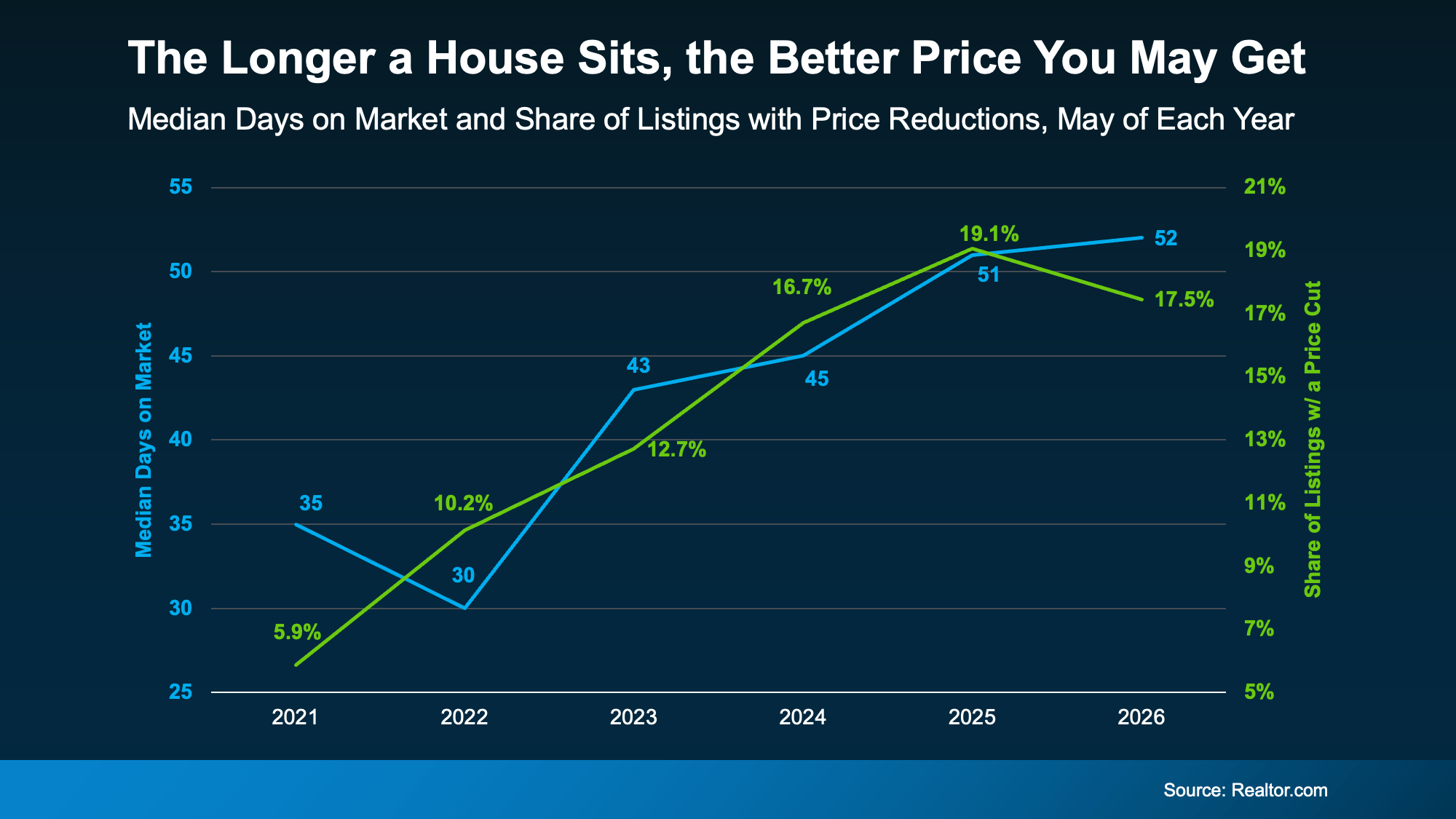
Here’s why. Data from Realtor.com shows there’s a connection between longer time on the market and lower sales prices. Basically, the longer a house sits, the more likely it is that the seller will reduce the price (see graph below):

a graph with numbers and lines

The blue line tracks how long homes stay on the market, while the green line tracks the share of homes getting a price reduction. As one climbs, so does the other.  

And if you focus on these homes that are just sitting and waiting, the opportunity for you is bigger than you may think right now.

Redfin data shows there’s $347 billion worth of stale listings on the market right now – more than ever before for this time of year. So, ask your agent to filter listings for you from oldest to newest. The home that fits your budget might already be there. Just further down the list than you thought.

Lingering Doesn’t Always Mean Something’s Wrong 

Let’s say you do that and something catches your eye. Still, you might be questioning why the home has been sitting in the first place. Just remember, sometimes it has nothing to do with the home itself.

According to Redfin, common causes are:

  • The asking price was set too high to start

  • The home didn’t show well online

  • There are a lot of homes for sale in the area, so it just got buried

So, nothing that’s necessarily a dealbreaker, or even anything that’s wrong with the home itself. If there’s a real issue, a thorough inspection will surface it. And that’s information you can use to negotiate. Not a reason to assume it’s a house worth skipping over.

How To Turn a Lingering Listing into a Win

So how do you capitalize on a lingering listing? According to USA Today, you have two main levers to pull.

The first is price. Work with your agent to study what comparable homes recently sold for, then build an offer around that. Coming in below asking price is fair game when a home has been sitting.

The second is concessions. If a seller won’t budge much on price, they may still help in other ways, like covering some closing costs, repair credits, or even a mortgage rate buydown that lowers your monthly payment.

A local agent has the context to tell which homes are the real opportunities and which are skippable.

Bottom Line

A house sitting on the market isn’t always a glaring red flag. In today’s market, it may be your best opportunity yet.

For help deciding which lingering listings are actually worth a second look, let’s connect.

The information contained, and the opinions expressed, in this article are not intended to be construed as investment advice. Keeping Current Matters, Inc. does not guarantee or warrant the accuracy or completeness of the information or opinions contained herein. Nothing herein should be construed as investment advice. You should always conduct your own research and due diligence and obtain professional advice before making any investment decision. Keeping Current Matters, Inc. will not be liable for any loss or damage caused by your reliance on the information or opinions contained herein.

July 11, 2022

The Drop in Mortgage Rates Brings Good News for Homebuyers

The Drop in Mortgage Rates Brings Good News for Homebuyers

The Drop in Mortgage Rates
Brings Good News for Homebuyers | MyKCM

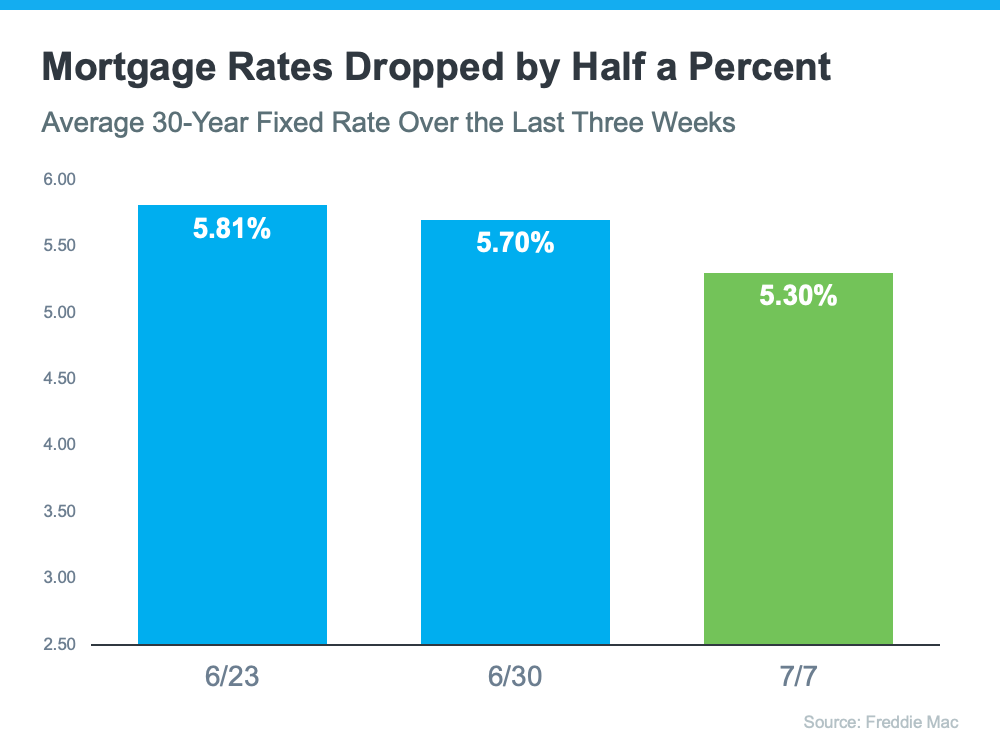
Over the past few weeks, the average 30-year fixed mortgage rate from Freddie Mac fell by half a percent. The drop happened over concerns about a potential recession. And since mortgage rates have risen dramatically this year, homebuyers across the country should see this decline as welcome news.

Freddie Mac reports that the average 30-year rate was down to 5.30% from 5.81% two weeks prior (see graph below):

The
Drop in Mortgage Rates Brings Good News for Homebuyers | MyKCM

But why is this recent dip such good news for homebuyers? As Nadia Evangelou, Senior Economist and Director of Forecasting at the National Association of Realtors (NAR), explains:

According to Freddie Mac, the 30-year fixed mortgage rate dropped sharply by 40 basis points to 5.3 percent. . . . As a result, home buying is about 5 percent more affordable than a week ago. This translates to about $100 less every month on a mortgage payment.

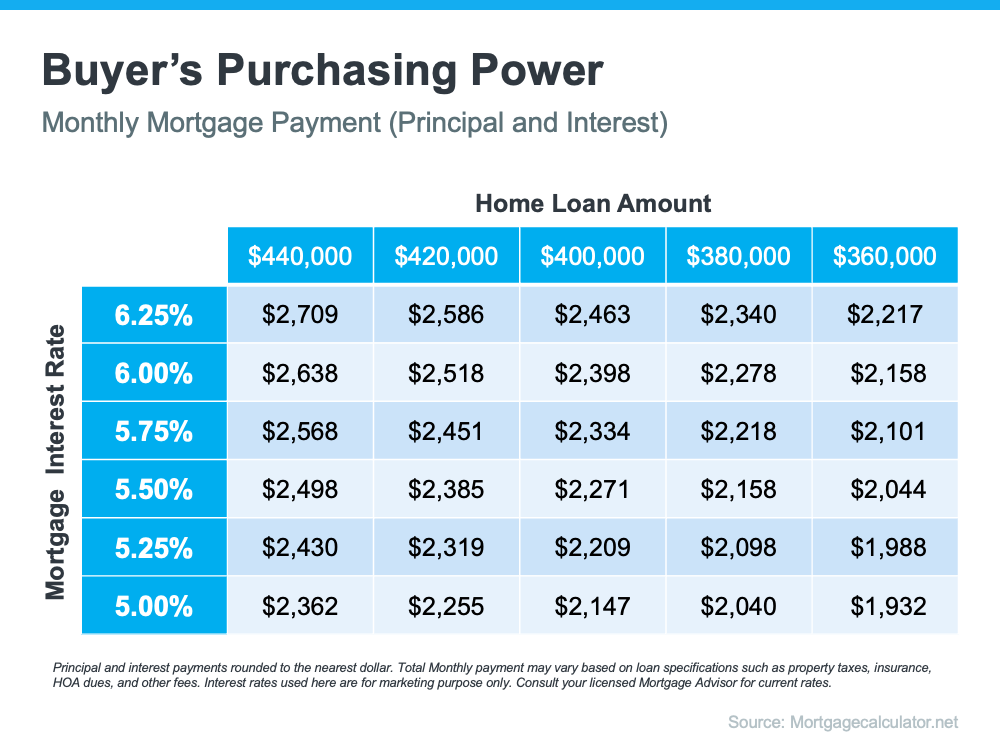
That's because when rates go up (as they have for the majority of this year), they impact how much you'll pay in your monthly mortgage payment, which directly affects how much you can comfortably afford. The inverse is also true. A decrease in mortgage rates means an increase in your purchasing power.

The chart below shows how a half-point, or even a quarter-point, change in mortgage rates can impact your monthly payment:

The
Drop in Mortgage Rates Brings Good News for Homebuyers | MyKCM

Bottom Line

If your home doesn't meet your needs, this may be the opportunity you've been waiting for. Let's connect to see how you can benefit from the current drop in mortgage rates.
 

Posted in Market Updates
July 8, 2022

Why Growing Home Equity Is Great News if You Plan To Move [INFOGRAPHIC]?

Why Growing Home Equity Is Great News if You Plan To Move [INFOGRAPHIC]

Why Growing Home Equity Is
Great News if You Plan To Move [INFOGRAPHIC] | MyKCM

Some Highlights

  • According to the latest data from CoreLogic, the average homeowner gained $64,000 in home equity over the past 12 months.
  • That much equity can be a game-changer when you move. When you sell, it could be some (if not all) of what you need for a down payment on your next home.
  • To find out how much equity you have in your home and how you can use it, let's connect today.
  •  
Posted in Market Updates
July 7, 2022

What Does an Economic Slowdown Mean for the Housing Market?

What Does an Economic Slowdown Mean for the Housing Market?

What Does an Economic
Slowdown Mean for the Housing Market? | MyKCM

According to a recent survey, more and more Americans are concerned about a possible recession. Those concerns were validated when the Federal Reserve met and confirmed they were strongly committed to bringing down inflation. And, in order to do so, they'd use their tools and influence to slow down the economy.

All of this brings up many fears and questions around how it might affect our lives, our jobs, and business overall. And one concern many Americans have is: how will this affect the housing market? We know how economic slowdowns have impacted home prices in the past, but how could this next slowdown affect real estate and the cost of financing a home?

According to Mortgage Specialists:

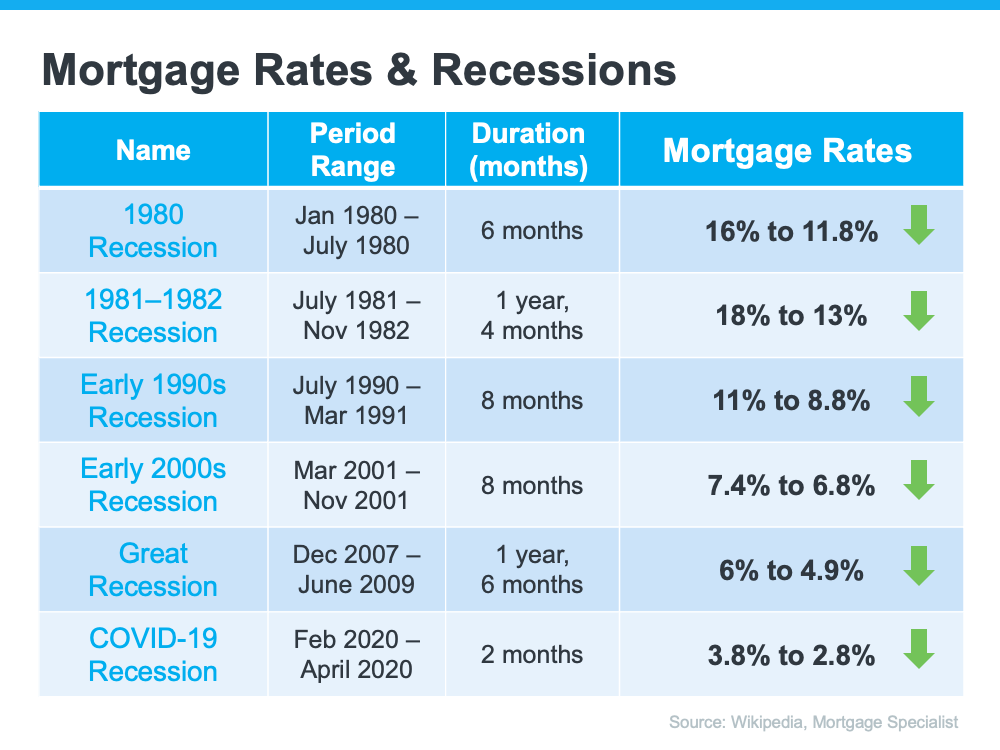
Throughout history, during a recessionary period, interest rates go up at the beginning of the recession. But in order to come out of a recession, interest rates are lowered to stimulate the economy moving forward.

Here's the data to back that up. If you look back at each recession going all the way to the early 1980s, here's what happened to mortgage rates during those times (see chart below):

What
Does an Economic Slowdown Mean for the Housing Market? | MyKCM

As the chart shows, historically, each time the economy slowed down, mortgage rates decreased. Fortune.com helps explain the trend like this:

Over the past five recessions, mortgage rates have fallen an average of 1.8 percentage points from the peak seen during the recession to the trough. And in many cases, they continued to fall after the fact as it takes some time to turn things around even when the recession is technically over.

And while history doesn't always repeat itself, we can learn from it. While an economic slowdown needs to happen to help taper inflation, it hasn't always been a bad thing for the housing market. Typically, it has meant that the cost to finance a home has gone down, and that's a good thing.

Bottom Line

Concerns of a recession are rising. As the economy slows down, history tells us this would likely mean lower mortgage rates for those looking to refinance or buy a home. While no one knows exactly what the future holds, you can make the right decision for you by working with a trusted real estate professional to get expert advice on what's happening in the housing market and what that means for your homeownership goals.


Posted in Market Updates
July 1, 2022

If You’re Selling Your House This Summer, Hiring a Pro Is Critical

If You’re Selling Your House This Summer, Hiring a Pro Is Critical

If You’re Selling Your House This Summer, Hiring a Pro Is Critical | MyKCM

It can be tempting, especially with how hot the housing market has been over the past two years, to consider selling your home on your own. But today’s market is at a turning point, making it more essential than ever to work with a real estate professional.

Not only will a trusted real estate advisor keep you updated and help you make the best decisions based on current market trends, but they’re also experts in managing the many aspects of selling your house.

Here are five key reasons why working with a real estate professional makes sense today.

1. A Professional Follows the Latest Market Trends

With higher mortgage rates, rising home prices, and a growing number of homes for sale, today’s housing market is showing signs of a shift back toward more pre-pandemic levels. When conditions change, following the trends and staying on top of new information is crucial when you sell.

That makes working with an expert real estate advisor critical today. They know your local area and follow national trends too. More importantly, they’ll know what this data means for you, and as the market shifts, they’ll be able to help you navigate it and make your best decision.

2. A Professional Helps Maximize Your Pool of Buyers

Your agent’s role in bringing in buyers is important. Real estate professionals have a large variety of tools at their disposal, such as social media followers, agency resources, and the Multiple Listing Service (MLS) to ensure your house is viewed by the most buyers. Investopedia explains why it’s risky to sell on your own without the network an agent provides:

“You don’t have relationships with clients, other agents, or a real estate agency to bring the largest pool of potential buyers to your home. A smaller pool of potential buyers means less demand for your property, which can translate into waiting longer to sell your home and possibly not getting as much money as your house is worth.”

3. A Professional Understands the Fine Print

Today, more disclosures and regulations are mandatory when selling a house. That means the number of legal documents you’ll need to juggle is growing. The National Association of Realtors (NAR) explains it best, saying:

“Selling a home typically requires a variety of forms, reports, disclosures, and other legal and financial documents. . . . Also, there’s a lot of jargon involved in a real estate transaction; you want to work with a professional who can speak the language.”

A real estate professional knows exactly what needs to happen, what all the paperwork means, and how to work through it efficiently. They’ll help you review the documents and avoid any costly missteps that could occur if you try to handle them on your own.

4. A Professional Is a Trained Negotiator

If you sell without a professional, you’ll also be solely responsible for all the negotiations. That means you’ll have to coordinate with:

  • The buyer, who wants the best deal possible
  • The buyer’s agent, who will use their expertise to advocate for the buyer
  • The inspection company, which works for the buyer and will almost always find concerns with the house
  • The appraiser, who assesses the property’s value to protect the lender

Instead of going toe-to-toe with all these parties alone, lean on an expert. They’ll know what levers to pull, how to address everyone’s concerns, and when you may want to get a second opinion.

5. A Professional Knows How To Set the Right Price for Your House

If you sell your house on your own, you may over or undershoot your asking price. That could mean you’ll leave money on the table because you priced it too low or your house will sit on the market because you priced it too high. Pricing a house requires expertise. NAR explains it like this:

“A great real estate agent will look at your home with an unbiased eye, providing you with the information you need to enhance marketability and maximize price.”

Real estate professionals know the ins and outs of how to price your house accurately and competitively. To do so, they compare your house to recently sold homes in your area and factor in the current condition of your home. These steps are key to making sure it’s set to move quickly while still getting you the highest possible final sale price.

Bottom Line

Whether it’s following local and national trends and guiding you through a shifting market or pricing your house right, a real estate agent has essential insights you'll want to rely on throughout the transaction. Don’t go at it alone. If you plan to sell, let’s connect so you have an expert on your side.

Posted in Market Updates
June 22, 2022

Things To Avoid After Applying for a Home Loan?

Things To Avoid After Applying for a Home Loan

Things To Avoid After
Applying for a Home Loan | MyKCM

Once you've applied for a mortgage to buy a home, there are some key things to keep in mind. While it's exciting to start thinking about moving in and decorating, be careful when it comes to making any big purchases. Here are a few things you may not realize you need to avoid after applying for your home loan.

Don't Deposit Large Sums of Cash

Lenders need to source your money, and cash isn't easily traceable. Before you deposit any amount of cash into your accounts, discuss the proper way to document your transactions with your loan officer.

Don't Make Any Large Purchases

It's not just home-related purchases that could disqualify you from your loan. Any large purchases can be red flags for lenders. People with new debt have higher debt-to-income ratios (how much debt you have compared to your monthly income). Since higher ratios make for riskier loans, borrowers may no longer qualify for their mortgage. Resist the temptation to make any large purchases, even for furniture or appliances.

Don't Co-Sign Loans for Anyone

When you co-sign for a loan, you're making yourself accountable for that loan's success and repayment. With that obligation comes higher debt-to-income ratios as well. Even if you promise you won't be the one making the payments, your lender will have to count the payments against you.

Don't Switch Bank Accounts

Lenders need to source and track your assets. That task is much easier when there's consistency among your accounts. Before you transfer any money, speak with your loan officer.

Don't Apply for New Credit

It doesn't matter whether it's a new credit card or a new car. When you have your credit report run by organizations in multiple financial channels (mortgage, credit card, auto, etc.), it will have an impact on your FICO® score. Lower credit scores can determine your mortgage interest rate and possibly even your eligibility for approval.

Don't Close Any Accounts

Many buyers believe having less available credit makes them less risky and more likely to be approved. This isn't true. A major component of your score is your length and depth of credit history (as opposed to just your payment history) and your total usage of credit as a percentage of available credit. Closing accounts has a negative impact on both of those aspects of your score.

In Short, Consult an Expert

To sum it up, be upfront about any changes when talking with your lender. Blips in income, assets, or credit should be reviewed and executed in a way that ensures your home loan can still be approved. If your job or employment status has changed recently, share that with your lender as well. Ultimately, it's best to fully disclose and discuss your intentions with your loan officer before you do anything financial in nature.

Bottom Line

You want your home purchase to go as smoothly as possible. Remember, before you make any large purchases, move your money around, or make any major life changes, be sure to consult your lender – someone who's qualified to explain how your financial decisions may impact your home loan.

Posted in Market Updates
June 21, 2022

The Average Homeowner Gained $64K in Equity over the Past Year?

The Average Homeowner Gained $64K in Equity over the Past Year

The Average Homeowner Gained
$64K in Equity over the Past Year | MyKCM

If you own a home, your net worth likely just got a big boost thanks to rising home equity. Equity is the current value of your home minus what you owe on the loan. And today, based on recent home price appreciation, you're building that equity far faster than you may expect – here's how it works.

Because there's an ongoing imbalance between the number of homes available for sale and the number of buyers looking to make a purchase, home prices are on the rise. That means your home is worth more in today's market because it's in high demand. As Patrick Dodd, President and CEO of CoreLogicexplains:

Price growth is the key ingredient for the creation of home equity wealth. . . . This has led to the largest one-year gain in average home equity wealth for owners. . . .

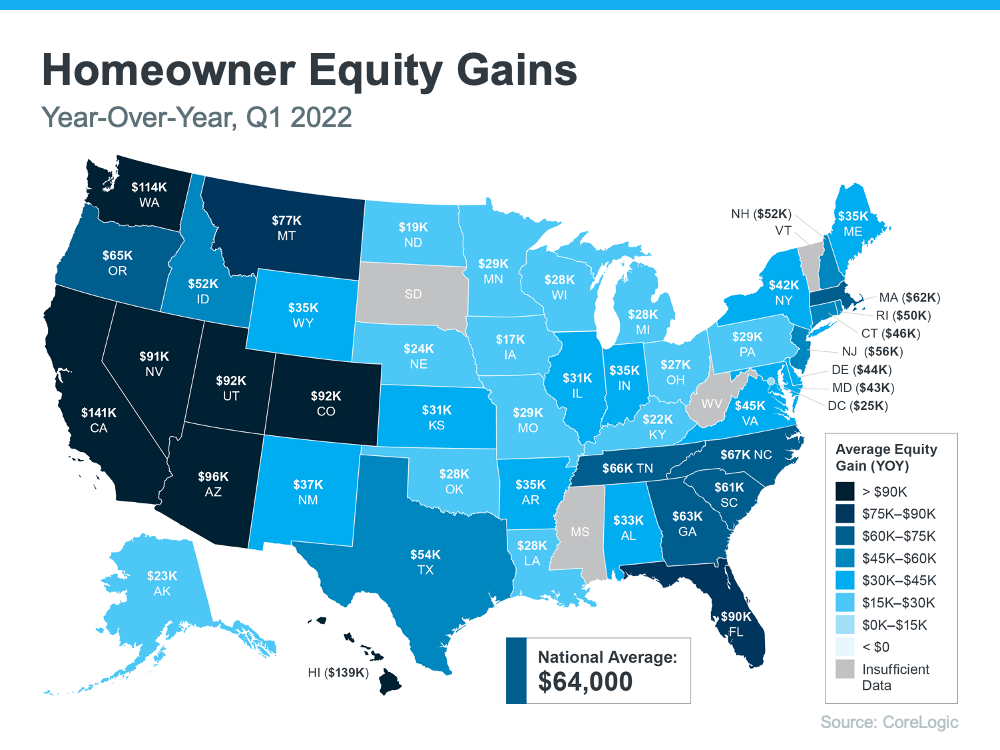
Basically, because your home value has likely climbed so much, your equity has increased too. According to the latest Homeowner Equity Insights from CoreLogicthe average homeowner's equity has grown by $64,000 over the last 12 months.

While that's the nationwide number, if you want to know what's happening in your area, look at the map below. It breaks down the average year-over-year equity growth for each state using the data from CoreLogic.

The
Average Homeowner Gained $64K in Equity over the Past Year | MyKCM

The Opportunity Your Rising Home Equity Provides

In addition to building your overall net worth, equity can also help you achieve other goals like buying your next home. When you sell your current house, the equity you built up comes back to you in the sale. In a market where homeowners are gaining so much equity, it may be just what you need to cover a large portion – if not all – of the down payment on your next home.

So, if you've been holding off on selling or you're worried about being priced out of your next home because of today's ongoing home price appreciation, rest assured your equity can help fuel your move.

Bottom Line

If you're planning to make a move, the equity you've gained can make a big impact. To find out just how much equity you have in your current home and how you can use it to fuel your next purchase, let's connect so you can get a professional equity assessment report on your house.


Posted in Market Updates
June 17, 2022

More Listings Are Coming onto the Market [INFOGRAPHIC]?

More Listings Are Coming onto the Market [INFOGRAPHIC]

More Listings Are Coming onto
the Market [INFOGRAPHIC] | MyKCM

Some Highlights

  • Worried you won't be able to find your next home after you sell? You should know data from realtor.com shows more listings are coming onto the market each month this year.
  • Having additional options can make the search for your next home. But inventory is still low overall, which means your house should still stand out when you sell.
  • If your biggest question is where you'll go if you sell, take this as encouraging news. Let's connect to start the process today.
  •  
Posted in Market Updates
June 16, 2022

Home Price Deceleration Doesn't Mean Home Price Depreciation

Home Price Deceleration Doesn't Mean Home Price Depreciation

Home Price Deceleration
Doesn't Mean Home Price Depreciation | MyKCM

Experts in the real estate industry use a number of terms when they talk about what’s happening with home prices. And some of those words sound a bit similar but mean very different things. To help clarify what’s happening with home prices and where experts say they’re going, here's a look at a few terms you may hear:

  • Appreciation is when home prices increase.
  • Depreciation is when home prices decrease.
  • Deceleration is when home prices continue to appreciate, but at a slower pace.

Where Home Prices Have Been in Recent Years

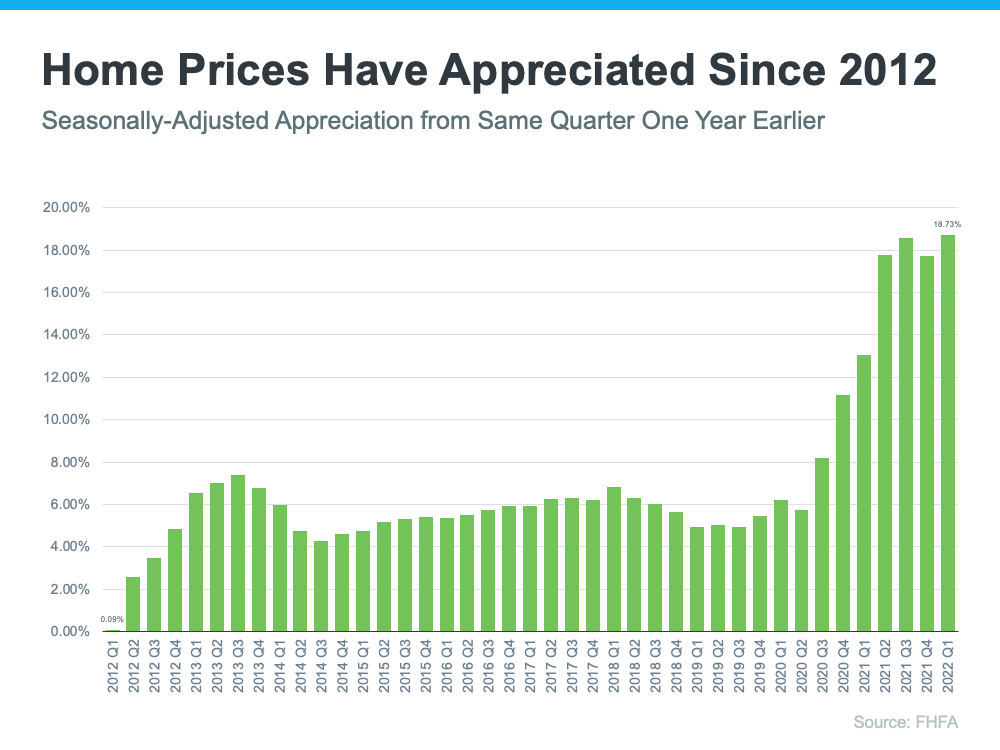
For starters, you've probably heard home prices have skyrocketed over the past two years, but homes were actually appreciating long before that. You might be surprised to learn that home prices have climbed for 122 consecutive months (see graph below):

Home
Price Deceleration Doesn't Mean Home Price Depreciation | MyKCM

As the graph shows, houses have gained value consistently over the past 10 consecutive years. But since 2020, the increase has been more dramatic as home price growth accelerated.

So why did home prices climb so much? It's because there were more buyers than there were homes for sale. That imbalance put upward pressure on home prices because demand was high and supply was low.

Where Experts Say Home Prices Are Going

While this is helpful context, if you're a buyer or seller in today's market, you probably want to know what's going to happen with home prices moving forward. Will they continue that same growth path or will home prices fall?

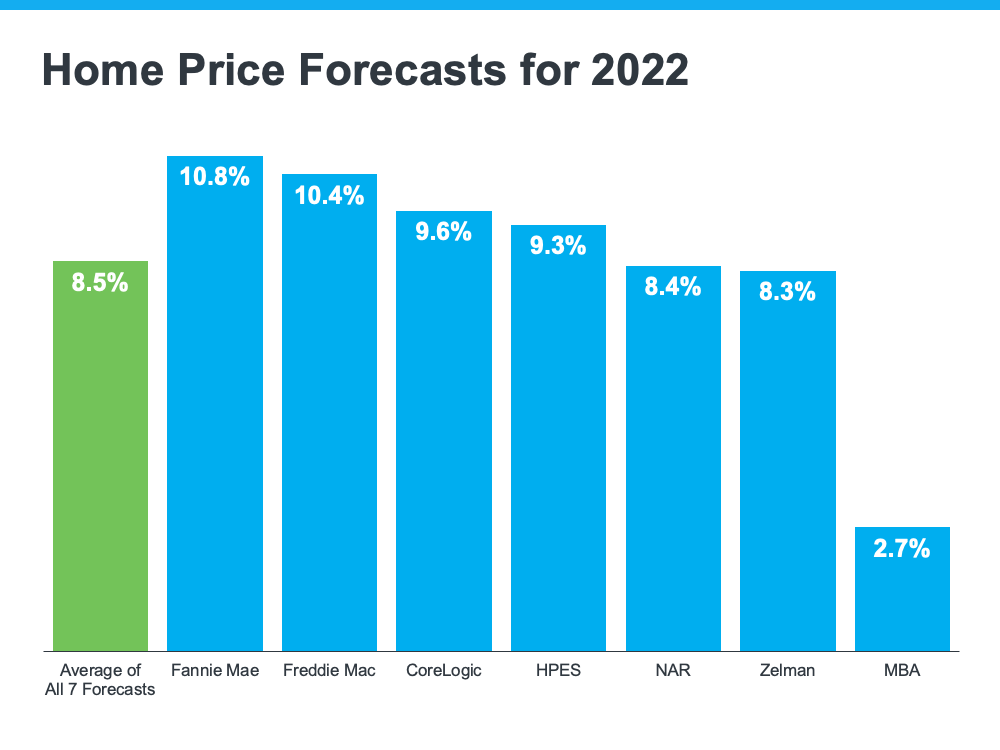
Experts are forecasting ongoing appreciation, just at a decelerated pace. In other words, prices will keep climbing, just not as fast as they have been. The graph below shows home price forecasts from seven industry leaders. None are calling for prices to fall (see graph below):

Home
Price Deceleration Doesn't Mean Home Price Depreciation | MyKCM

Mark Fleming, Chief Economist at First American, identifies a key reason why home prices won't depreciate or drop:

In today's housing market, demand for homes continues to outpace supply, which is keeping the pressure on house prices, so don't expect house prices to decline.

And although housing supply is starting to tick up, it's not enough to make home prices decline because there's still a gap between the number of homes available for sale and the volume of buyers looking to make a purchase.

Terry Loebs, Founder of the research firm Pulsenomics, notes that most real estate experts and economists anticipate home prices will continue rising. As he puts it:

With home values at record-high levels and a vast majority of experts projecting additional price increases this year and beyond, home prices and expectations remain buoyant.

Bottom Line

Experts forecast price deceleration, not depreciation. That means home prices will continue to rise, just at a slower pace. Let's connect so you can get the full picture of what's happening with home prices in our local market and to discuss your buying and selling goals.


Posted in Market Updates
June 15, 2022

A Majority of Consumers Say It's a Good Time To Sell Your House?

A Majority of Consumers Say It's a Good Time To Sell Your House

A Majority of Consumers Say
It's a Good Time To Sell Your House | MyKCM

If you're a homeowner thinking about selling your house, you're probably looking for the best time to make your move. That means you're likely balancing a number of factors, like your changing needs, where you'll go when you sell, and today's mortgage rates in order to time it just right.

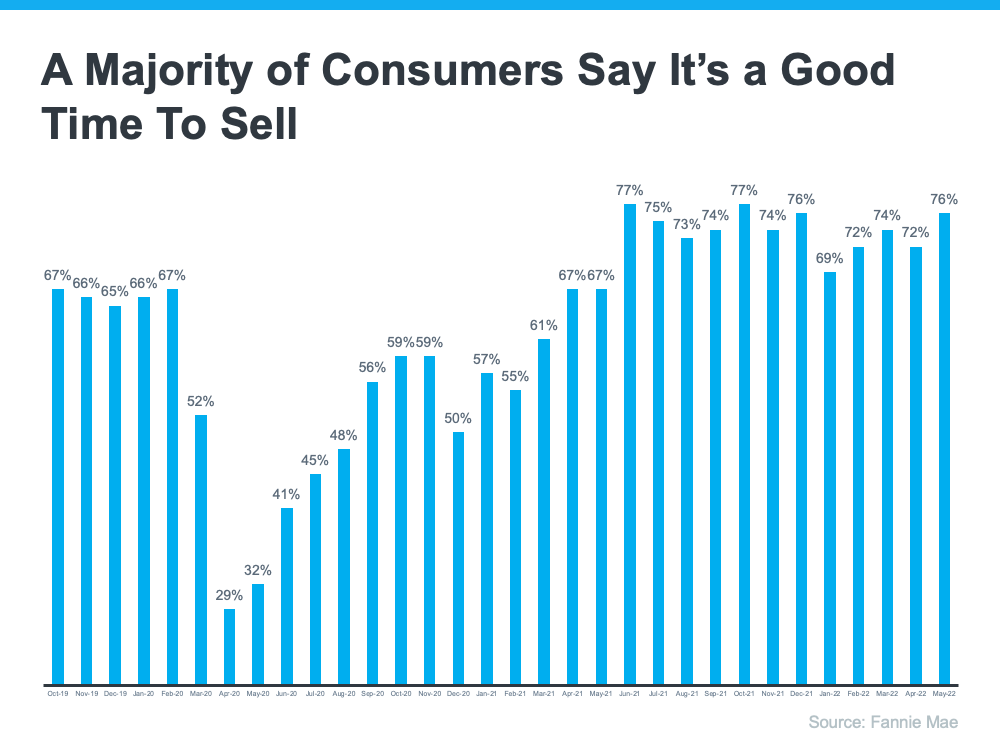
According to recent data, that sweet spot could already be here. The latest Home Purchase Sentiment Index (HPSI) by Fannie Mae finds that 76% of consumers believe now is a good time to sell.

The graph below shows the percentage of survey respondents who say it's a good time to sell a house. The big dip in March and April of 2020 reflects how consumer sentiment dropped at the beginning of the pandemic as uncertainty about the health crisis grew. Since then, the percentage has grown consistently as more people feel confident it's a good time to sell.

In fact, survey respondents think it's an even better time to sell a house today than they did in 2019, which was a strong year for the housing market. The latest survey results indicate one of the strongest peaks in seller sentiment in nearly three years (see graph below):

A
Majority of Consumers Say It's a Good Time To Sell Your House | MyKCM

What Makes Today a Good Time To Sell?

One reason so many people think it's a good time to sell is because there are still more buyers in today's market than there are homes for sale. That's driving home prices up, making it a good time to sell your house.

And if you're on the fence about whether or not to sell because you don't know where you'll go once you do, know that you might have more options today than in previous months. That's because the number of homes coming onto the market has grown each month since the start of the year. When more homes come onto the market, it gives you more opportunities to find one that meets your changing needs.

Bottom Line

While the number of homes available for sale is growing and giving you more options for your move, inventory is still low overall. That could mean it's a great time for you to sell. If you're ready to address your changing needs and take advantage of today's favorable conditions, let's connect.

Posted in Market Updates
June 14, 2022

Is the Housing Market Correcting??

Is the Housing Market Correcting?

Is the Housing Market
Correcting? | MyKCM

If you’re following the news, all of the headlines about conditions in the current housing market may leave you with more questions than answers. Is the boom over? Is the market crashing or correcting? Here's what you need to know.

The housing market is moderating compared to the last two years, but what everyone needs to remember is that the past two years were record-breaking in nearly every way. Record-low mortgage rates and millennials reaching peak homebuying years led to an influx of buyer demand. At the same time, there weren't enough homes available to purchase thanks to many years of underbuilding and sellers who held off on listing their homes due to the health crisis.

This combination led to record-high demand and record-low supply, and that wasn't going to be sustainable for the long term. The latest data shows early signs of a shift back to the market pace seen in the years leading up to the pandemic – not a crash nor a correction. As realtor.com says:

The housing market is at a turning point. . . . We're starting to see signs of a new direction, . . .

Home Showings Then and Now

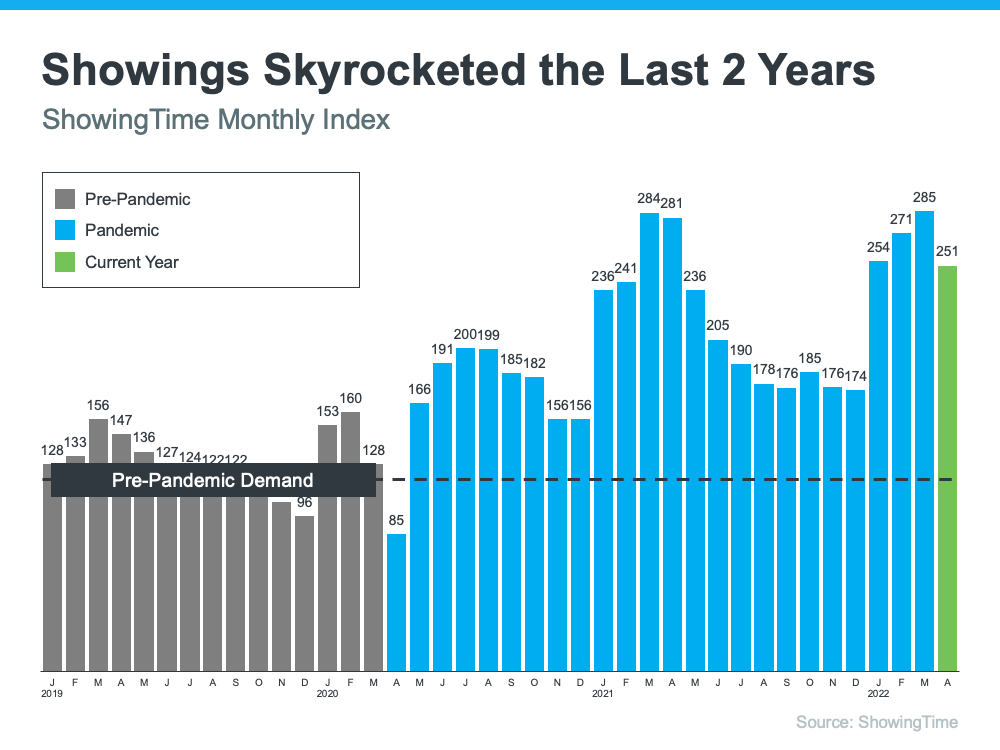
The ShowingTime Showing Index tracks the traffic of home showings according to agents and brokers. It's a good indication of buyer demand. Here's a look at that data going back to 2019 (see graph below):

Is
the Housing Market Correcting? | MyKCM

The 2019 numbers give a good baseline of pre-pandemic demand (shown in gray). As the graph indicates, home showings skyrocketed during the pandemic (shown in blue). And while current buyer demand has begun to moderate slightly based on the latest data (shown in green), showings are still above 2019 levels.

And since 2019 was such a strong year for the housing market, this helps show that the market isn't crashing – it's just at a turning point that's moving back toward more pre-pandemic levels.

Existing Home Sales Then and Now

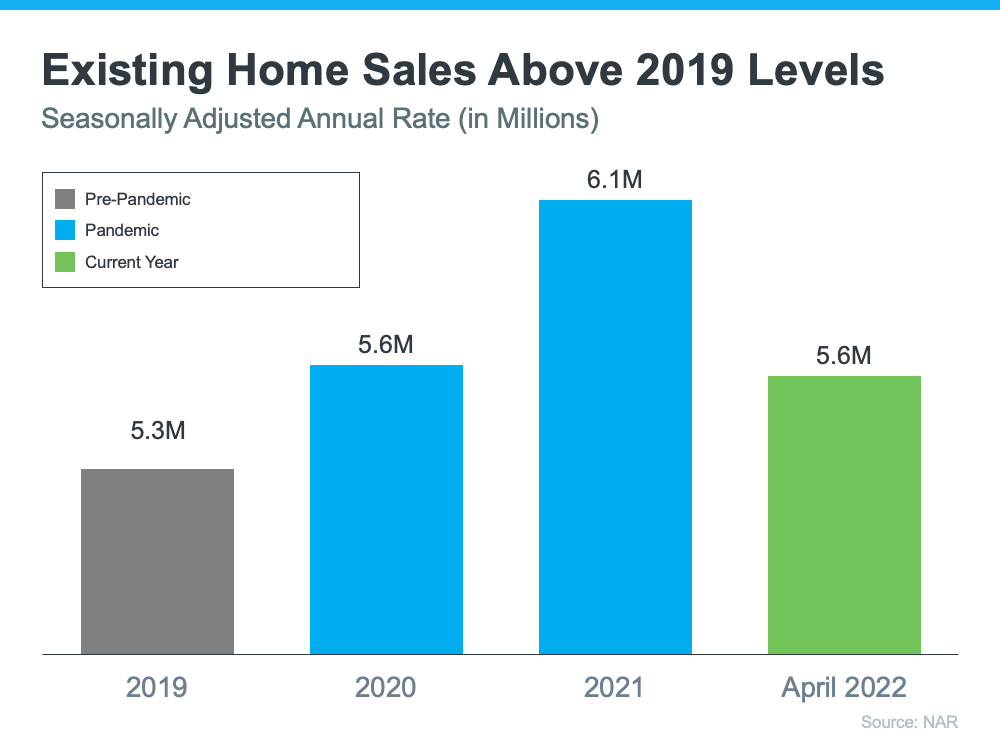
Headlines are also talking about how existing home sales are declining, but perspective matters. Here's a look at existing home sales going all the way back to 2019 using data from the National Association of Realtors (NAR) (see graph below):

Is
the Housing Market Correcting? | MyKCM

Again, a similar story emerges. The pandemic numbers (shown in blue) beat the more typical year of 2019 home sales (shown in gray). And according to the latest projections for 2022 (shown in green), the market is on pace to close this year with more home sales than 2019 as well.

It's important to compare today not to the abnormal pandemic years, but to the most recent normal year to show the current housing market is still strong. First American sums it up like this:

. . . today's housing market looks a lot like the 2019 housing market, which was the strongest housing market in a decade at the time.

Bottom Line

If recent headlines are generating any concerns, look at a more typical year for perspective. The current market is not a crash or correction. It's just a turning point toward more typical, pre-pandemic levels. Let's connect if you have any questions about our local market and what it means for you when you buy or sell this year.


Posted in Market Updates