That House That’s Been Sitting Could Be Your Best Shot at a Deal

BLOGJune 22, 2026


Open up a home search and you'll see them. Listings that have been on the market for two months. Three. Some longer.

Most buyers scroll right past them, assuming something’s wrong with the house. But that instinct could be costing you, since the longer a home sits, the more motivated the seller usually gets.

Where Some Buyers Are Finding Better Deals

If affordability has been your #1 hurdle to buying, here’s a surprisingly simple strategy that could help you finally get your foot in the door. Start with the homes that have been sitting the longest. That’s often where the best deals are.

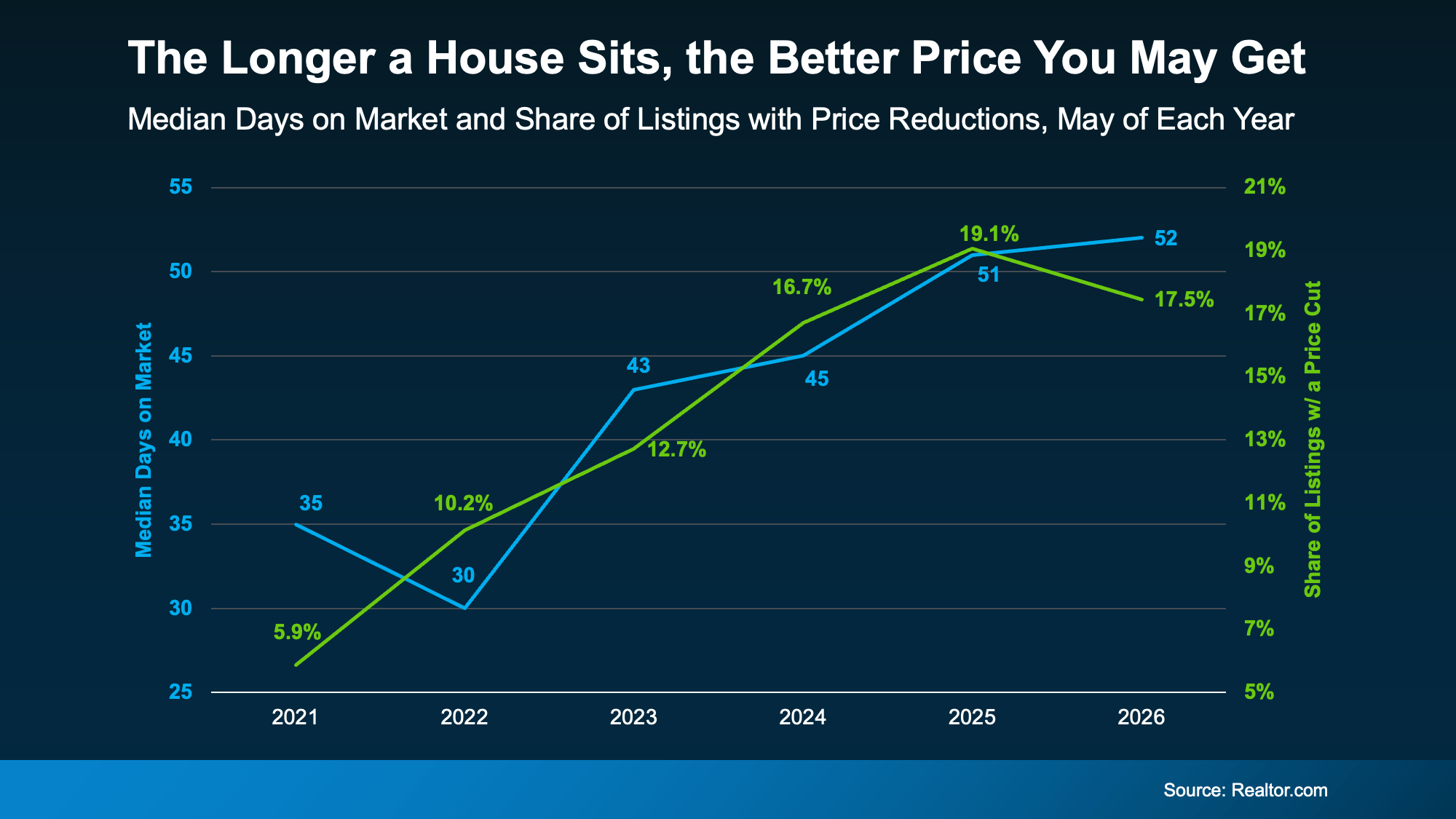
Here’s why. Data from Realtor.com shows there’s a connection between longer time on the market and lower sales prices. Basically, the longer a house sits, the more likely it is that the seller will reduce the price (see graph below):
a graph with numbers and lines

The blue line tracks how long homes stay on the market, while the green line tracks the share of homes getting a price reduction. As one climbs, so does the other.  

And if you focus on these homes that are just sitting and waiting, the opportunity for you is bigger than you may think right now.

Redfin data shows there’s $347 billion worth of stale listings on the market right now – more than ever before for this time of year. So, ask your agent to filter listings for you from oldest to newest. The home that fits your budget might already be there. Just further down the list than you thought.

Lingering Doesn’t Always Mean Something’s Wrong 

Let’s say you do that and something catches your eye. Still, you might be questioning why the home has been sitting in the first place. Just remember, sometimes it has nothing to do with the home itself.

According to Redfin, common causes are:

  • The asking price was set too high to start

  • The home didn’t show well online

  • There are a lot of homes for sale in the area, so it just got buried

So, nothing that’s necessarily a dealbreaker, or even anything that’s wrong with the home itself. If there’s a real issue, a thorough inspection will surface it. And that’s information you can use to negotiate. Not a reason to assume it’s a house worth skipping over.

How To Turn a Lingering Listing into a Win

So how do you capitalize on a lingering listing? According to USA Today, you have two main levers to pull.

The first is price. Work with your agent to study what comparable homes recently sold for, then build an offer around that. Coming in below asking price is fair game when a home has been sitting.

The second is concessions. If a seller won’t budge much on price, they may still help in other ways, like covering some closing costs, repair credits, or even a mortgage rate buydown that lowers your monthly payment.

A local agent has the context to tell which homes are the real opportunities and which are skippable.

Bottom Line

A house sitting on the market isn’t always a glaring red flag. In today’s market, it may be your best opportunity yet.

For help deciding which lingering listings are actually worth a second look, let’s connect.

The information contained, and the opinions expressed, in this article are not intended to be construed as investment advice. Keeping Current Matters, Inc. does not guarantee or warrant the accuracy or completeness of the information or opinions contained herein. Nothing herein should be construed as investment advice. You should always conduct your own research and due diligence and obtain professional advice before making any investment decision. Keeping Current Matters, Inc. will not be liable for any loss or damage caused by your reliance on the information or opinions contained herein.

Feb. 3, 2023

You May Not Need as Much as You Think for Your Down Payment [INFOGRAPHIC]?

You May Not Need as Much as You Think for Your Down Payment [INFOGRAPHIC]

You May Not Need as Much as
You Think for Your Down Payment [INFOGRAPHIC] | MyKCM

Some Highlights

  • Many people believe you need to put down 20% of the purchase price when you buy a home. But recent homebuyers actually put down far less on their purchase.
  • And with programs like FHA loansVA loans, and USDA loans, some qualified buyers are able to put down as little as 0-3.5%.
  • Let's connect to make sure you have a trusted lender and can find out if you're ready to buy a home sooner rather than later.
Posted in Market Updates
Feb. 2, 2023

Experts Forecast a Turnaround in the Housing Market in 2023?

Experts Forecast a Turnaround in the Housing Market in 2023

Experts Forecast a
Turnaround in the Housing Market in 2023 | MyKCM

The housing market has gone through a lot of change recently, and much of that was a result of how quickly mortgage rates rose last year.

Now, as we move through 2023, there are signs things are finally going to turn around. Home price appreciation is slowing from the recent frenzy, mortgage rates are coming down, inflation is easing, and overall market activity is starting to pick up. All of that's great news for the housing market this year. Here's what experts are saying.

Cristian deRitis, Deputy Chief Economist, Moody's Analytics:

The current state of the housing market is that it is certainly in transition.

Susan Wachter, Professor of Real Estate and Finance, University of Pennsylvania's Wharton School:

Housing is going to ease up. I think 2023 will be a turnaround year.

Lawrence Yun, Chief Economist, National Association of Realtors (NAR):

Mortgage rates have fallen in the recent past weeks, so I'm very hopeful that the worst in home sales is probably coming to an end.

Robert Dietz, Chief Economist and Senior Vice President, National Association of Home Builders (NAHB):

. . . it appears a turning point for housing lies ahead. In the coming quarters, single-family home building will rise off of cycle lows as mortgage rates are expected to trend lower and boost housing affordability.

Bottom Line

If you're thinking about making a move this year, a turnaround in the housing market could be exactly what you've been waiting for. Let's connect to talk about the latest trends in our area.


Posted in Market Updates
Feb. 1, 2023

Should You Rent Your House or Sell It??

Should You Rent Your House or Sell It?

Should You Rent Your House
or Sell It? | MyKCM

If you're a homeowner ready to make a move, you may be thinking about using your current house as a short-term rental property instead of selling it. A short-term rental (STR) is typically offered as an alternative to a hotel, and they're an investment that's gained popularity in recent years. According to a Harris Poll survey, 28% of homeowners have considered using a rental service to temporarily rent out their home for additional income.

Owning a short-term rental can be a tempting idea, but you may find the reality of being responsible for one difficult to take on. Here are some of the challenges you could face if you rent out your house instead of selling it.

A Short-Term Rental Comes with Responsibilities

Successfully owning and renting a house takes work. Think through your ability to make that commitment, especially if you plan to use a platform that advertises your rental listing. Most of them have specific requirements hosts have to meet, and it takes a lot of work. A recent article from Bankrate explains:

Managing a rental property can be time-consuming and challenging. Are you handy and able to make some repairs yourself? If not, do you have a network of affordable contractors you can reach out to in a pinch? Consider whether you want to take on the added responsibility of being a landlord, which means screening tenants and fielding issues, among other responsibilities, or paying for a third party to take care of things instead.

Not only is there the upfront time and cost of owning a short-term rental, but there are also risks that could come up for you down the road. Investopedia warns:

Risks of hosting include renting your place to rude guests, theft or damaged property, complaints from neighbors, and potential regulatory violations depending on your location.

There's a lot to consider before taking the leap and converting your house into a short-term rental. If you aren't ready for the work it takes, it could be wiser to sell instead.

Your House May Not Be Ideal for Your Rental Goals

Not every house ends up being a profitable short-term rental either. One of the biggest factors is where your home is located. The less likely your neighborhood is to be a travel destination, the fewer requests you should expect from potential renters—and that impacts your bottom line. An article from the National Association of Realtors (NAR) advises:

When it comes to the viability of profitable STRs . . . consider factors like location, amenities, and whether the property is appealing. Most people seek STRs in locations where they vacation, so proximity to attractions is important. Likewise, the property should cater to a variety of travelers.

It's smart to do your homework and learn how much rentals in your area go for, how much business they get throughout the year, and how this compares to your goals.

Bottom Line

Converting your home into a short-term rental isn't a decision you should make without doing your research. To decide if selling your house is a better alternative, let's connect today.


Posted in Market Updates
Jan. 30, 2023

Where Will You Go If You Sell? You Have Options.?

Where Will You Go If You Sell? You Have Options.

Where Will You Go If You
Sell? You Have Options. | MyKCM

There are plenty of good reasons you might be ready to move. No matter your motivations, before you list your current house, you need to consider where you'll go next.

In today's market, it makes sense to explore all your options. That includes both homes that have been lived in before as well as newly built ones. To help you decide which is right for you, let's compare the benefits of each. Regardless of which option you choose to explore, working with a trusted real estate professional throughout the process is essential.

The Benefits of Newly Built Homes

First, let's look at the benefits of purchasing a newly constructed home. With a brand-new house, you'll be able to:

1. Build your dream home

If you build a home from the ground up, you'll have the option to select the custom features you want, including appliances, finishes, landscaping, layout, and more. Bankrate puts it like this:

Building means customizing. . . . instead of wishing your home had a certain kind of flooring, a sunroom or some other special amenity, you'll be able to tailor the property to your exact needs. You also won't be limited to a specific location or neighborhood.

2. Take advantage of builder concessions

In today's market, a lot of home builders are working hard to sell their current inventory before they add more to their mix. That means many of them are offering concessions and are more willing to negotiate with buyers. That could work to your advantage in the process.

3. Minimize home repairs

Many builders offer a warranty, so you'll have peace of mind on unlikely repairs. Plus, you won't have as many little improvement projects to tackle. As realtor.com says:

. . . if something goes wrong with your new home, not only are there likely some manufacturer warranties in place, but many builders also include additional home warranties . . .

4. Take advantage of energy efficiency

When building a home, you can choose brand-new, energy-efficient options to help lower your utility costs, protect the environment, and reduce your carbon footprint.

The Benefits of Existing Homes

Now, let's compare those to the perks that come with buying an existing home. With a pre-existing home, you can:

1. Explore a wider variety of home styles and floorplans

With decades of homes to choose from, you'll have a broader range of floorplans and designs available.

2. Appreciate that lived-in charm

The character of older homes is hard to reproduce. If you value timeless craftsmanship or design elements, you may prefer an existing home.

3. Join an established neighborhood

Existing homes give you the option to get to know the neighborhood, community, or traffic patterns before you commit. Plus, they have more developed landscaping and trees, which can give you additional privacy and curb appeal.

4. Move in faster

If you have a short timeframe to move or you just don't want the process to take several months while your home is under construction, buying an existing home might make sense for you. U.S. News explains:

When you're choosing a home, existing or new, you should also consider how long it might take to move into that home. Just because you have a contract doesn't mean that your new home will be completed (or even started) at the time you agree to the purchase. It can be a struggle waiting for the walls to go up as you wonder what your home will become.

When thinking about where you'll go after you sell your house, remember your options. As you start your search, think about what's most important to you. By working with a trusted real estate agent, you can be confident you're making the most educated, informed decision.

Bottom Line

If you have questions about the options in our area, let's discuss what’s available and what’s right for you, so you're ready to make your next move with confidence.


Posted in Market Updates
Jan. 27, 2023

Homeownership Builds Your Wealth over Time [INFOGRAPHIC]?

Homeownership Builds Your Wealth over Time [INFOGRAPHIC]

Homeownership Builds Your
Wealth over Time [INFOGRAPHIC] | MyKCM

Some Highlights

  • If you're thinking of buying a home this year, be sure to factor in the long-term benefits of homeownership.
  • On average, nationwide, home prices appreciated by 288.7% over the last 32 years. That means homeowners grow their net worth significantly in the long term.
  • Homeownership wins over time. Let's connect so you can start your homebuying journey today.
  •  
Posted in Market Updates
Jan. 26, 2023

Why It Makes Sense To Move Before Spring?

Why It Makes Sense To Move Before Spring

Why It Makes Sense To Move
Before Spring | MyKCM

Spring is usually the busiest season in the housing market. Many buyers wait until then to make their move, believing it's the best time to find a home. However, that isn't always the case when you factor in the competition you could face with other buyers at that time of year. If you're ready to buy a home, here's why it makes sense to move before the spring market picks up.

Spring Should Bring a Wave of Buyers to the Market

In most years, the housing market goes through predictable seasonal trends in activity. Winter is typically a quiet point in the year, while spring sees a surge of buyers begin their search. And experts project that this year will be no exception.

Right now, buyer demand is low due to a combination of normal seasonal trends and a reaction to last year's rise in mortgage rates. But rates have started to come down since last November, which has more and more potential buyers planning to jump into the market. That means right now is a sweet spot if you're in a good position to buy, before more buyers reappear. Affordability is beginning to improve, but demand is still low — for now. Lawrence Yun, Chief Economist at the National Association of Realtors (NAR), shares:

. . . expect sales to pick up again soon since mortgage rates have markedly declined after peaking late last year.

If you're ready to buy a home, right now is the best time to do so before your competition grows and more buyers enter the market.

Today's Sellers Are Motivated

Low demand from buyers often means sellers are more motivated to work with you, and that can set you up to buy a home on your terms. In fact, sellers have been more willing to negotiate this winter because there are fewer buyers in the market. According to a recent article from Forbes:

. . . sellers gave concessions to buyers in 41.9% of home sales in the fourth quarter of last year.

But keep in mind, the advantages buyers have this winter won't last forever. The competition you face could be greater if you wait until spring to make a move, and increased buyer demand means sellers will have less motivation to negotiate with you. Be sure to work with a trusted real estate professional to learn what you can expect in your local market right now.

Bottom Line

If you're in a good position to make a move, it may make sense to move before spring. Working with your team of expert real estate advisors is the best way to learn about the current market and what it means for you. Let's connect today to determine the best plan to achieve your homebuying goals.


Posted in Market Updates
Jan. 24, 2023

The 3 Factors That Affect Home Affordability?

The 3 Factors That Affect Home Affordability

The 3 Factors That Affect
Home Affordability | MyKCM

If you've been following the housing market over the last couple of years, you've likely heard about growing affordability challenges. But according to experts, the key factors that determine housing affordability are projected to improve this year. Selma Hepp, Executive, Deputy Chief Economist at CoreLogicshares:

. . . with slowly improving affordability and a more optimistic economic outlook than previously believed, the housing market could show resilience in 2023.

The three measures used to establish home affordability are home prices, mortgage rates, and wages. Here's a closer look at each one.

1. Mortgage Rates

Mortgage rates shot up to over 7% last year, causing many buyers to put their plans on hold. But things are looking different today as rates are starting to come down. George Ratiu, Senior Economist at realtor.comexplains:

Let's celebrate some good news. . . . mortgage rates are down. With inflation showing a tangible slowdown, I do expect mortgage rates to follow suit in the months ahead.

Even a small change in rates can impact your purchasing power. Nadia Evangelou, Director of Forecasting for the National Association of Realtors (NAR), gives this context:

With a 6% rate instead of 7%, buyers pay about $2,700 less every year on their mortgage. As a result, owning a home becomes affordable to about 1.4 million more renters and 4.3 million more homeowners.

If 7% rates paused your homebuying plans last year, this could be the opportunity you need to get back in the game. Be sure to work with a team of experts who know the latest on mortgage rates and can give you the best advice for the current market.

2. Home Prices

The second factor at play is home prices. Home prices have made headlines over the past few years because they skyrocketed during the pandemic. When discussing home prices in 2023, Lawrence Yun, Chief Economist at NAR, says:

After a big boom over the past two years, there will essentially be no change nationally . . . Half of the country may experience small price gains, while the other half may see slight price declines.

So, while prices will likely be flat this year in some markets, others could see small gains or slight declines. It all depends on your local area. For insight into what's happening in your market and how prices are impacting affordability, reach out to a trusted real estate professional.

3. Wages

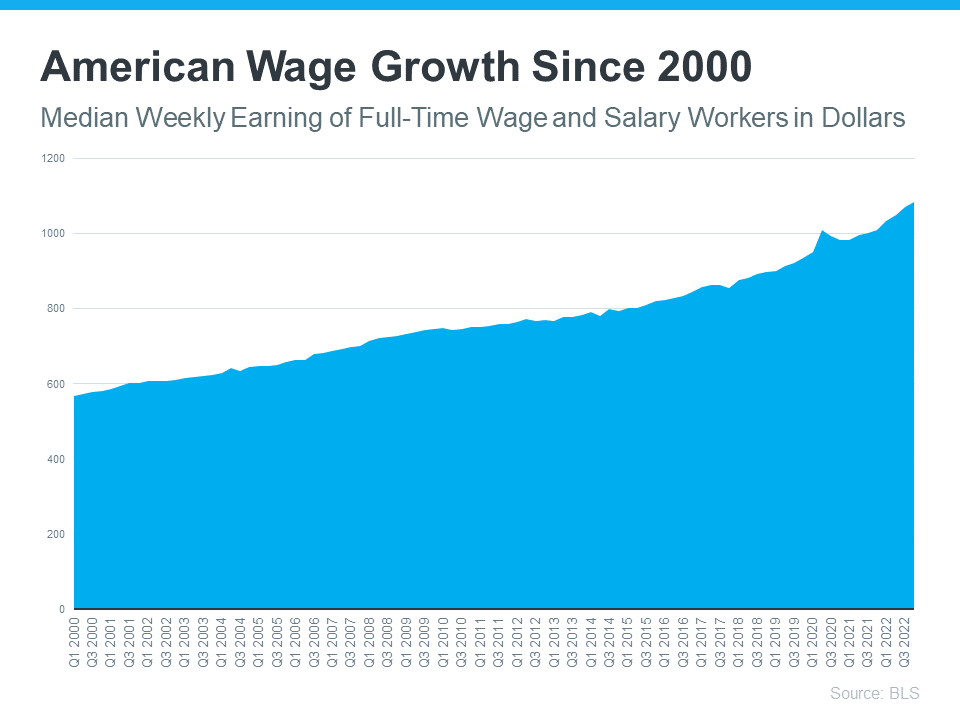
The final component in the affordability equation is wages. The graph below uses data from the Bureau of Labor Statistics (BLS) to show how wages have increased over time:

The 3 Factors That Affect Home Affordability | MyKCM

When you think about affordability, remember the full picture includes more than just mortgage rates and prices. Wages need to be factored in as well. Because wages have been rising, many buyers have renewed opportunity in the market.

While affordability hurdles are not completely going away this year, based on current trends and projections, 2023 should bring some sense of relief to homebuyers who have faced growing challenges. As Mike Fratantoni, Chief Economist at the Mortgage Bankers Association (MBA), says:

Rates are expected to move lower for the year, and home price growth is expected to cool, both of which will help affordability challenges.

Bottom Line

If you have questions, let's connect. You'll also want to make sure you have a trusted lender so you can explore your financing options. You may be closer to owning a home than you think.


Posted in Market Updates
Jan. 23, 2023

Want To Sell Your House? Price It Right.?

Want To Sell Your House? Price It Right.

Want To Sell Your House?
Price It Right. | MyKCM

Last year, the housing market slowed down in response to higher mortgage rates, and that had an impact on home prices. If you're thinking of selling your house soon, that means you'll want to adjust your expectations accordingly. As realtor.com explains:

. . . some of the more prominent pandemic trends have changed, so sellers might wish to adjust accordingly to get the best deal possible.

In a more moderate market, how you price your house will make a big difference to not only your bottom line, but to how quickly your house could sell. And the reality is, homes priced right are still selling in today's market.

Why Pricing Your House Appropriately Matters

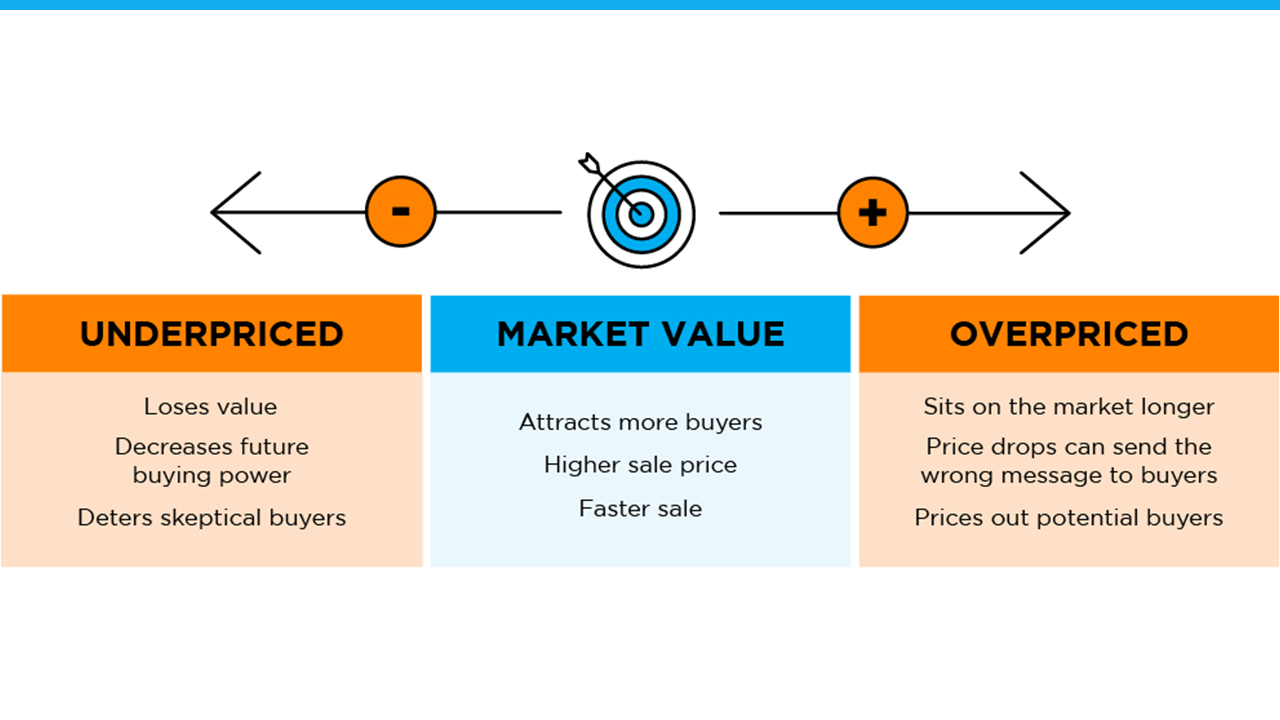
Especially today, your asking price sends a message to potential buyers.

If it's priced too low, you may leave money on the table or discourage buyers who may see a lower-than-expected price tag and wonder if that means something is wrong with the home.

If it's priced too high, you run the risk of deterring buyers. When that happens, you may have to lower the price to try to reignite interest in your house when it sits on the market for a while. But be aware that a price drop can be seen as a red flag by some buyers who will wonder what that means about the home.

To avoid either headache, price it right from the start. A real estate professional knows how to determine that ideal asking price. They balance the value of homes in your neighborhood, current market trends, buyer demand, the condition of your house, and more to find the right price. This helps lead to stronger offers and a greater likelihood your house will sell quickly.

The visual below helps summarize the impact your asking price can have:

Want
To Sell Your House? Price It Right. | MyKCM

Bottom Line

Homes that are priced at current market value are still selling. To make sure you price your house appropriately, maximize your sales potential, and minimize your hassle, let's connect.


Posted in Market Updates
Jan. 20, 2023

What's Really Happening with Home Prices? [INFOGRAPHIC]?

What's Really Happening with Home Prices? [INFOGRAPHIC]

What's Really Happening
with Home Prices? [INFOGRAPHIC] | MyKCM

Some Highlights

  • If you're thinking about selling your house, recent headlines about home prices falling month-over-month may have you second guessing your decision—but perspective matters.
  • While home prices are down slightly month-over-month in some markets, home values are still up almost 10% nationally on a year-over-year basis. A nearly 10% gain is still dramatic compared to the more normal level of appreciation, which is 3-4%.
  • Let's connect to find out how much equity you have in your current home and how you can use it to fuel your next purchase.
  •  
Posted in Market Updates
Jan. 19, 2023

Pre-Approval in 2023: What You Need To Know?

Pre-Approval in 2023: What You Need To Know

Pre-Approval in 2023: What
You Need To Know | MyKCM

One of the first steps in your homebuying journey is getting pre-approved. To understand why it's such an important step, you need to understand what pre-approval is and what it does for you. Business Insider explains:

In a preapproval [sic], the lender tells you which types of loans you may be eligible to take out, how much you may be approved to borrow, and what your rate could be.

Basically, pre-approval gives you critical information about the homebuying process that'll help you understand your options and what you may be able to borrow.

How does it work? As part of the pre-approval process, a lender will look at your finances to determine what they'd be willing to loan you. From there, your lender will give you a pre-approval letter to help you understand how much money you can borrow. That can make it easier when you set out to search for homes because you'll know your overall numbers. And with higher mortgage rates impacting affordability for many buyers today, a solid understanding of your numbers is even more important.

Pre-Approval Helps Show You're a Serious Buyer

Another added benefit is pre-approval can help a seller feel more confident in your offer because it shows you're serious about buying their house. A recent article from Forbes notes:

From the seller's perspective, a preapproval [sic] letter from a reputable local lender often can make the difference between accepting and rejecting an offer.

This goes to show, even though you may not face the intense bidding wars you saw if you tried to buy during the pandemic, pre-approval is still an important part of making a strong offer. In fact, Christy Bieber, Personal Finance Writer at The Motley Fool explains it may be the most important part of making an offer:

Pre-approval maximizes the chances you'll be able to actually close the deal – and sellers want to see that.

The fact that a pre-approval gives you a better chance of getting your offer accepted is undoubtedly the most important reason to complete this step . . .

Bottom Line

Getting pre-approved is an important first step towards buying a home. It lets you know what you can borrow and shows sellers you're serious about purchasing their home. Connect with a local real estate professional and a trusted lender so you have the tools you need to purchase a home in today's market.


Posted in Market Updates