That House That’s Been Sitting Could Be Your Best Shot at a Deal

BLOGJune 22, 2026


Open up a home search and you'll see them. Listings that have been on the market for two months. Three. Some longer.

Most buyers scroll right past them, assuming something’s wrong with the house. But that instinct could be costing you, since the longer a home sits, the more motivated the seller usually gets.

Where Some Buyers Are Finding Better Deals

If affordability has been your #1 hurdle to buying, here’s a surprisingly simple strategy that could help you finally get your foot in the door. Start with the homes that have been sitting the longest. That’s often where the best deals are.

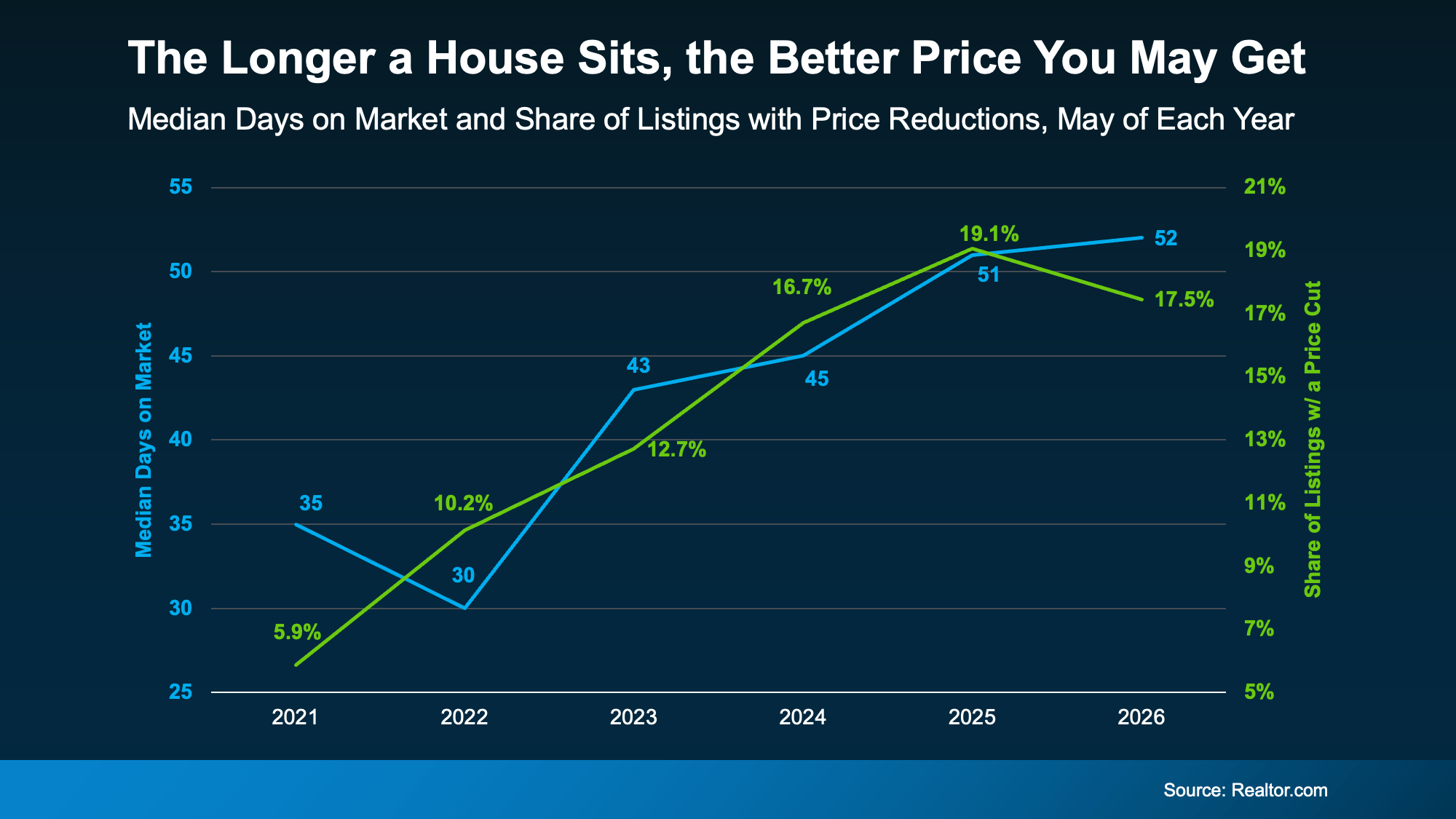
Here’s why. Data from Realtor.com shows there’s a connection between longer time on the market and lower sales prices. Basically, the longer a house sits, the more likely it is that the seller will reduce the price (see graph below):
a graph with numbers and lines

The blue line tracks how long homes stay on the market, while the green line tracks the share of homes getting a price reduction. As one climbs, so does the other.  

And if you focus on these homes that are just sitting and waiting, the opportunity for you is bigger than you may think right now.

Redfin data shows there’s $347 billion worth of stale listings on the market right now – more than ever before for this time of year. So, ask your agent to filter listings for you from oldest to newest. The home that fits your budget might already be there. Just further down the list than you thought.

Lingering Doesn’t Always Mean Something’s Wrong 

Let’s say you do that and something catches your eye. Still, you might be questioning why the home has been sitting in the first place. Just remember, sometimes it has nothing to do with the home itself.

According to Redfin, common causes are:

  • The asking price was set too high to start

  • The home didn’t show well online

  • There are a lot of homes for sale in the area, so it just got buried

So, nothing that’s necessarily a dealbreaker, or even anything that’s wrong with the home itself. If there’s a real issue, a thorough inspection will surface it. And that’s information you can use to negotiate. Not a reason to assume it’s a house worth skipping over.

How To Turn a Lingering Listing into a Win

So how do you capitalize on a lingering listing? According to USA Today, you have two main levers to pull.

The first is price. Work with your agent to study what comparable homes recently sold for, then build an offer around that. Coming in below asking price is fair game when a home has been sitting.

The second is concessions. If a seller won’t budge much on price, they may still help in other ways, like covering some closing costs, repair credits, or even a mortgage rate buydown that lowers your monthly payment.

A local agent has the context to tell which homes are the real opportunities and which are skippable.

Bottom Line

A house sitting on the market isn’t always a glaring red flag. In today’s market, it may be your best opportunity yet.

For help deciding which lingering listings are actually worth a second look, let’s connect.

The information contained, and the opinions expressed, in this article are not intended to be construed as investment advice. Keeping Current Matters, Inc. does not guarantee or warrant the accuracy or completeness of the information or opinions contained herein. Nothing herein should be construed as investment advice. You should always conduct your own research and due diligence and obtain professional advice before making any investment decision. Keeping Current Matters, Inc. will not be liable for any loss or damage caused by your reliance on the information or opinions contained herein.

Sept. 3, 2021

Your Agent Is Key When Pricing Your House [INFOGRAPHIC]?

Your Agent Is Key When Pricing Your House [INFOGRAPHIC]

Your Agent Is Key When
Pricing Your House [INFOGRAPHIC] | MyKCM

Some Highlights

  • Pricing your house right takes market experience and expertise.
  • To find the best list price, your agent balances current market demand, values of homes in your neighborhood, where prices are headed, and your home's condition.
  • If you're ready to sell, don't guess on the price. Let's connect today so we price your house to attract multiple offers and maximize your return on investment.
Posted in Market Updates
Sept. 2, 2021

5 Reasons Today's Housing Market Is Anything but Normal?

5 Reasons Today's Housing Market Is Anything but Normal

5 Reasons Today's
Housing Market Is Anything but Normal | MyKCM

There are many headlines out there that claim we're reverting to a more normal real estate market. That would indicate the housing market is returning to the pre-pandemic numbers we saw from 2015-2019. But that's not happening. The market is still extremely vibrant as demand is still strong even while housing supply is slowly returning.

Here's the definition of normal from the Merriam-Webster Dictionary:

conforming to a type, standard, or regular pattern: characterized by that which is considered usual, typical, or routine.

Using this definition, here are five housing industry metrics that prove we're nowhere near normal.

1. Mortgage Rates

If we look at the 30-year mortgage rate chronicled by Freddie Mac, we can see the average rates by decade:

  • 1970s: 8.86%
  • 1980s: 12.7%
  • 1990s: 8.12%
  • 2000s: 6.29%
  • 2010s: 4.09%

Today, the average mortgage rate stands at 2.87%, which is very close to the historic low.

Currently, mortgage rates are anything but usual, typical, or routine.

2. Home Price Appreciation

According to Black Knight, a housing data and analytics company, the average annual appreciation on residential real estate prices since 1995 has been 4.14%.

According to the latest forecast from the National Association of Realtors (NAR), home price appreciation will hit 14.1% this year, which will be greater than any year since Black Knight began collecting this data.

Currently, home price appreciation is anything but usual, typical, or routine.

3. Months' Supply of Inventory (Homes for Sale)

According to NAR:

Months' supply refers to the number of months it would take for the current inventory of homes on the market to sell given the current sales pace. Historically, six months of supply is associated with moderate price appreciation, and a lower level of months' supply tends to push prices up more rapidly.

As of the latest Existing Homes Sales Report from NAR, the current months' supply of inventory stands at 2.6. That's less than half of a normal supply.

Currently, the supply of homes for sale is anything but usual, typical, or routine.

4. Days It Takes To Sell a Home

The days-on-market metric gives an indication of how hot a market is and how quickly homes are selling. In 2019, prior to the pandemic, the average days on market stood at 35, according to NAR. Today, that number is cut in half and is now at 17 days.

Currently, the days-on-market metric is anything but usual, typical, or routine.

5. Number of Offers per Listing

According to NAR, the number of offers per listing stood at 2.2 in 2019. Today, that number is double at 4.5.

Currently, the number of offers per listing is anything but usual, typical, or routine.

Bottom Line

When…

  1. Mortgage rates are near historic lows
  2. Price appreciation is at historic highs
  3. Housing inventory is less than half of the normal amount
  4. The time it takes to sell a home is cut in half, and
  5. There are twice as many offers on each house

…it's hard to say we're in a normal market.


Posted in Market Updates
Sept. 1, 2021

What You Can Do Right Now To Prepare for Homeownership?

What You Can Do Right Now To Prepare for Homeownership

What You Can Do Right Now To
Prepare for Homeownership | MyKCM

As rent prices continue to soar, many renters want to know what they can do to get ready to buy their first home. According to recent data from ApartmentList.com:

The first half of 2021 has seen the fastest growth in rent prices since the start of our estimates in 2017. Our national rent index has increased by 11.4 percent since January . . . .

Those rising rental costs may make it seem impossible to prepare for homeownership if you're a renter. But the truth is, there are ways you can – and should – prepare to purchase your first home. Here's some expert advice on what to do if you're ready to learn more about how to escape rising rents.

Start Saving – Even Small Amounts – Now

Experts agree, setting aside what you can – even smaller amounts of money – into a dedicated savings account is a great starting point when it comes to saving for a down payment. As Cindy Zuniga-Sanchez, Founder of Zero-Based Budget Coaching LLCsays:

I recommend saving for a home in a ‘sinking fund' . . . . This is a savings account separate from your emergency fund that you use to save for a short or mid-term expense.

Zuniga-Sanchez adds saving in smaller increments can help make a large goal – such as saving for a down payment –achievable:

Breaking up your goals into smaller bite-sized pieces by saving incrementally can make a large daunting number more manageable.

Assess Your Finances and Work on Your Credit

Another tip experts recommend: take a look at your overall finances and credit score and find ways to reduce your debt. According to the HUD, the average credit score of first-time homebuyers is 716. If you're not sure what your credit score is, there are numerous online tools that can help you check. If your score is below that average, don't fret. Remember that an average means there are homeowners with credit scores both above and below that threshold.

If you find out your score is below the average, there are several ways to improve your credit before you apply for a loan. HUD recommends reducing your debt as much as you can, paying your bills on time, and using your credit card responsibly.

Start the Conversation with Your Advisor Today

Finally, it's important to talk to someone who understands the market and what it takes to become a first-time homebuyer. That's where we come in. A trusted advisor can help you navigate your specific market and talk you through all the available options. Having the right network of real estate and lending professionals in your corner can help you plan for the homebuying process as well as determine what you can afford and how you can get pre-approved when you're ready.

Most importantly, we can help you understand how homeownership is achievable. As Lauren Bringle, Accredited Financial Advisor with Self Financial, says:

Don't write home ownership off just because you have a low income . . . . With the right tools, resources and assistance, you could still achieve your dream.

Bottom Line

If you're planning to be a homeowner one day, the best thing you can do is start preparing now. Even if you don't think you'll purchase for a few years, let's connect today to discuss the process and to set you up for success on your journey to homeownership.


Posted in Market Updates
Aug. 31, 2021

What Buyers and Sellers Need To Know About the Appraisal Gap?

What Buyers and Sellers Need To Know About the Appraisal Gap

What Buyers and Sellers Need
To Know About the Appraisal Gap | MyKCM

It's economy 101 – when supply is low and demand is high, prices naturally rise. That's what's happening in today's housing market. Home prices are appreciating at near-historic rates, and that's creating some challenges when it comes to home appraisals.

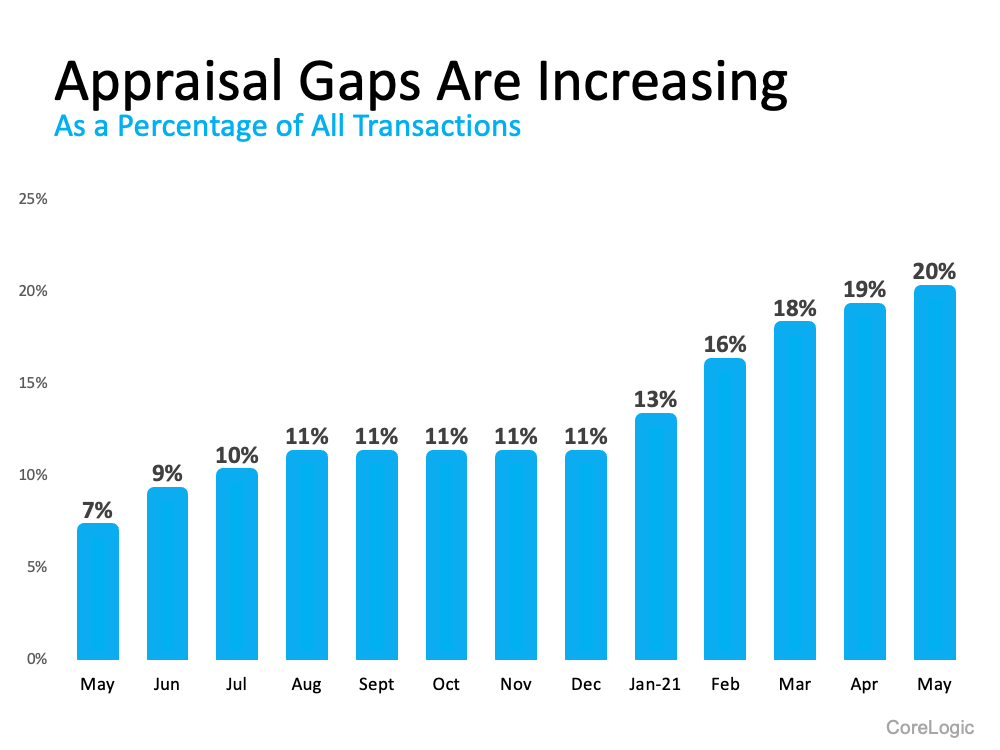
In recent months, it's become increasingly common for an appraisal to come in below the contract price on the house. Shawn Telford, Chief Appraiser for CoreLogic, explains it like this:

Recently, we observed buyers paying prices above listing price and higher than the market data available to appraisers can support. This difference is known as ‘the appraisal gap . . . .'

Why does an appraisal gap happen?

Basically, with the heightened buyer demand, purchasers are often willing to pay over asking to secure the home of their dreams. If you've ever toured a house you've fallen in love with, you understand. Once you start to picture yourself and your furniture in the rooms, you want to do everything you can to land the property, including putting in a high offer to try to beat out other would-be buyers.

When the appraiser comes in, they look at things a bit more objectively. Their job is to assess the inherent value of the home, so they're going to study the facts. Dustin Harris, Appraiser Coach, drives this point home:

It's important for everyone to understand that the appraiser's job in the end is to remain that unbiased third party, to truly tell the client what that home is worth in the current market, regardless of what decisions have been made on the price side of things.

In simple terms, while homebuyers may be willing to pay more, appraisers are there to assess the market value of the home. Their goal is to make sure the lender isn't loaning more money than the home is worth. It's objective, rather than emotional.

In a highly competitive market like today's, having a discrepancy between the two numbers isn't unusual. Here's a look at the increasing rate of appraisal gaps, according to data from CoreLogic (see graph below):What
Buyers and Sellers Need To Know About the Appraisal Gap | MyKCM

What does this mean for you?

Ultimately, knowledge is power. The best thing you can do is understand appraisal gaps may impact your transaction if you're buying or selling. If you do encounter an appraisal below your contract price, know that in today's sellers' market, the most common approach is for the seller to ask the buyer to make up the difference in price. Buyers, be prepared to bring extra money to the table if you really want the home.

Above all else, lean on your real estate agent. Whether you're a buyer or seller, your trusted advisor is your ally if you come up against an appraisal gap. We'll help you understand your options and handle any additional negotiations that need to happen.

Bottom Line

In today's real estate market, it's important to stay informed on the latest trends. Let's connect so you have an ally to help you navigate an appraisal gap to get the best possible outcome.


Posted in Market Updates
Aug. 30, 2021

The Difference in Net Worth Between Homeowners and Renters Is Widening

The Difference in Net Worth Between Homeowners and Renters Is Widening

The Difference in Net Worth
Between Homeowners and Renters Is Widening | MyKCM

Becoming financially secure is an important goal for many people today, but some don't realize just how much homeownership can help them achieve that dream. A recent report, The Journey Toward Financial Freedom, surveys Americans about their perspective on financial wellness and their goals. It shows there may be a significant misconception about the role owning a home plays in building wealth:

Home ownership is one of the indicators Americans say is least connected to financial health.”

Two major personal wealth goals – homeownership and net worth – work hand-in-hand. Below are just a few reasons why, if you're looking for financial security, homeownership should be a top priority.

Homeownership Is an Important Cornerstone of Building Wealth

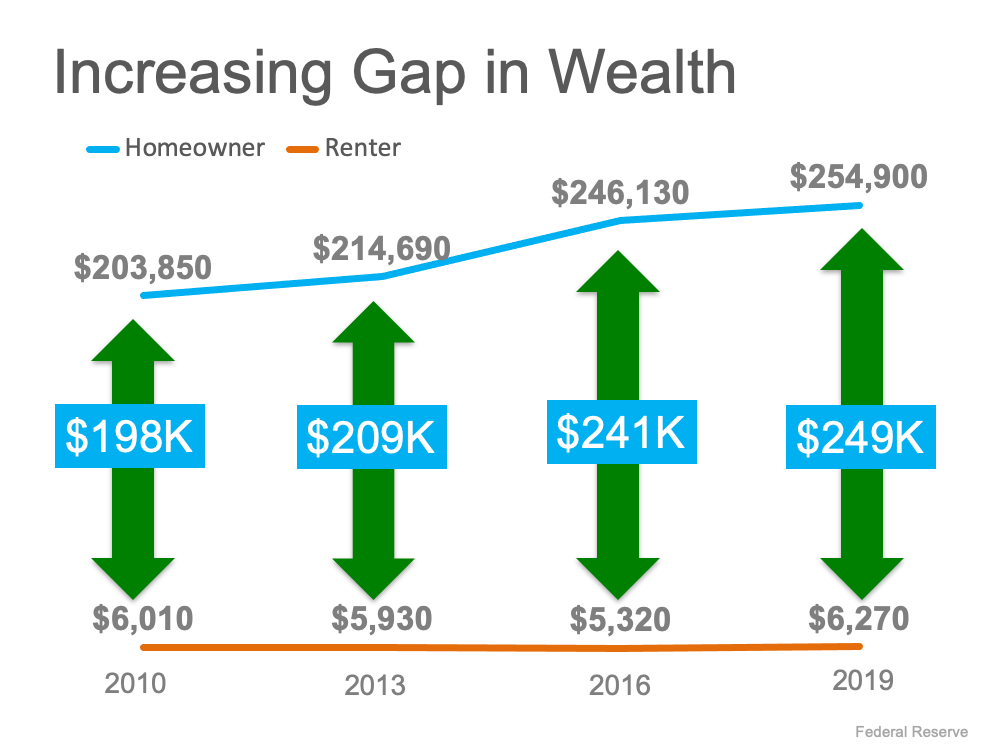
Every three years, the Federal Reserve releases the Survey of Consumer Finances which highlights the difference in wealth between homeowners and renters. The graph below shows the findings across the previous surveys including the latest data (2019), and the results are staggering:The
Difference in Net Worth Between Homeowners and Renters Is Widening | MyKCMAs the graph illustrates, the gap between homeowners and renters continues to widen. That's because homeownership contributes massively to an individual's overall net worth. Odeta Kushi, Deputy Chief Economist at First Americanhighlights this idea:

. . . between 2016 and 2019, housing wealth was the single biggest contributor to the increase in net worth across all income groups . . . .

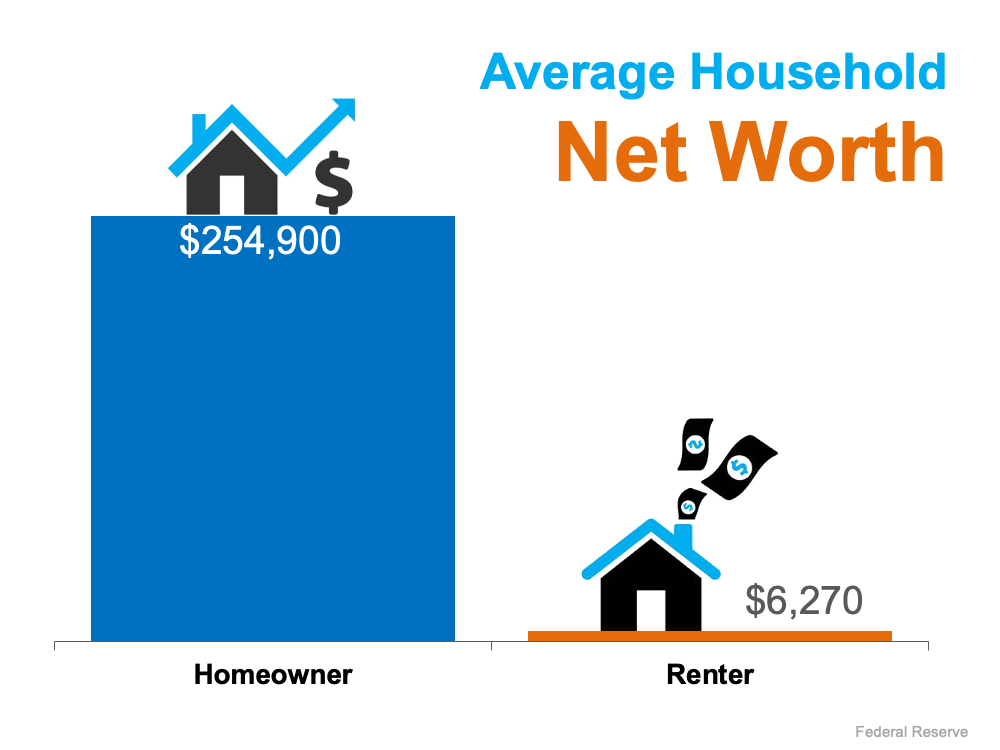
When we look even closer at the most recent data from 2019, the average homeowner's net worth is more than 40 times greater than that of the average renter (see graph below):The
Difference in Net Worth Between Homeowners and Renters Is Widening | MyKCMThe gap exists in large part because homeowners build equity as their home appreciates in value and they pay off a portion of their mortgage each month. When you own your home, your monthly mortgage payment is, in essence, forced savings that come back to you when you sell your home or refinance. As a renter, you'll never see a return on the money you pay out in rent every month.

If you're ready to start building your net worth, the current real estate market offers several opportunities you should consider. For example, with today's low mortgage rates, your purchasing power may be higher now than it has been in some time. That means there may be no better time than now to start working towards your homeownership goals – especially since rates are anticipated to rise in the coming months.

Bottom Line

Owning a home provides one of the strongest foundations for building individual wealth and lasting financial security. If you're ready to start your path towards homeownership, let's connect today.


Posted in Market Updates
Aug. 25, 2021

Why 2021 Is Still the Year To Sell Your House?

Why 2021 Is Still the Year To Sell Your House

Why 2021 Is Still the Year To
Sell Your House | MyKCM

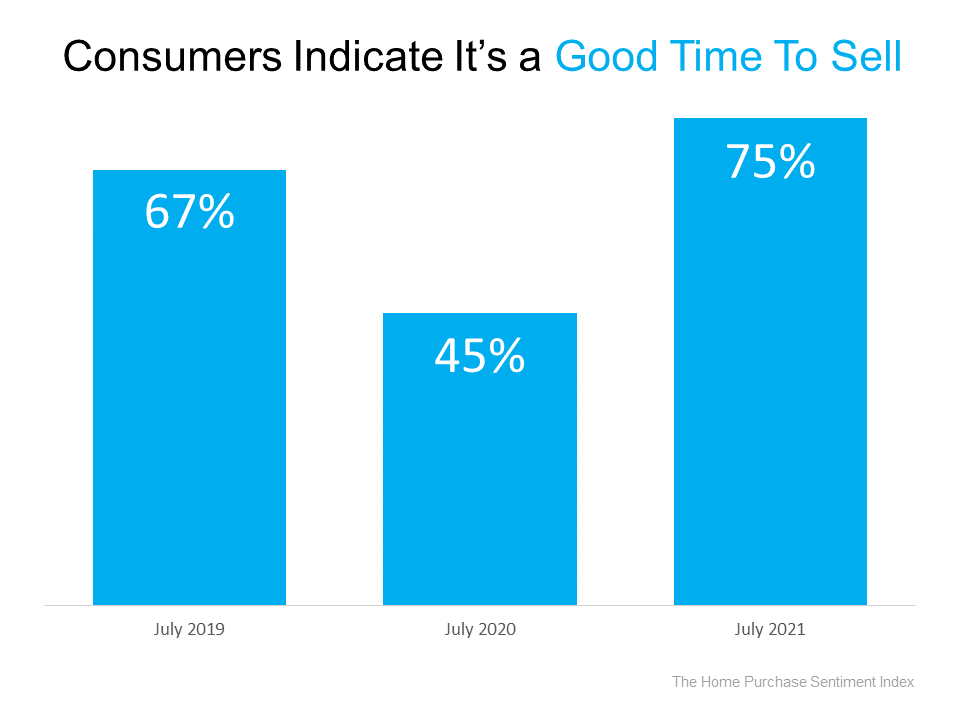
If you're trying to decide whether or not to sell your house, this is the time to think seriously about making a move. Fannie Mae's recent Home Purchase Sentiment Index (HPSI) reveals the number of respondents who say it's a good time to sell is higher now than it was over the past few summers (see graph below). Today, the majority of consumers, 75 percent, say it's a good time to sell a house.Why
2021 Is Still the Year To Sell Your House | MyKCM

Why is sellers sentiment up year-over-year?

The higher good time to sell sentiment has to do with today's market conditions, specifically low housing supply and high buyer demand. In the simplest terms, we don't have enough houses available for sale to meet buyer demand.

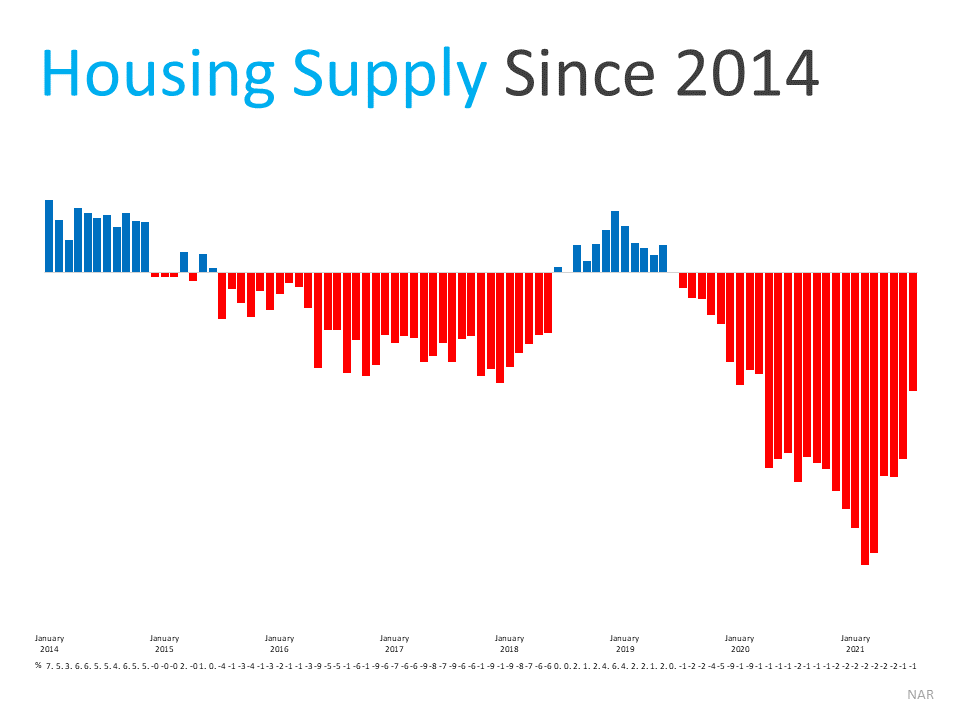
According to the latest data from the National Association of Realtors (NAR), we're still firmly in a sellers' market because housing supply is well below a balanced norm (shown in the graph below). Why
2021 Is Still the Year To Sell Your House | MyKCMClearly, the scales are tipped in a seller's favor today. But while housing supply is undeniably low, the right side of the graph shows how the inventory situation is improving little by little each month as more sellers list their homes for sale.

As a seller, that means each month, buyers have more options to pick from. By extension, that means your house may get less buyer attention with time. Danielle Hale, Chief Economist for realtor.com, explains it like this:

More homeowners continue to list homes for sale compared to a year ago… Notably, while new listings continue to lag behind a more ‘normal' 2019 pace, the gap is shrinking. Even though homes continue to sell quickly thanks to high demand and limited supply, new listings are subtly shifting the balance of market conditions in favor of buyers.

So, what's that mean for you?

If you've been waiting for the perfect time to sell, there may not be a better chance than right now. Inventory is gradually increasing each month, so selling sooner rather than later will help you maximize your home's potential.

Bottom Line

If you're planning to sell your house, 2021 is still the year to do it. The unique mix of low supply and high demand won't last forever. Let's connect to discuss what you need to do now to sell your house and take advantage of this sellers' market.


Posted in Market Updates
Aug. 24, 2021

What To Do with Your Vacation Home as Summer Ends?

What To Do with Your Vacation Home as Summer Ends

What To Do with Your Vacation
Home as Summer Ends | MyKCM

As summer comes to a close, is it time to think about selling your vacation home? Based on recent data and expert opinions, it's something you may want to consider. According to research from the National Association of Realtors (NAR), vacation home sales are up 57.2% year-over-year for January-April 2021.

If you've taken your last vacation this summer, here are reasons you should consider selling your vacation home this year.

1. Remote work continues to drive demand for vacation homes.

As the report from NAR says, based on continuously evolving work needs, there could be more interest in your second home than you think:

In 2020, across all nine divisions, the fraction of the workforce that work from home is typically higher in the vacation home counties than in the non-vacation home counties… The opportunity to work from home could further raise the demand for vacation homes in future years.

Recent data shows we'll likely see a sustained increase in the rate of remote work over the next five years. That means your vacation home could be highly sought after by certain buyers. Lawrence Yun, Chief Economist at NAR, puts it best, saying:

Vacation homes are a hot commodity at the moment . . . . With many businesses and employers still extending an option to work remotely to workers, vacation housing and second homes will remain a popular choice among buyers.”

2. Selling could allow you to upgrade your vacation spot – or even your day-to-day scenery.

When demand is high, so is buyer competition. When competition is strong, buyers will do everything they can to make their offer on your vacation home as appealing as possible. This can include things like all-cash offers and more. If you sell now, you'll be able to benefit from high buyer competition and pick the offer with the best possible terms for you. That offer could give you the opportunity to purchase the primary residence of your dreams.

Or, if you find that you'll continue working from home, you could consider taking up more permanent residence in your vacation home and selling your primary residence instead. While this isn't a choice everyone can consider, it could be a great option.

No matter what the situation, you don't have to make the decision on your own. Your trusted real estate advisor can help you determine your best option when you're ready to sell.

Bottom Line

Buyers remain interested in vacation homes this year for a number of reasons. Now that summer is winding down, it's time to think about taking advantage of today's demand for vacation homes. Let's connect today if you're ready to give your second home its day in the sun.


Posted in Market Updates
Aug. 23, 2021

What Do Experts Say About Today's Mortgage Rates??

What Do Experts Say About Today's Mortgage Rates?

What Do Experts Say About
Today's Mortgage Rates? | MyKCM

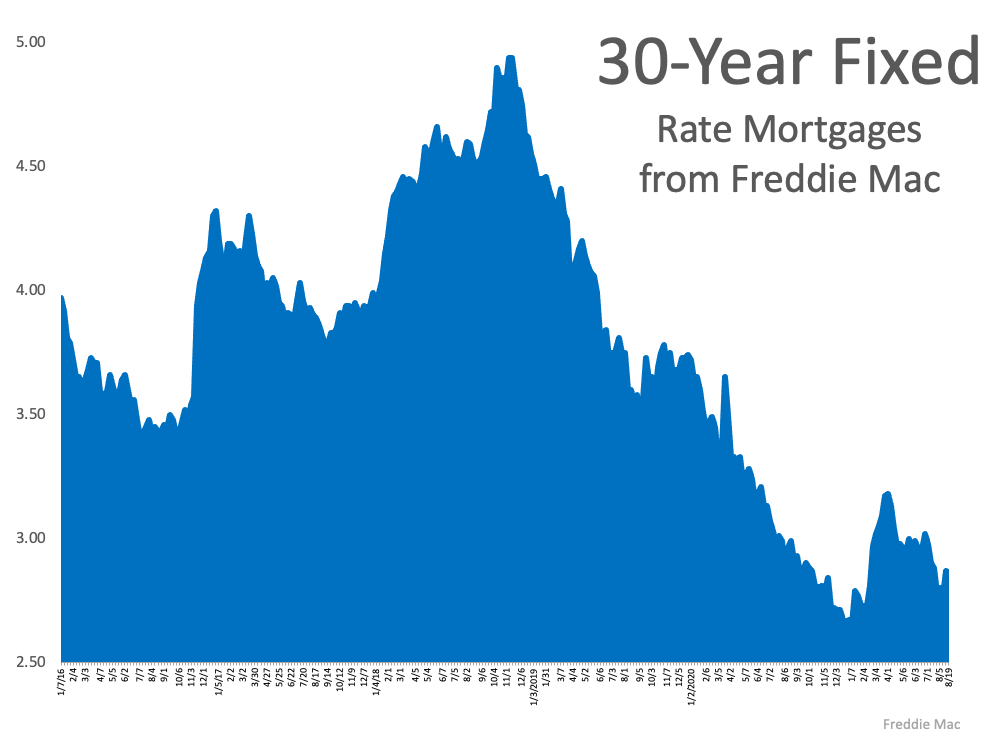
Mortgage rates are hovering near record lows, and that's good news for today's homebuyers. The graph below shows mortgage rates dating back to 2016 and where today falls by comparison.What
Do Experts Say About Today's Mortgage Rates? | MyKCMGenerally speaking, when rates are low, you can afford more home for your money. That's why experts across the industry agree – today's low rates present buyers with an incredible opportunity. Here's what they have to say:

Sam Khater, Chief Economist at Freddie Macpoints out the historic nature of today's rates:

As the economy works to get back to its pre-pandemic self, and the fight against COVID-19 variants unfolds, owners and buyers continue to benefit from some of the lowest mortgage rates of all-time.

Mark Fleming, Chief Economist at First Americantalks about how rates impact a buyer's bottom line:

Mortgage rates are generally the same across the country, so a decline in mortgage rates boosts affordability equally in each market.

Danielle Hale, Chief Economist at realtor.com, also notes the significance of today's low rates and urges buyers to carefully consider their timing:

Those who haven't yet taken advantage of low rates to buy a home or refinance still have the opportunity to do so this summer.

Hale goes on to say that buyers who don't act soon could see higher rates in the coming months, negatively impacting their purchasing power:

We expect mortgage rates to fluctuate near historic lows through the summer before beginning to climb this fall.

And while mortgage rates are still low today, the data from Freddie Mac indicates rates are fluctuating ever so slightly right now, as they moved up one week before inching slightly back down in their latest release. It's important to keep in mind the influence rates have on your monthly mortgage payment.

Even small increases can have a big impact on what you pay each month. Trust the experts. Today's rates give you opportunity and flexibility in what you can afford. Don't wait on the sidelines and hope for a better rate to come along; the rates we're seeing today are worth capitalizing on.

Bottom Line

Mortgage rates hover near record lows today, but experts forecast they'll rise in the coming months. Waiting could prove costly when that happens. Let's connect today to discuss today's rates and determine if now's the time for you to buy.


Posted in Market Updates
Aug. 20, 2021

Options for First-Time Homebuyers [INFOGRAPHIC]?

Options for First-Time Homebuyers [INFOGRAPHIC]

Options for First-Time
Homebuyers [INFOGRAPHIC] | MyKCM

Some Highlights

  • With a housing market this competitive, sometimes you have to think outside the box.
  • Work with your trusted real estate advisors to do things like assess your budgetexpand your search radius, look into other options, and determine your true needs.
  • If you’re having trouble finding your first home, let's connect to explore your options. It’s out there!
  •  
Posted in Market Updates
Aug. 19, 2021

More Young People Are Buying Homes?

More Young People Are Buying Homes

More Young People Are Buying
Homes | MyKCM

There's a common misconception that younger generations aren't interested in homeownership. Many people point to the fact that millennials put off purchasing their first home as a reason for this belief.

Odeta Kushi, Deputy Chief Economist for First Americanexplains why millennials have put off certain milestones linked to homeownership. Those delays led to their homeownership rates trailing slightly behind older generations:

Historically, millennials have delayed the critical lifestyle choices often linked to buying a first home, including getting married and having children, in order to further their education. This is clear in cross-generational comparisons of homeownership rates which show millennials lagging their generational predecessors.

So, it's partially true that some millennials have waited on homeownership to focus on other things in their lives – and that's impacting certain housing market trends.

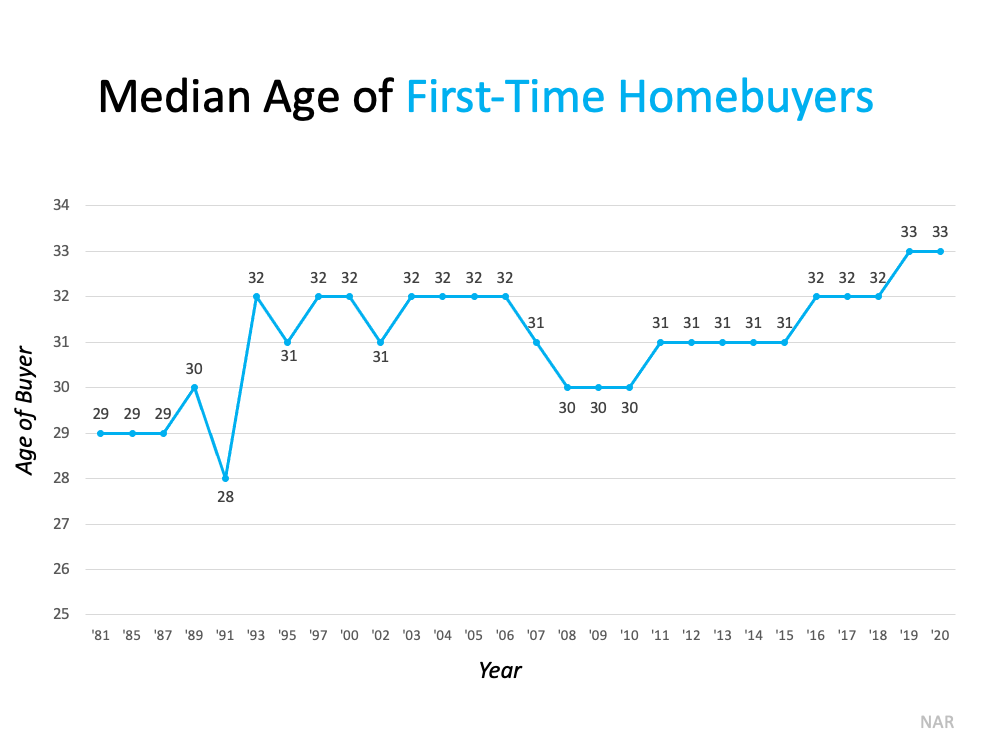
Data from the National Association of Realtors (NAR) indicates the average age of a first-time homebuyer is higher today than it's been over the past 40 years. As the graph below shows, homebuyers today are purchasing their first home an average of 4 years later than people in the 1980s and early 1990s:More
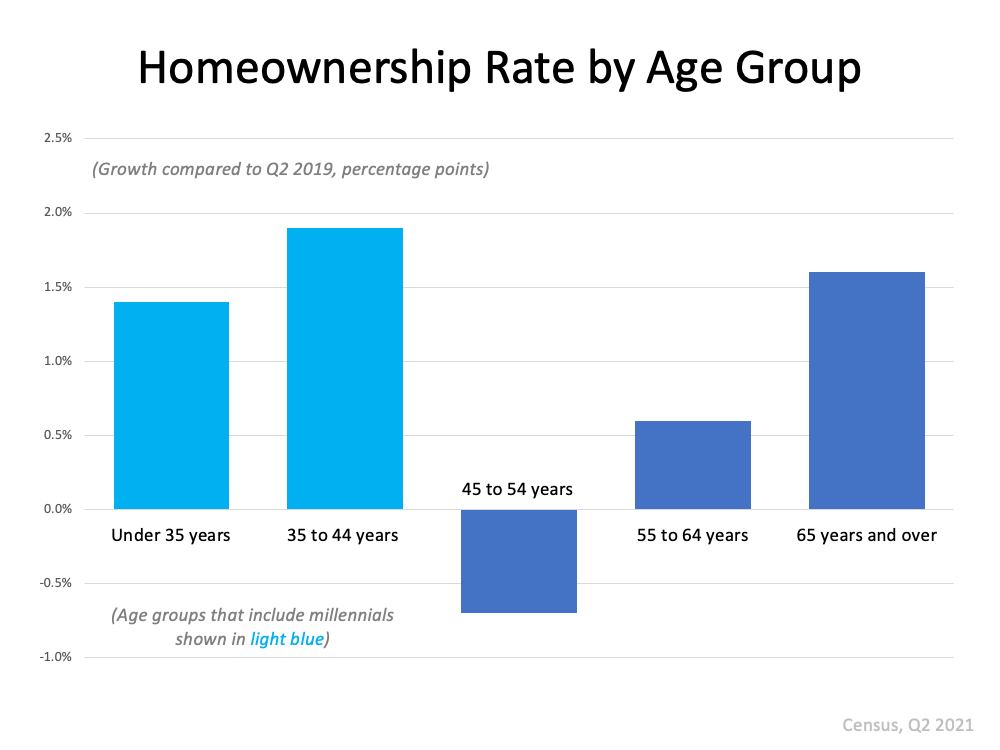
Young People Are Buying Homes | MyKCMBut just because millennials are hitting certain milestones later in life doesn't mean they're not interested in becoming homeowners. The recent U.S. Census reveals a significant increase in homeownership rates for millennials and other young homebuyers.More
Young People Are Buying Homes | MyKCMAs the graph above shows, millennials are entering the market in full force, and their share of the market is growing. Based on the data, the belief that younger generations don't want to buy homes is a misconception. In fact, the recent Capital Market Outlook report from Merrill-Lynch further drives home this point, as it specifically mentions the effect millennials are having on demand:

Demand is very strong because the biggest demographic cohort in history is moving through the household-formation and peak home-buying stages of its life cycle.”

Kushi is following the trend of millennial homeownership and puts it more simply, saying:

. . . it’s clear that younger households (millennials!) are driving homeownership growth.

As the largest generation, millennials' impact on the market is growing as more and more people from that generation reach homebuying age – and Generation Z isn't far behind, either. That means younger generations will likely continue to drive demand in the housing market for years to come.

Bottom Line

If you’re a member of a younger generation and interested in purchasing a home, you’re not alone. Many of your peers are on their path to homeownership, too. Let’s connect today and discuss what you can do to accomplish your homebuying goals.


Posted in Market Updates