That House That’s Been Sitting Could Be Your Best Shot at a Deal

BLOGJune 22, 2026


Open up a home search and you'll see them. Listings that have been on the market for two months. Three. Some longer.

Most buyers scroll right past them, assuming something’s wrong with the house. But that instinct could be costing you, since the longer a home sits, the more motivated the seller usually gets.

Where Some Buyers Are Finding Better Deals

If affordability has been your #1 hurdle to buying, here’s a surprisingly simple strategy that could help you finally get your foot in the door. Start with the homes that have been sitting the longest. That’s often where the best deals are.

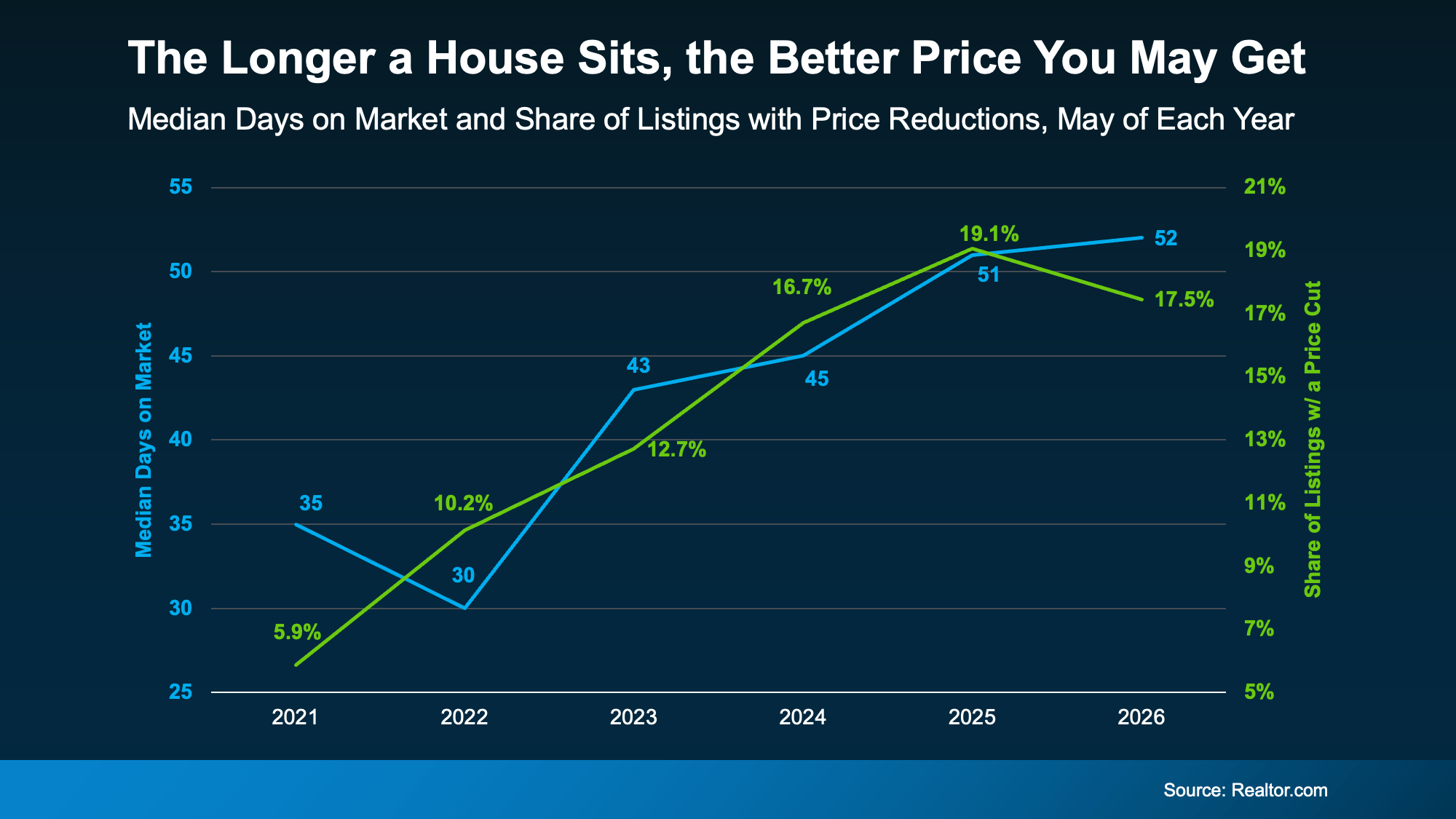
Here’s why. Data from Realtor.com shows there’s a connection between longer time on the market and lower sales prices. Basically, the longer a house sits, the more likely it is that the seller will reduce the price (see graph below):

a graph with numbers and lines

The blue line tracks how long homes stay on the market, while the green line tracks the share of homes getting a price reduction. As one climbs, so does the other.  

And if you focus on these homes that are just sitting and waiting, the opportunity for you is bigger than you may think right now.

Redfin data shows there’s $347 billion worth of stale listings on the market right now – more than ever before for this time of year. So, ask your agent to filter listings for you from oldest to newest. The home that fits your budget might already be there. Just further down the list than you thought.

Lingering Doesn’t Always Mean Something’s Wrong 

Let’s say you do that and something catches your eye. Still, you might be questioning why the home has been sitting in the first place. Just remember, sometimes it has nothing to do with the home itself.

According to Redfin, common causes are:

  • The asking price was set too high to start

  • The home didn’t show well online

  • There are a lot of homes for sale in the area, so it just got buried

So, nothing that’s necessarily a dealbreaker, or even anything that’s wrong with the home itself. If there’s a real issue, a thorough inspection will surface it. And that’s information you can use to negotiate. Not a reason to assume it’s a house worth skipping over.

How To Turn a Lingering Listing into a Win

So how do you capitalize on a lingering listing? According to USA Today, you have two main levers to pull.

The first is price. Work with your agent to study what comparable homes recently sold for, then build an offer around that. Coming in below asking price is fair game when a home has been sitting.

The second is concessions. If a seller won’t budge much on price, they may still help in other ways, like covering some closing costs, repair credits, or even a mortgage rate buydown that lowers your monthly payment.

A local agent has the context to tell which homes are the real opportunities and which are skippable.

Bottom Line

A house sitting on the market isn’t always a glaring red flag. In today’s market, it may be your best opportunity yet.

For help deciding which lingering listings are actually worth a second look, let’s connect.

The information contained, and the opinions expressed, in this article are not intended to be construed as investment advice. Keeping Current Matters, Inc. does not guarantee or warrant the accuracy or completeness of the information or opinions contained herein. Nothing herein should be construed as investment advice. You should always conduct your own research and due diligence and obtain professional advice before making any investment decision. Keeping Current Matters, Inc. will not be liable for any loss or damage caused by your reliance on the information or opinions contained herein.

April 27, 2022

The Dream of Homeownership Is Worth the Effort?

The Dream of Homeownership Is Worth the Effort

The Dream of Homeownership Is
Worth the Effort | MyKCM

If you're in the market to buy a home this season, stick with it. Homebuyers face challenges in any market, and today's is no exception. But if you persevere, your decision to purchase a home will be worth the effort in the end. In fact, a recent survey from Bankrate shows homeownership is so powerful that:

Nearly three in four homeowners say they would still buy their current home if they had it to do [sic] all over again.

That means the results – owning a home and the benefits that come with it – outweigh the effort needed to achieve their goal. If you're a homebuyer, let that provide you with the confidence to know the work you're putting in today will pay off for years to come. Here are a few reasons to stick with your search and focus on the outcome.

Homeownership Contributes Significantly to Your Financial Well-Being

The National Association of Realtors (NAR) lists several motivations to consider if you're thinking about buying a home. One of the top financial reasons is the equity you build. As NAR says:

Money paid for rent is money that you'll never see again, but mortgage payments let you build equity . . . Building equity in your home is a ready-made savings plan.

Your equity is a powerful tool you can leverage in a number of ways. And with recent home price appreciation, homeowners are seeing record levels of equity today. That may be one reason why so many people view owning a home as a great investment and a top indicator of financial well-being. As the survey from Bankrate mentioned above shows:

. . . Americans place a higher value on homeownership than on any other indicator of economic stability, . . .

Owning a home ranks above other major accomplishments like retirement, having a successful career, and getting a college degree. That indicates just how impactful the financial benefits of homeownership truly are.

The Emotional Benefits of Owning a Home Are Powerful

Of course, homeownership is more than an investment. In their list of top reasons to buy a home, NAR also highlights some of the powerful, non-financial aspects of homeownership. Among them is the opportunity to customize your home to reflect your personality and needs. As they say:

The home is yours. You can decorate any way you want and choose the types of upgrades and new amenities that appeal to your lifestyle.

Another benefit homeowners enjoy is the stability it provides. Homeowners typically stay put longer than renters. According to NAR, when you remain in one place longer than a few years, you can grow closer to your community. And that can enhance your sense of pride and lead to better relationships.

What Does That Mean for You?

The benefits of homeownership are powerful, as Leslie Rouda Smith, President of NAR, says:

“From building personal wealth and fostering communities, to strengthening social stability and driving the national economy, the value of homeownership is indisputable.

Even if you face challenges in today's market, the payoff when you succeed and purchase a home will be worth it.

Bottom Line

If you're planning to buy a home this year, there are incredible benefits waiting for you at the end of your journey. Let's connect to discuss everything homeownership has to offer.


Posted in Market Updates
April 26, 2022

How Homeownership Can Help Shield You from Inflation?

How Homeownership Can Help Shield You from Inflation

How Homeownership Can Help
Shield You from Inflation | MyKCM

If you're following along with the news today, you've likely heard about rising inflation. You're also likely feeling the impact in your day-to-day life as prices go up for gas, groceries, and more. These rising consumer costs can put a pinch on your wallet and make you re-evaluate any big purchases you have planned to ensure they're still worthwhile.

If you've been thinking about purchasing a home this year, you're probably wondering if you should continue down that path or if it makes more sense to wait. While the answer depends on your situation, here's how homeownership can help you combat the rising costs that come with inflation.

Homeownership Offers Stability and Security

Investopedia explains that during a period of high inflation, prices rise across the board. That's true for things like food, entertainment, and other goods and services, even housing. Both rental prices and home prices are on the rise. So, as a buyer, how can you protect yourself from increasing costs? The answer lies in homeownership.

Buying a home allows you to stabilize what's typically your biggest monthly expense: your housing cost. If you get a fixed-rate mortgage on your home, you lock in your monthly payment for the duration of your loan, often 15 to 30 years. James Royal, Senior Wealth Management Reporter at Bankrate, says:

A fixed-rate mortgage allows you to maintain the biggest portion of housing expenses at the same payment. Sure, property taxes will rise and other expenses may creep up, but your monthly housing payment remains the same.

So even if other prices rise, your housing payment will be a reliable amount that can help keep your budget in check. If you rent, you don't have that same benefit, and you won't be protected from rising housing costs.

Use Home Price Appreciation to Your Benefit

While it's true rising mortgage rates and home prices mean buying a house today costs more than it did a year ago, you still have an opportunity to set yourself up for a long-term win. Buying now lets you lock in at today's rates and prices before both climb higher.

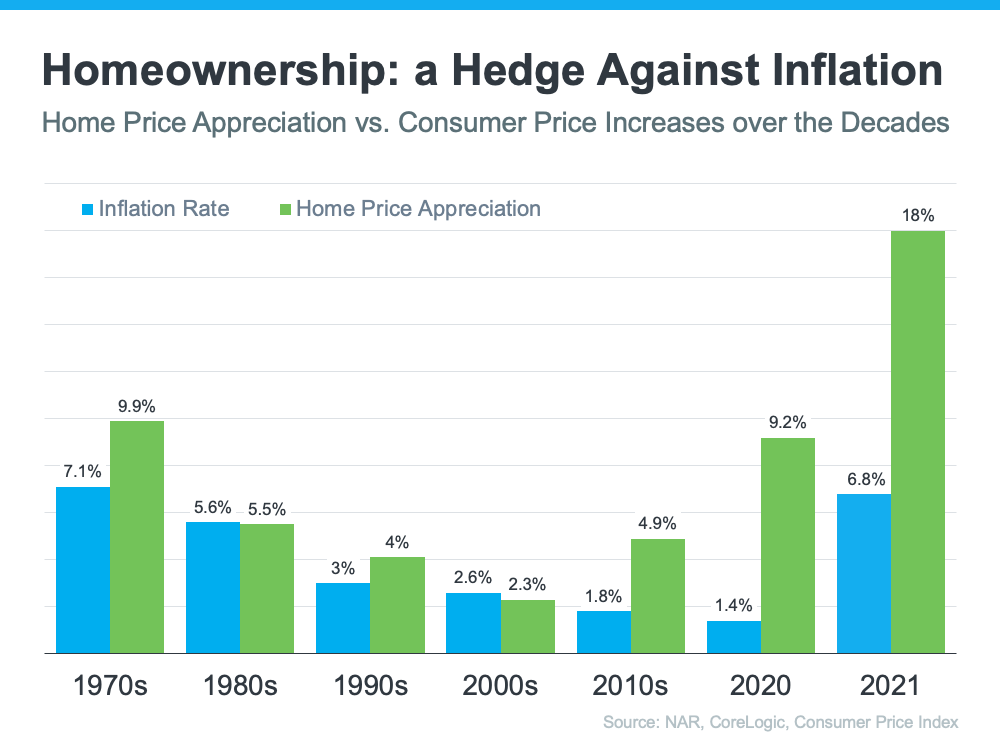
In inflationary times, it's especially important to invest your money in an asset that traditionally holds or grows in value. The graph below shows how home price appreciation outperformed inflation in most decades going all the way back to the seventies – making homeownership a historically strong hedge against inflation (see graph below):

How
Homeownership Can Help Shield You from Inflation | MyKCM

So, what does that mean for you? Today, experts say home prices will only go up from here thanks to the ongoing imbalance in supply and demand. Once you buy a house, any home price appreciation that does occur will be good for your equity and your net worth. And since homes are typically assets that grow in value (even in inflationary times), you have peace of mind that history shows your investment is a strong one.

Bottom Line

If you're ready to buy a home, it may make sense to move forward with your plans despite rising inflation. If you want expert advice on your specific situation and how to time your purchase, let's connect.


Posted in Market Updates
April 22, 2022

Myths About Today’s Housing Market [INFOGRAPHIC]

Myths About Today’s Housing Market [INFOGRAPHIC]

Myths About Today’s Housing Market [INFOGRAPHIC] | MyKCM

Some Highlights

  • If you’re planning to buy or sell a home today, it’s important to be aware of common misconceptions.
  • Whether it’s timing your purchase as a buyer based on home prices and mortgage rates or knowing what to upgrade or repair before listing your house as a seller, it takes a professional to guide you through those decisions.
  • Let’s connect so you have an expert to help separate fact from fiction in today’s housing market.
Posted in Market Updates
April 21, 2022

Why This Housing Market Is Not a Bubble Ready To Pop

Why This Housing Market Is Not a Bubble Ready To Pop

Why This Housing Market Is Not a Bubble Ready To Pop | MyKCM

Homeownership has become a major element in achieving the American Dream. A recent report from the National Association of Realtors (NAR) finds that over 86% of buyers agree homeownership is still the American Dream.

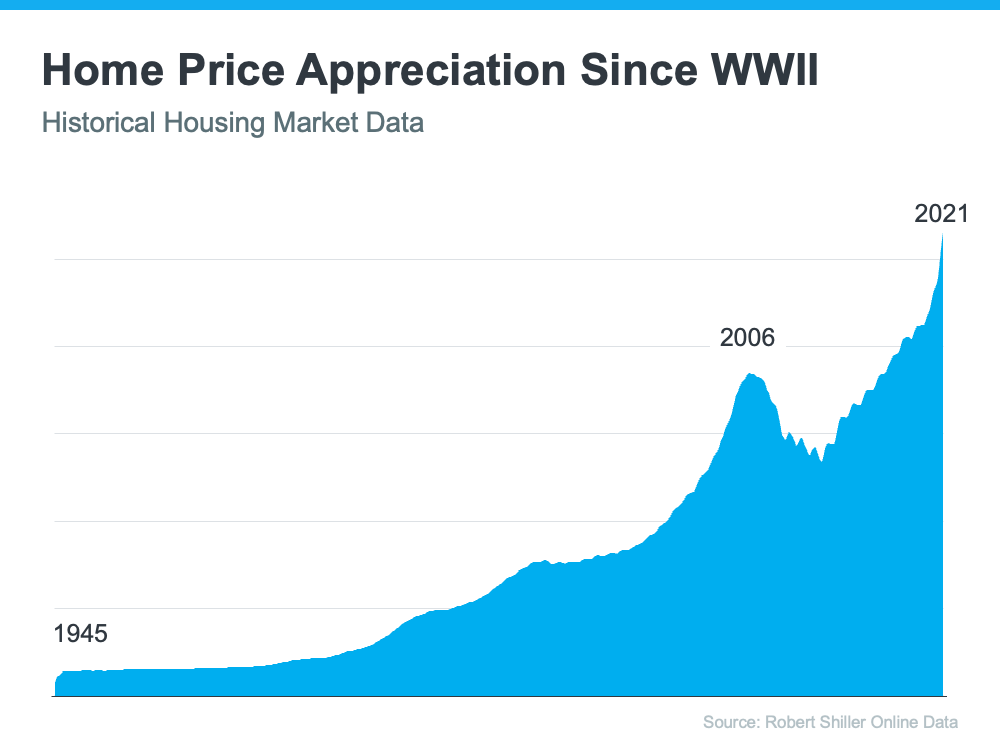
Prior to the 1950s, less than half of the country owned their own home. However, after World War II, many returning veterans used the benefits afforded by the GI Bill to purchase a home. Since then, the percentage of homeowners throughout the country has increased to the current rate of 65.5%. That strong desire for homeownership has kept home values appreciating ever since. The graph below tracks home price appreciation since the end of World War II:

Why This Housing Market Is Not a Bubble Ready To Pop | MyKCM

The graph shows the only time home values dropped significantly was during the housing boom and bust of 2006-2008. If you look at how prices spiked prior to 2006, it looks a bit like the current spike in prices over the past two years. That may lead some people to be concerned we’re about to see a similar fall in home values as we did when the bubble burst. To help alleviate those worries, let’s look at what happened last time and what’s happening today.

What Caused the Housing Crash 15 Years Ago?

Back in 2006, foreclosures flooded the market. That drove down home values dramatically. The two main reasons for the flood of foreclosures were:

1. Many purchasers were not truly qualified for the mortgage they obtained, which led to more homes turning into foreclosures.
2. A number of homeowners cashed in the equity on their homes. When prices dropped, they found themselves in an underwater situation (where the home was worth less than the mortgage on the house). Many of these homeowners walked away from their homes, leading to more foreclosures. This lowered neighboring home values even more.

This cycle continued for years.

Why Today’s Real Estate Market Is Different

Here are two reasons today’s market is nothing like the one we experienced 15 years ago.

1. Today, Demand for Homeownership Is Real (Not Artificially Generated)

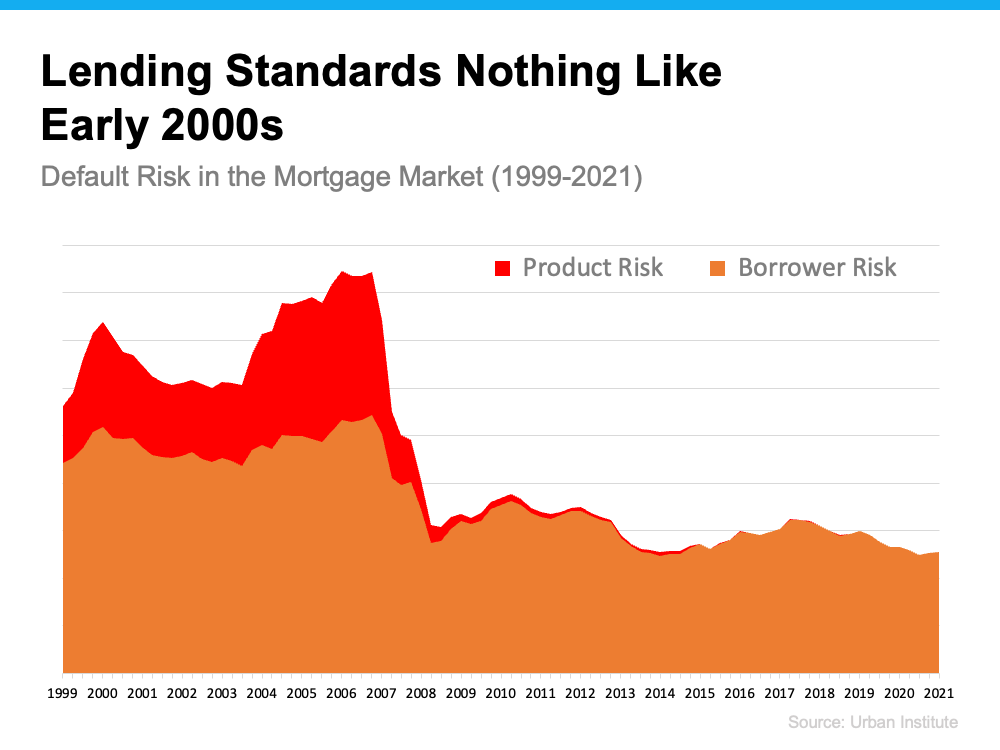
Running up to 2006, banks were creating artificial demand by lowering lending standards and making it easy for just about anyone to qualify for a home loan or refinance their current home. Today, purchasers and those refinancing a home face much higher standards from mortgage companies.

Data from the Urban Institute shows the amount of risk banks were willing to take on then as compared to now.

Why This Housing Market Is Not a Bubble Ready To Pop | MyKCM

There’s always risk when a bank loans money. However, leading up to the housing crash 15 years ago, lending institutions took on much greater risks in both the person and the mortgage product offered. That led to mass defaults, foreclosures, and falling prices.

Today, the demand for homeownership is real. It’s generated by a re-evaluation of the importance of home due to a worldwide pandemic. Additionally, lending standards are much stricter in the current lending environment. Purchasers can afford the mortgage they’re taking on, so there’s little concern about possible defaults.

And if you’re worried about the number of people still in forbearance, you should know there’s no risk of that causing an upheaval in the housing market today. There won’t be a flood of foreclosures.

2. People Are Not Using Their Homes as ATMs Like They Did in the Early 2000s

As mentioned above, when prices were rapidly escalating in the early 2000s, many thought it would never end. They started to borrow against the equity in their homes to finance new cars, boats, and vacations. When prices started to fall, many of these homeowners were underwater, leading some to abandon their homes. This increased the number of foreclosures.

Homeowners didn’t forget the lessons of the crash as prices skyrocketed over the last few years. Black Knight reports that tappable equity (the amount of equity available for homeowners to access before hitting a maximum 80% loan-to-value ratio, or LTV) has more than doubled compared to 2006 ($4.6 trillion to $9.9 trillion).

The latest Homeowner Equity Insights report from CoreLogic reveals that the average homeowner gained $55,300 in home equity over the past year alone. Odeta Kushi, Deputy Chief Economist at First Americanreports:

“Homeowners in Q4 2021 had an average of $307,000 in equity - a historic high.”

ATTOM Data Services also reveals that 41.9% of all mortgaged homes have at least 50% equity. These homeowners will not face an underwater situation even if prices dip slightly. Today, homeowners are much more cautious.

Bottom Line

The major reason for the housing crash 15 years ago was a tsunami of foreclosures. With much stricter mortgage standards and a historic level of homeowner equity, the fear of massive foreclosures impacting today’s market is not realistic.

Posted in Market Updates
April 13, 2022

Where Are Mortgage Rates Headed??

Where Are Mortgage Rates Headed?

Where Are Mortgage Rates
Headed? | MyKCM

There's never been a truer statement regarding forecasting mortgage rates than the one offered last year by Mark Fleming, Chief Economist at First American:

You know, the fallacy of economic forecasting is: Don’t ever try and forecast interest rates and or, more specifically, if you’re a real estate economist mortgage rates, because you will always invariably be wrong.

Coming into this year, most experts projected mortgage rates would gradually increase and end 2022 in the high three-percent range. It's only April, and rates have already blown past those numbers. Freddie Mac announced last week that the 30-year fixed-rate mortgage is already at 4.72%.

Danielle Hale, Chief Economist at realtor.comtweeted on March 31:

Continuing on the recent trajectory, would have mortgage rates hitting 5% within a matter of weeks. . . .

Just five days later, on April 5, the Mortgage News Daily quoted a rate of 5.02%.

No one knows how swiftly mortgage rates will rise moving forward. However, at least to this point, they haven't significantly impacted purchaser demand. Ali Wolf, Chief Economist at Zondaexplains:

Mortgage rates jumped much quicker and much higher than even the most aggressive forecasts called for at the end of last year, and yet housing demand appears to be holding steady.

Through February, home prices, the number of showings, and the number of homes receiving multiple offers all saw a substantial increase. However, much of the spike in mortgage rates occurred in March. We will not know the true impact of the increase in mortgage rates until the March housing numbers become available in early May.

Rick Sharga, EVP of Market Intelligence at ATTOM Datarecently put rising rates into context:

Historically low mortgage rates and higher wages helped offset rising home prices over the past few years, but as home prices continue to soar and interest rates approach five percent on a 30-year fixed rate loan, more consumers are going to struggle to find a property they can comfortably afford.

While no one knows exactly where rates are headed, experts do think they'll continue to rise in the months ahead. In the meantime, if you're looking to buy a home, know that rising rates do have an impact. As rates rise, it'll cost you more when you purchase a house. If you're ready to buy, it may make sense to do so sooner rather than later.

Bottom Line

Mark Fleming got it right. Forecasting mortgage rates is an impossible task. However, it's probably safe to assume the days of attaining a 3% mortgage rate are over. The question is whether that will soon be true for 4% rates as well.


Posted in Market Updates
April 12, 2022

Why a Real Estate Professional Is Key When Selling Your House?

Why a Real Estate Professional Is Key When Selling Your House

Why a Real Estate
Professional Is Key When Selling Your House | MyKCM

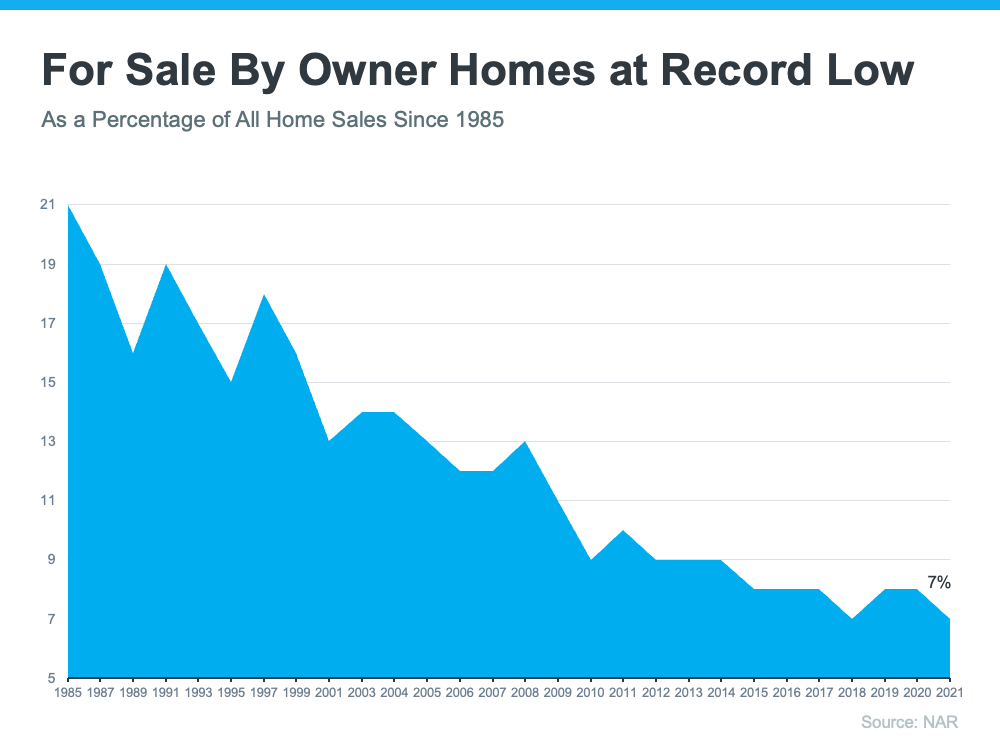
With today's real estate market moving as fast as it is, working with a real estate professional is more essential than ever. They have the skills, experience, and expertise it takes to navigate the highly detailed and involved process of selling a home. That may be why the percentage of people who list their houses on their own, known as a FSBO or For Sale By Owner, has reached its lowest point since 1985 (see graph below):

Why
a Real Estate Professional Is Key When Selling Your House | MyKCM

Here are five reasons why selling with a real estate professional makes more sense, even in today's hot market:

1. They Know What Buyers Want To See

Before you decide which projects and repairs to take on, connect with a real estate professional. They have first-hand experience with today's buyers, what they expect, and what you need to do to make sure your house shows well.

If you don't lean on their expertise, you may spend your time and money on something that isn't essential. That's because, in today's low-inventory market, buyers are willing to take on more of the renovation work themselves. A survey from Freddie Mac finds that:

. . . nearly two-in-five potential homebuyers would consider purchasing a home requiring renovations. 

A professional can help you decide what you need to tackle. It's not canned advice you could find online – it's recommendations specific to your house and your area.

2. They Help Maximize Your Buyer Pool

Today, the average home is getting 4.8 offers per sale according to recent data from the National Association of Realtors (NAR), and that competition is pushing prices up. While that's promising for you as a seller, it's important to understand your agent's role in bringing buyers in.

Real estate professionals have an assortment of tools at their disposal, such as social media followers, agency resources, and the MLS to ensure your house is viewed by the most buyers. According to realtor.com:

Only licensed real estate agents can list homes on the MLS, which is a one-stop online shop of sorts for getting a house seen by thousands of agents and home buyers. . . . This is certainly one of many good reasons why the majority of home sellers decide to employ the services of a listing agent rather than going it alone.

Without access to these tools, your buyer pool is limited. And you want more buyers to view your house since buyer competition can drive your final sales price higher.

3. They Understand the Fine Print

Today, more disclosures and regulations are mandatory when selling a house. That means the number of legal documents you'll need to juggle is growing. That's why Investopedia says:

One of the biggest risks of FSBO is not having the experience or expertise to navigate all of the legal and regulatory requirements that come with selling a home.

A real estate professional knows exactly what needs to happen, what all the paperwork means, and how to work through it efficiently. They'll help you review the documents and avoid any costly missteps that could occur if you try to handle them on your own.

4. They're Trained Negotiators

If you sell without a professional, you'll also be solely responsible for all the negotiations. That means you'll have to coordinate with:

  • The buyer, who wants the best deal possible
  • The buyer's agent, who will use their expertise to advocate for the buyer
  • The inspection company, which works for the buyer and will almost always find concerns with the house
  • The appraiser, who assesses the property's value to protect the lender

Instead of going toe-to-toe with all these parties alone, lean on an expert. They'll know what levers to pull, how to address everyone's concerns, and when you may want to get a second opinion.

5. They Know How To Set the Right Price for Your House

If you sell your house on your own, you may over or undershoot your asking price. That could mean you'll leave money on the table because you priced it too low or your house will sit on the market because you priced it too high. Pricing a house requires expertise. Investopedia explains it like this:

. . . There is no easy or universal way to determine market value for real estate.

Real estate professionals know the ins and outs of how to price your house accurately and competitively. To do so, they compare your house to recently sold homes in your area and factor in the current condition of your house. These factors are key to making sure it's priced to move quickly while still getting you the highest possible final sale price.

Bottom Line

There’s a lot that goes into selling your house. Instead of tackling it alone, let's connect so you have an expert on your side throughout the entire process.


Posted in Market Updates
April 11, 2022

Using Your Tax Refund To Achieve Your Homeownership Goals This Year?

Using Your Tax Refund To Achieve Your Homeownership Goals This Year

Using Your Tax Refund To
Achieve Your Homeownership Goals This Year | MyKCM

If you're buying or selling a home this year, you're likely saving up for a variety of expenses. For buyers, that might include things like your down payment and closing costs. And for sellers, you're probably working on a bit of spring cleaning and maintenance to spruce up your house before you list it.

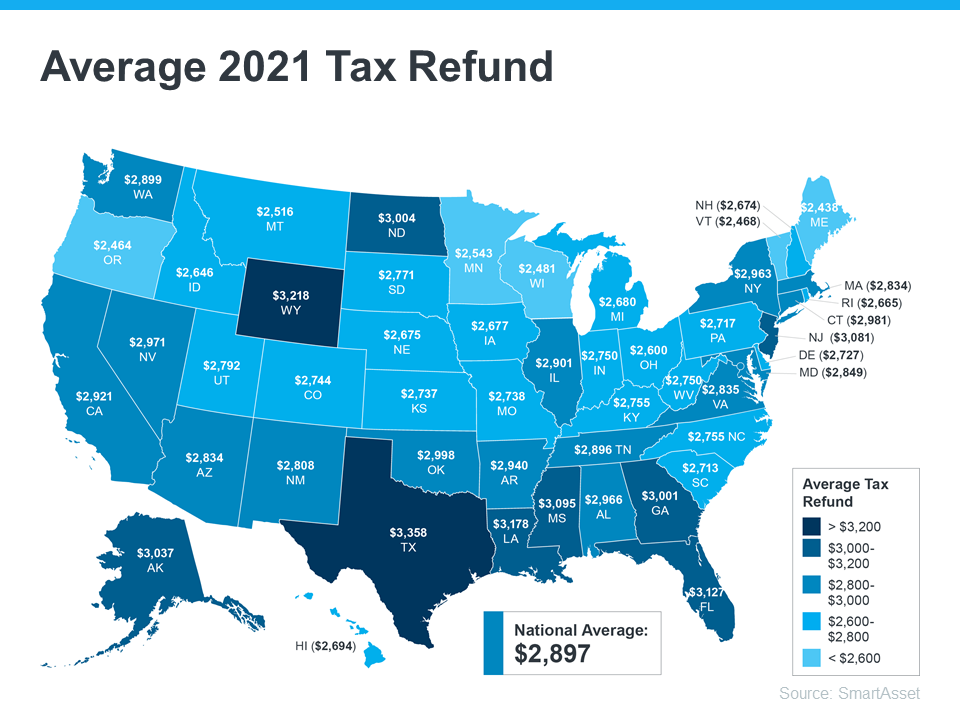
Either way, any money you get back from your taxes can help you achieve your goals. Using a tax refund is a common tactic for buyers and sellers. SmartAsset estimates the average American will receive a $2,897 tax refund this year. The map below provides a more detailed estimate by state:

Using Your Tax Refund To Achieve Your Homeownership Goals This Year |
MyKCM

If you're getting a refund this year, here are a few tips to help with your home purchase or sale this season.

How Buyers Can Use Their Tax Refund

According to American Financing, there are multiple ways your refund check can help you as a homebuyer. A few include:

  • Growing your down payment fund – If you haven't started saving for your down payment, let your tax refund kick off the process. And if you have a fund already, the money you get back could put you closer to your goal.
  • Paying for your home inspection – Your home inspection can save you a lot of headaches down the road by helping you determine the condition of the house. As a buyer, you'll typically be responsible for paying for your inspection, and it's definitely worth the investment.
  • Saving for closing costs – Closing costs are additional expenses you'll need to pay once it's time to close. They average anywhere between 2-5% of the purchase price of your home.

This list is a great start, but it isn't exhaustive of all the costs you may encounter as you set out on your homebuying journey. The best way to prepare is to work with a trusted real estate professional to make sure you understand what's to come in the process.

How Sellers Can Use Their Tax Refund

If you own a home and are planning to sell this spring, your tax refund can help you make sure your home is ready to list. Here are a few ways current homeowners can put their tax refund to good use:

  • Making small upgrades – NerdWallet provides a list of great ways to use your tax refund, including tackling small projects or boosting your curb appeal to help your home stand out.
  • Making repairs – If there's anything in your house that needs to be fixed, American Financing notes that completing repairs is another great use of that money.
  • Buying your next home – Whether you're selling to move up or downsize, you can use your tax refund to help pay for any costs on the purchase of your next home.

Of course, it's important to talk with your trusted real estate advisor before taking on any projects. They'll make sure you can focus on areas that'll help you receive the best possible price when you sell.

Bottom Line

Funding your home purchase or sale can feel like a daunting task, but it doesn't have to be. Your tax refund can help you reach your goals. Let's connect to discuss how you can start on your journey.


Posted in Market Updates
April 8, 2022

Do You Know How Much Equity You Have in Your Home? [INFOGRAPHIC]?

Do You Know How Much Equity You Have in Your Home? [INFOGRAPHIC]

Do You Know How Much Equity
You Have in Your Home? [INFOGRAPHIC] | MyKCM

Some Highlights

  • If you're a homeowner, your net worth has gotten a big boost. That's because recent home price appreciation has increased your equity.
  • Your equity grows as you pay down your loan and as your home increases in value. Over the past year, the average homeowner's equity grew by $55,300.
  • Ready to sell? Let's connect to talk about how you can use that equity to fuel your next move.
  •  
Posted in Market Updates
April 7, 2022

The Future of Home Price Appreciation and What It Means for You?

The Future of Home Price Appreciation and What It Means for You

The Future of Home Price
Appreciation and What It Means for You | MyKCM

Many consumers are wondering what will happen with home values over the next few years. Some are concerned that the recent run-up in home prices will lead to a situation similar to the housing crash 15 years ago.

However, experts say the market is totally different today. For example, Odeta Kushi, Deputy Chief Economist at First American, tweeted just last week on this issue:

. . . We do need price appreciation to slow today (it's not sustainable over the long run) but high price growth today is supported by fundamentals- short supply, lower rates & demographic demand. And we are in a much different & safer space: better credit quality, low DTI [Debt-To-Income] & tons of equity. Hence, a crash in prices is very unlikely.

Price appreciation will slow from the double-digit levels the market has seen over the last two years. However, experts believe home values will not depreciate (where a home would lose value).

To this point, Pulsenomics just released the latest Home Price Expectation Survey – a survey of a national panel of over 100 economists, real estate experts, and investment and market strategists. It forecasts home prices will continue appreciating over the next five years. Below are the expected year-over-year rates of home price appreciation based on the average of all 100+ projections:

  • 2022: 9%
  • 2023: 4.74%
  • 2024: 3.67%
  • 2025: 3.41%
  • 2026: 3.57%

Those responding to the survey believe home price appreciation will still be relatively high this year (though half of what it was last year), and then return to more normal levels over the next four years.

What Does This Mean for You as a Buyer?

With a limited supply of homes available for sale and both prices and mortgage rates increasing, it can be a challenging market to navigate as a buyer. But buying a home sooner rather than later does have its benefits. If you wait to buy, you'll pay more in the future. However, if you buy now, you'll actually be in the position to make future price increases work for you. Once you buy, those rising home prices will help you build your home's value, and by extension, your own household wealth through home equity.

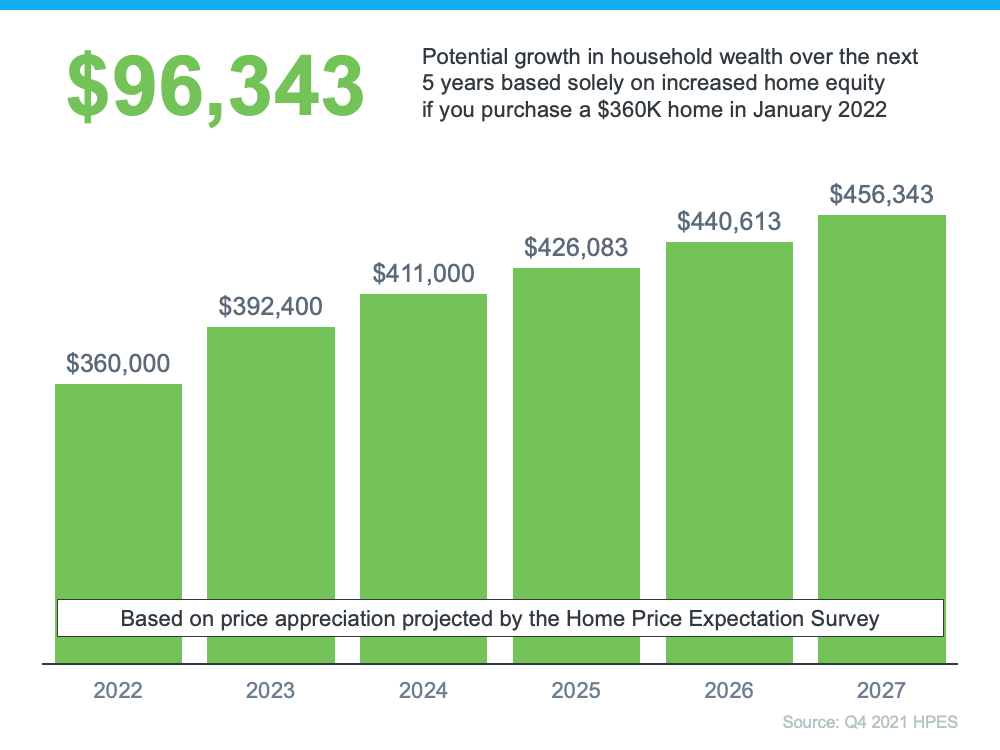
As an example, let's assume you purchased a $360,000 home in January of this year (the median price according to the National Association of Realtors rounded up to the nearest $10K). If you factor in the forecast for appreciation from the Home Price Expectation Survey, you could accumulate over $96,000 in household wealth over the next five years (see graph below):

The
Future of Home Price Appreciation and What It Means for You | MyKCM

Bottom Line

If you're trying to decide whether to buy now or wait, the key is knowing what's expected to happen with home prices. Experts say prices will continue to climb in the years ahead, just at a slower pace. So, if you're ready to buy, doing so now may be your best bet for your wallet. It'll also give you the chance to use the future home price appreciation to build your own net worth through rising equity. If you want to get started, let's connect today.


Posted in Market Updates
April 6, 2022

Remote Work Trends Mean Flexibility for First-Time Homebuyers?

Remote Work Trends Mean Flexibility for First-Time Homebuyers

Remote Work Trends Mean
Flexibility for First-Time Homebuyers | MyKCM

Today’s low inventory can be challenging for homebuyers, especially if you're looking to purchase your first home. But if you’re one of many people who work remotely, you may have a great opportunity to use the flexibility you have at work to achieve your homebuying goals this year.

In a recent report, Arch Capital Services explains how the ongoing trend of remote work can open up more options for homebuyers:

. . . This will enable those who are able to work from home on a part-time or hybrid basis to move slightly farther away from job centers. . . . For workers who secure full-time remote jobs, their place of residence will be determined by affordability and personal preferences.

Basically, working from home is great news if you're a first-time buyer trying to find a home that meets your needs and budget. Here's a deeper look at how it could benefit you.

Extra Flexibility in Your Career Means Extra Flexibility in Your Home Search

If your job is 100% remote, you don't have to be tied to a specific location or office. So, if you've been having a hard time finding what you want in your local area, it may be time to expand your search.

One option you could consider is moving to a place where you've always wanted to live, like the mountains, beach, or closer to loved ones. When you broaden your search radius to include those locations, it'll give you additional homes to consider.

It could also allow you to search for a more affordable location where you have more options in your price range. This can help you achieve two goals – saving money and finding additional features that meet your needs. To truly highlight this benefit, a recent First American article discusses the great ways remote work can really help you with your homebuying goals. Ksenia Potapov, Economist at First American, says:

For potential first-time home buyers, leveraging their house-buying power in more affordable markets can also help them buy more attractive homes – more square footage and rooms, more options for different home styles and neighborhood amenities – increasing the opportunity to find a home that suits their preferences.

That means you can use your work flexibility to search for homes with the amenities you need at a lower price point.

Bottom Line

Remote work doesn't just give you expanded flexibility for your career. If you're no longer tied to a location because of your office, you have a great opportunity to expand your housing search. Let's connect to explore how this can open up your options.


Posted in Market Updates