That House That’s Been Sitting Could Be Your Best Shot at a Deal

BLOGJune 22, 2026


Open up a home search and you'll see them. Listings that have been on the market for two months. Three. Some longer.

Most buyers scroll right past them, assuming something’s wrong with the house. But that instinct could be costing you, since the longer a home sits, the more motivated the seller usually gets.

Where Some Buyers Are Finding Better Deals

If affordability has been your #1 hurdle to buying, here’s a surprisingly simple strategy that could help you finally get your foot in the door. Start with the homes that have been sitting the longest. That’s often where the best deals are.

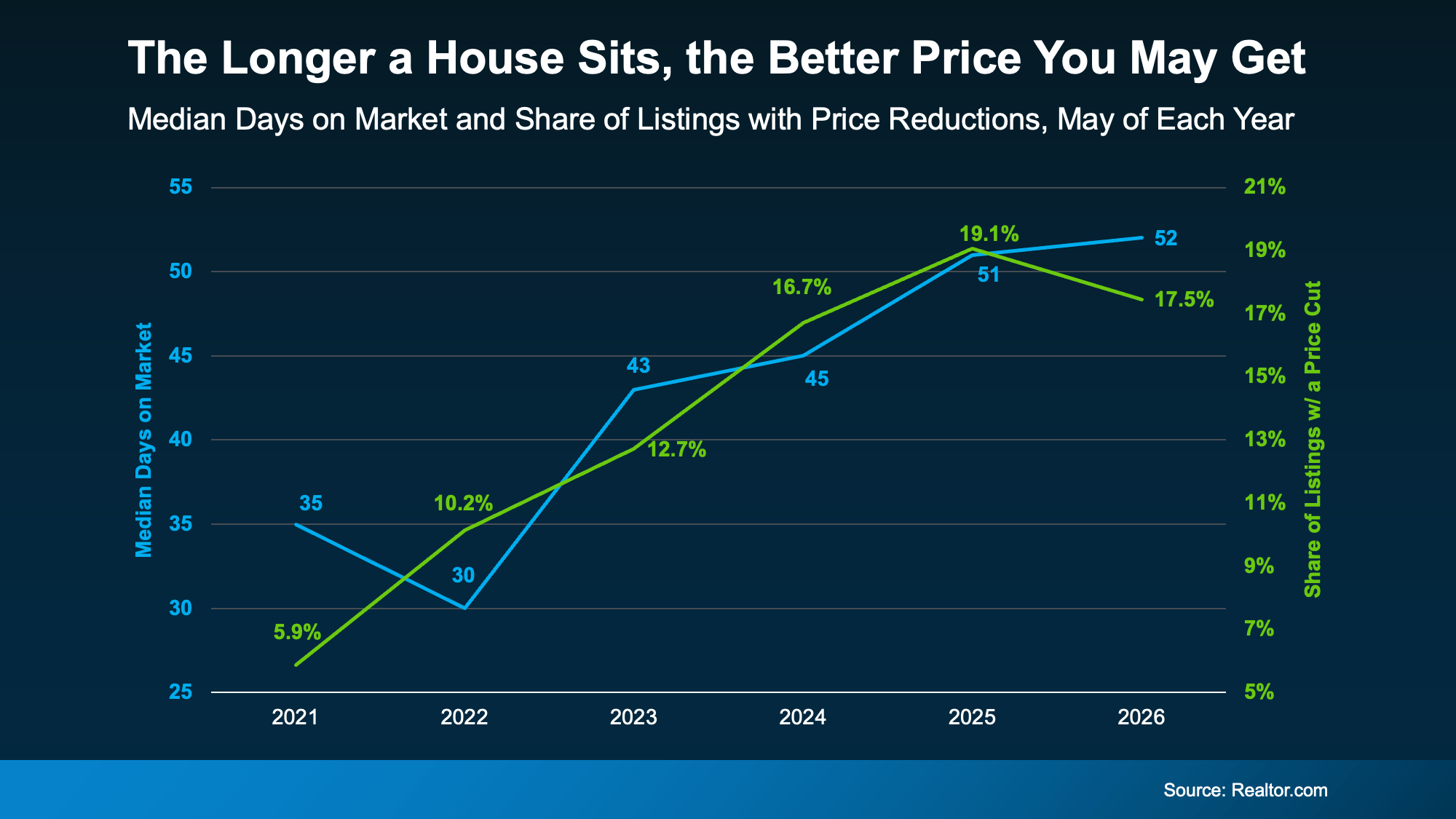
Here’s why. Data from Realtor.com shows there’s a connection between longer time on the market and lower sales prices. Basically, the longer a house sits, the more likely it is that the seller will reduce the price (see graph below):

a graph with numbers and lines

The blue line tracks how long homes stay on the market, while the green line tracks the share of homes getting a price reduction. As one climbs, so does the other.  

And if you focus on these homes that are just sitting and waiting, the opportunity for you is bigger than you may think right now.

Redfin data shows there’s $347 billion worth of stale listings on the market right now – more than ever before for this time of year. So, ask your agent to filter listings for you from oldest to newest. The home that fits your budget might already be there. Just further down the list than you thought.

Lingering Doesn’t Always Mean Something’s Wrong 

Let’s say you do that and something catches your eye. Still, you might be questioning why the home has been sitting in the first place. Just remember, sometimes it has nothing to do with the home itself.

According to Redfin, common causes are:

  • The asking price was set too high to start

  • The home didn’t show well online

  • There are a lot of homes for sale in the area, so it just got buried

So, nothing that’s necessarily a dealbreaker, or even anything that’s wrong with the home itself. If there’s a real issue, a thorough inspection will surface it. And that’s information you can use to negotiate. Not a reason to assume it’s a house worth skipping over.

How To Turn a Lingering Listing into a Win

So how do you capitalize on a lingering listing? According to USA Today, you have two main levers to pull.

The first is price. Work with your agent to study what comparable homes recently sold for, then build an offer around that. Coming in below asking price is fair game when a home has been sitting.

The second is concessions. If a seller won’t budge much on price, they may still help in other ways, like covering some closing costs, repair credits, or even a mortgage rate buydown that lowers your monthly payment.

A local agent has the context to tell which homes are the real opportunities and which are skippable.

Bottom Line

A house sitting on the market isn’t always a glaring red flag. In today’s market, it may be your best opportunity yet.

For help deciding which lingering listings are actually worth a second look, let’s connect.

The information contained, and the opinions expressed, in this article are not intended to be construed as investment advice. Keeping Current Matters, Inc. does not guarantee or warrant the accuracy or completeness of the information or opinions contained herein. Nothing herein should be construed as investment advice. You should always conduct your own research and due diligence and obtain professional advice before making any investment decision. Keeping Current Matters, Inc. will not be liable for any loss or damage caused by your reliance on the information or opinions contained herein.

Sept. 27, 2022

How an Expert Can Help You Understand Inflation & Mortgage Rates

How an Expert Can Help You Understand Inflation & Mortgage Rates

How an Expert Can Help You
Understand Inflation & Mortgage Rates | MyKCM

If you're following today's housing market, you know two of the top issues consumers face are inflation and mortgage rates. Let's take a look at each one.

Inflation and the Housing Market

This year, inflation reached a high not seen in forty years. For the average consumer, you probably felt the pinch at the gas pump and in the grocery store. It may have even impacted your ability to save money to buy a home.

While the Federal Reserve is working hard to lower inflation, the August data shows the inflation rate was still higher than expected. This news impacted the stock market and fueled conversations about a recession. It also played a role in the Federal Reserve's decision to raise the Federal Funds Rate last week. As Bankrate says:

. . . the Fed has raised rates again, announcing yet another three-quarter-point hike on September 21 . . . The hikes are designed to cool an economy that has been on fire. . .

While their actions don't directly dictate what happens with mortgage rates, their decisions have contributed to the intentional cooldown in the housing market. A recent article from Fortune explains:

As the Federal Reserve moved into inflation-fighting mode, financial markets quickly put upward pressure on mortgage rates. Those elevated mortgage rates . . . coupled with sky-high home prices, threw cold water onto the housing boom.

The Impact on Rising Mortgage Rates

Over the past few months, mortgage rates have fluctuated in light of growing economic pressures. Most recently, the average 30-year fixed mortgage rate according to Freddie Mac ticked above 6% for the first time in well over a decade (see graph below):

How
an Expert Can Help You Understand Inflation & Mortgage Rates | MyKCM

The mortgage rate increases this year are the big reason buyer demand has pulled back in recent months. Basically, as rates (and home prices) rose, so did the cost of buying a home. That pushed on affordability and priced some buyers out of the market, so home sales slowed and the inventory of homes for sale grew as a result.

Where Experts Say Rates and Inflation Will Go from Here

Moving forward, both of these factors will continue to impact the housing market. A recent article from CNET puts the relationship between inflation and mortgage rates in simple terms:

As a general rule, when inflation is low, mortgage rates tend to be lower. When inflation is high, rates tend to be higher.

Sam Khater, Chief Economist at Freddie Mac, has this to say about where rates may go from here:

Mortgage rates remained volatile due to the tug of war between inflationary pressures and a clear slowdown in economic growth. The high uncertainty surrounding inflation and other factors will likely cause rates to remain variable, . . .

While there's no way to say with certainty where mortgage rates will go from here, there is something you can do to stay informed, and that's connect with a trusted real estate advisor. They keep their pulse on what's happening today and help you understand what the experts are projecting. They can provide you with the best advice possible.

Bottom Line

Rising inflation and higher mortgage rates have had a clear impact on housing. For expert insights on the latest trends in the housing market and what they mean for you, let's connect.


Posted in Market Updates
Sept. 26, 2022

The True Strength of Homeowners Today?

The True Strength of Homeowners Today

The True Strength of
Homeowners Today | MyKCM

The real estate market is on just about everyone's mind these days. That's because the unsustainable market of the past two years is behind us, and the difference is being felt. The question now is, just how financially strong are homeowners throughout the country? Mortgage debt grew beyond 10 trillion dollars over the past year, and many called that a troubling sign when it happened for the first time in history.

Recently Odeta Kushi, Deputy Chief Economist at First American, answered that question when she said:

U.S. households own $41 trillion in owner-occupied real estate, just over $12 trillion in debt, and the remaining ~$29 trillion in equity. The national “LTV” in Q2 2022 was 29.5%, the lowest since 1983.

She continued on to say:

Homeowners had an average of $320,000 in inflation-adjusted equity in their homes in Q2 2022, an all-time high.

What Is LTV?

The term LTV refers to loan to value ratio. For more context, here's how the Mortgage Reports defines it:

Your ‘loan to value ratio' (LTV) compares the size of your mortgage loan to the value of the home. For example: If your home is worth $200,000, and you have a mortgage for $180,000, your LTV ratio is 90% — because the loan makes up 90% of the total price.

You can also think about LTV in terms of your down payment. If you put 20% down, that means you're borrowing 80% of the home's value. So your LTV ratio is 80%.

Why Is This Important?

This is yet another reason we won't see the housing market crash. Home equity allows homeowners to be in control. For example, if someone did need to sell their home, they likely have the equity they need to be able to sell it and still put money in their pocket. This was not the case back in 2008, when many owed more on their homes than they were worth.

Bottom Line

Homeowners today have more financial strength than they have had since 1983. This is a combination of how homeowners have handled equity since the crash and rising home prices of the last two years. And this is yet another reason homeownership in any market makes sense.

Posted in Market Updates
Sept. 23, 2022

Fall Home Selling Checklist [INFOGRAPHIC]

Fall Home Selling Checklist [INFOGRAPHIC]

Fall Home Selling Checklist
[INFOGRAPHIC] | MyKCM

Some Highlights

  • When it comes to selling your house, you want it to look its best inside and out so it catches the attention of buyers. A real estate professional can help you decide what to do to make that happen.
  • Focus on tasks that can make it inviting, show it's cared for, and boost your curb appeal.
  • Let's connect so you have advice on what you may want to do to get your house ready to sell this season.
Posted in Market Updates
Sept. 22, 2022

What Experts Say Will Happen with Home Prices Next Year?

What Experts Say Will Happen with Home Prices Next Year

What Experts Say Will Happen
with Home Prices Next Year | MyKCM

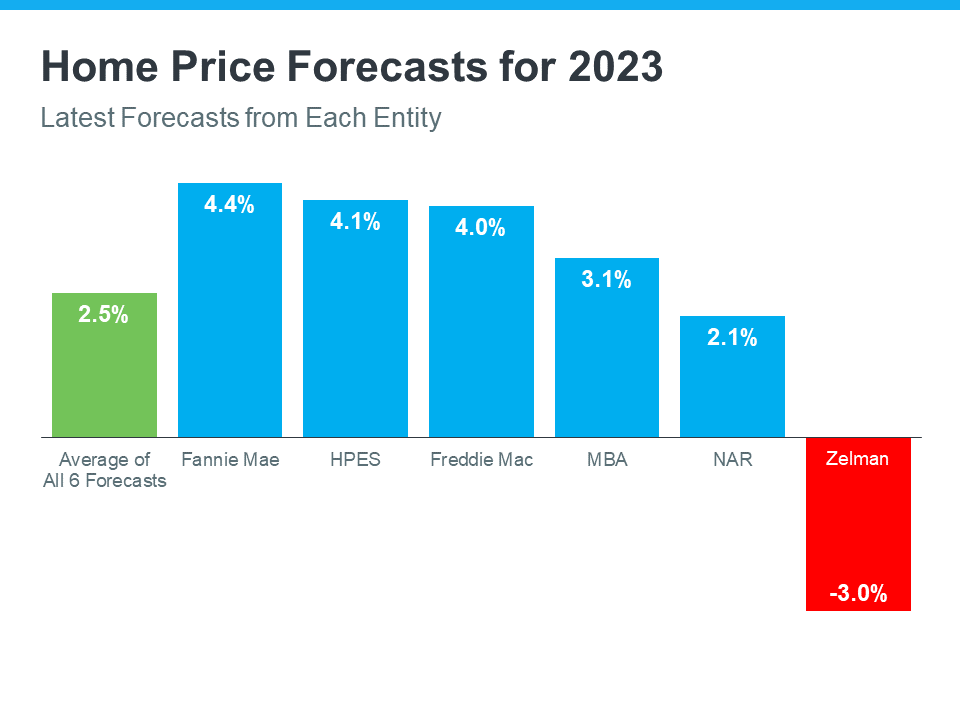
Experts are starting to make their 2023 home price forecasts. As they do, most agree homes will continue to gain value, just at a slower pace. Over the past couple of years, home prices have risen at an unsustainable rate, leaving many to wonder how long it would last. If you're asking yourself: what's ahead for the price of my home, know that experts are now answering this question, and its welcome news for homeowners who may have been led by the media to believe their home would lose value.

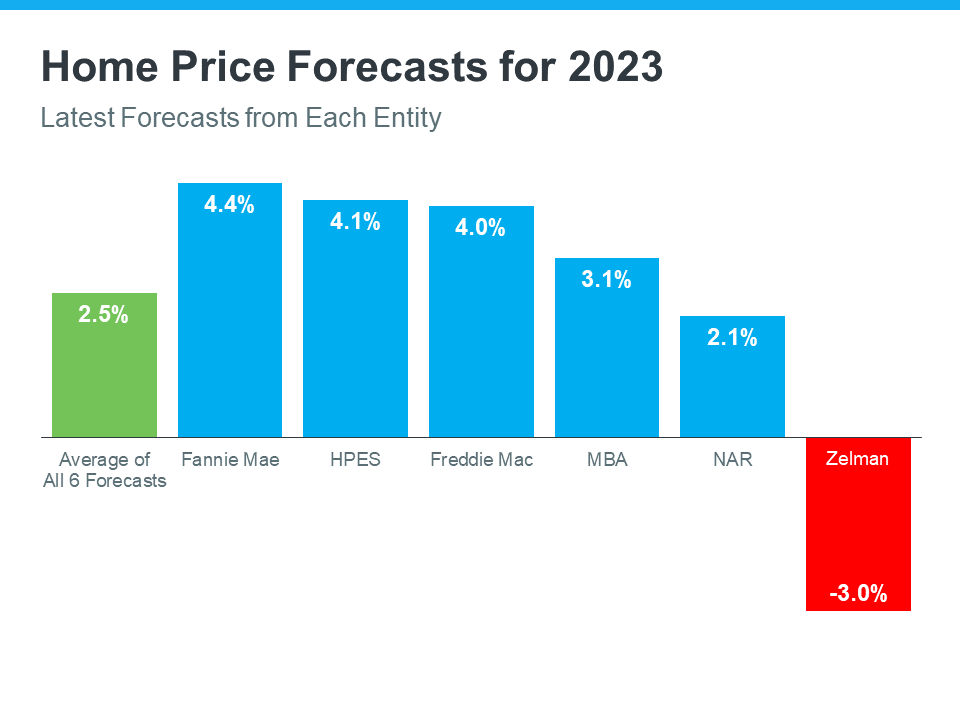
Historically, home prices have appreciated at a rate near 4%. For 2023, the average of six major forecasters noted below is 2.5%. While one, Zelman & Associates, is calling for depreciation, the other five are calling for appreciation. The graph below outlines each expert forecast to show where they project home prices are going in the coming year.

What
Experts Say Will Happen with Home Prices Next Year | MyKCM

To understand why experts are calling for appreciation next year, look to the economics of supply and demand. Dave Ramsey, Financial Expert, says this:

The root issue of what drives house prices almost always is supply and demand . . .

Two things are driving home prices upward. First, the undersupply of homes on the market is an issue we continue to face in this country. We still don't have enough homes on the market for the number of people that want to buy them. To further that point, we're still in a sellers' market nationally, and in that scenario, home prices tend to appreciate.

Second, millennials are moving through their peak homebuying years. Since they're the largest demographic behind the baby boomers, demand isn't going away any time soon.

Bottom Line

Experts are calling for home prices to appreciate next year, although at a slower pace than the previous three years. The reason for this is simple. The dynamics of supply and demand are playing out in real estate and will continue for many years to come.


Posted in Market Updates
Sept. 21, 2022

Top Reasons Homeowners Are Selling Their Houses Right Now?

Top Reasons Homeowners Are Selling Their Houses Right Now

Top Reasons Homeowners Are
Selling Their Houses Right Now | MyKCM

Some people believe there's a group of homeowners who may be reluctant to sell their houses because they don't want to lose the historically low mortgage rate they have on their current home. You may even have the same hesitation if you're thinking about selling your house.

Data shows 51% of homeowners have a mortgage rate under 4% as of April this year. And while it's true mortgage rates are higher than that right now, there are other non-financial factors to consider when it comes to making a move. In other words, your mortgage rate is important, but you may have other things going on in your life that make a move essential, regardless of where rates are today. As Jessica Lautz, Vice President of Demographics and Behavioral Insights at the National Association of Realtors (NAR), explains:

Home sellers have historically moved when something in their lives changed – a new baby, a marriage, a divorce or a new job. . . .

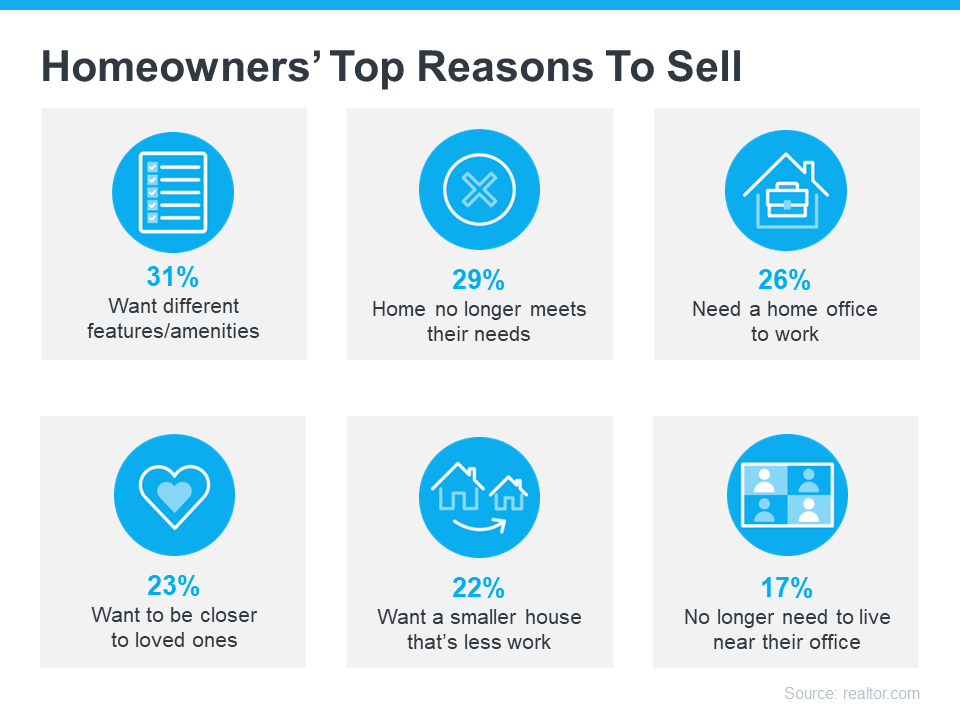
So, if you're thinking about selling your house, it may help to explore the other reasons homeowners are choosing to make a move today. The 2022 Summer Sellers Survey by realtor.com asked recent home sellers why they decided to sell. The visual below breaks down how those homeowners responded:

Top
Reasons Homeowners Are Selling Their Houses Right Now | MyKCM

As the visual shows, an appetite for different features or the fact that their current home could no longer meet their needs topped the list for recent sellers. Additionally, remote work and whether or not they need a home office or are tied to a specific physical office location also factored in, as did the desire to live close to their loved ones.

The realtor.com survey summarizes the findings like this:

The primary reason homeowners decided to sell in the last year was the realization that, after so much time spent at home, they wanted different features and amenities, such as walkability, outdoor space, pool, etc. . . .

If you, like the homeowners they surveyed, find yourself wanting features, space, or amenities your current home just can't provide, it may be time to consider listing your house for sale.

Even with today's mortgage rates, your lifestyle needs may be enough to motivate you to make a change. The best way to find out what's right for you is to partner with a trusted real estate professional who can provide expert guidance and advice throughout the process. They can help walk you through your options, so you can make a confident decision based on what matters most to you and your loved ones.

Bottom Line

While the financial reasons for moving are important, there's often far more to consider. Non-financial reasons can also be a significant motivating factor. If you need help weighing the pros and cons of selling your house, let's connect today.


Posted in Market Updates
Sept. 20, 2022

Watching the Stock Market? Check the Value of Your Home for Good News.?

Watching the Stock Market? Check the Value of Your Home for Good News.

Watching the Stock Market?
Check the Value of Your Home for Good News. | MyKCM

While watching the stock market recently may have started to feel pretty challenging, checking the value of your home should come as welcome relief in this volatile time. If you're a homeowner, your net worth got a big boost over the past few years thanks to rising home prices. And that increase in your wealth came in the form of home equity. Here's how it works.

Equity is the current value of your home minus what you owe on the loan. Because there was a significant imbalance between the number of homes available for sale and the number of buyers looking to make a purchase over the past few years, home prices appreciated substantially. And while rising inventory and mortgage rates have cooled the market some in recent months, home prices nationally remain strong.

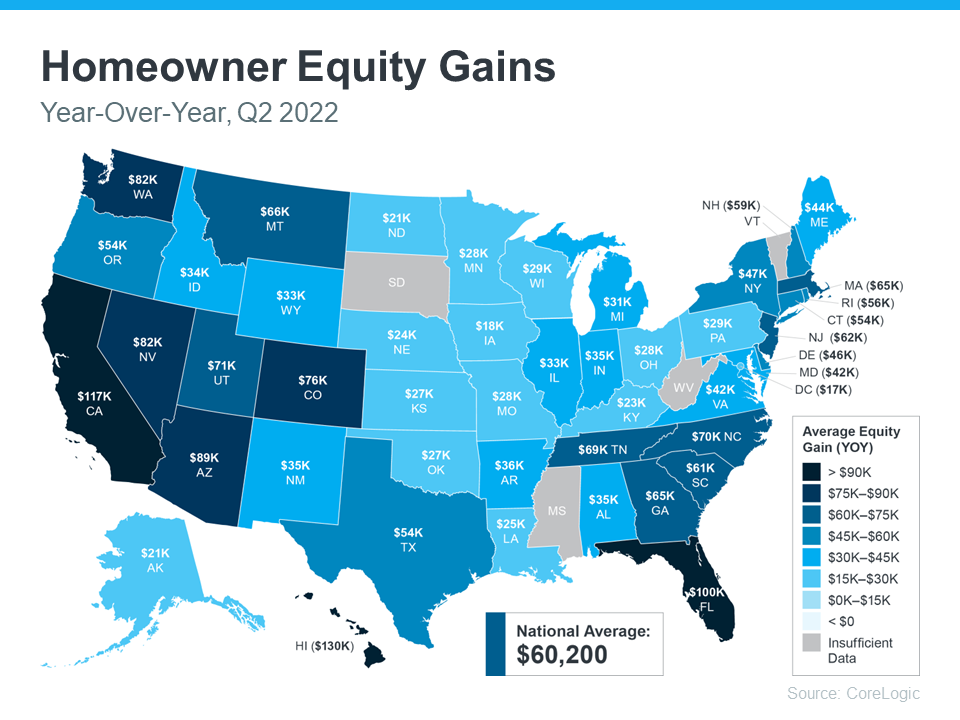
That's why, according to the latest Homeowner Equity Insights from CoreLogicthe average homeowner equity has grown by $60,000 over the last 12 months. While that's the national number, if you want to know what happened, on average, over the past year in your area, look at the map below from CoreLogic:

Watching the Stock Market? Check the Value of Your Home for Good News. |
MyKCM

Why This Is So Important Right Now

Lawrence Yun, Chief Economist at the National Association of Realtors (NAR), helps explain why this matters so much today:

. . . the decline in the stock market has dented overall net wealth. It has fallen by $6 trillion from the first to the second quarter. Only housing wealth has held on, with homeowners’ real estate wealth (home value minus mortgage balance) rising by $1.2 trillion.

While equity helps increase your overall net worth, it can also help you achieve other goals like buying your next home. When you sell your current house, the equity you built up comes back to you in the sale, and it may be just what you need to cover a large portion – if not all – of the down payment on your next home.

Bottom Line

There's volatility in today's stock market, but home equity is still incredibly strong. To find out just how much equity you have in your current home, let's connect.


Posted in Market Updates
Sept. 19, 2022

Will My House Still Sell in Today's Market??

Will My House Still Sell in Today's Market?

Will My House Still Sell in
Today's Market? | MyKCM

If recent headlines about the housing market cooling and buyer demand moderating have you worried you've missed your chance to sell, here's what you need to know. Buyer demand hasn't disappeared, it's just eased from the peak intensity we saw over the past two years.

Buyer Demand Then and Now

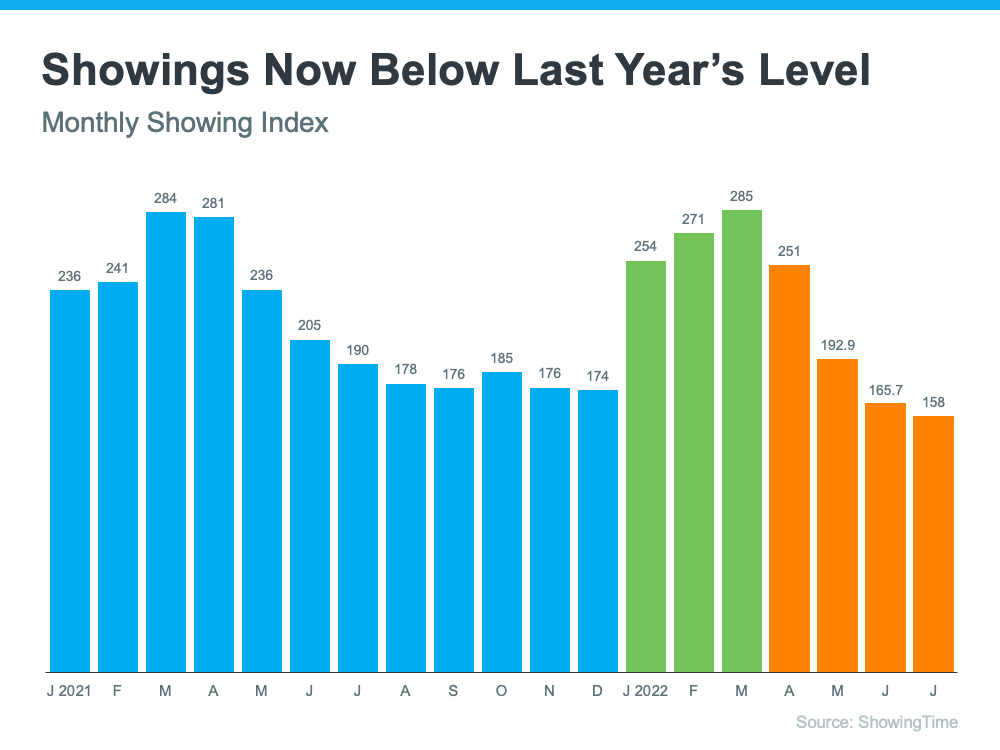
During the pandemic, mortgage rates hit record lows, and that spurred a significant rise in buyer demand. This year, as rates increased due to factors like rising inflation, buyer demand pulled back or softened as a result. The latest data from ShowingTime confirms this trend (see graph below):

Will
My House Still Sell in Today's Market? | MyKCM

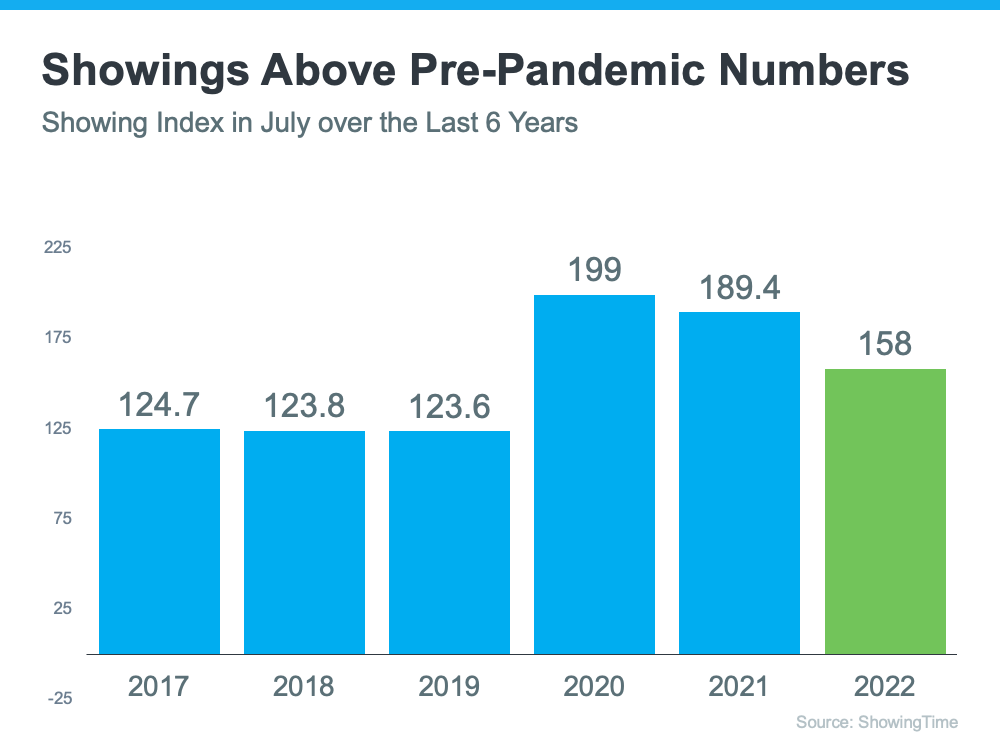
The orange bars in the graph above represent the last few months of data and the clear cooldown in the volume of home showings the market has seen since mortgage rates started to rise. But context is important. To get the full picture of where today’s demand stands, let’s look at the July data for the past six years (see graph below):

Will
My House Still Sell in Today's Market? | MyKCM

This second visual makes it clear that, while moderating compared to the frenzy in 2020 and 2021, showing activity is still beating pre-pandemic levels – and those pre-pandemic years were great years for the housing market. That goes to show there's still demand if you sell your house today.

What That Means for You When You Sell

The key to selling in a changing market is understanding where the housing market is now. It's not the same market we had last year or even earlier this year, but that doesn't mean the opportunity to sell has passed.

While things have cooled a bit, it's still a sellers' market. If you work with a trusted local expert to price your house at the current market valuethe demand is still there, and it should sell quickly. According to a recent survey from realtor.com, 92% of homeowners who sold in August reported being satisfied with the outcome of their sale.

Bottom Line

Buyer demand hasn't disappeared, it's just moderated this year. If you're ready to sell your house today, let's connect so you have expert insights on how the market has shifted and how to plan accordingly for your sale.


Posted in Market Updates
Sept. 16, 2022

A Crucial First Step: Mortgage Pre-Approval [INFOGRAPHIC]?

A Crucial First Step: Mortgage Pre-Approval [INFOGRAPHIC]

A Crucial First Step:
Mortgage Pre-Approval [INFOGRAPHIC] | MyKCM

Some Highlights

  • Mortgage pre-approval means a lender has reviewed your finances and, based on factors like your income, debt, and credit history, determined how much you're qualified to borrow.
  • Being pre-approved for a loan can give you clarity while planning your homebuying budget, confidence in your ability to secure a loan, and helps sellers know your offer is serious.
  • Connect with a trusted professional to learn more and start your homebuying process today.
  •  
Posted in Market Updates
Sept. 15, 2022

Buyers Are Regaining Some of Their Negotiation Power in Today's Housing Market

Buyers Are Regaining Some of Their Negotiation Power in Today's Housing Market

Buyers Are Regaining Some of
Their Negotiation Power in Today's Housing Market | MyKCM

If you’re thinking about buying a home today, there’s welcome news. Even though it's still a sellers' market, it's a more moderate sellers' market than last year. And the days of feeling like you may need to waive contingencies or pay drastically over asking price to get your offer considered may be coming to a close.

Today, you should have less competition and more negotiating power as a buyer. That's because the intensity of buyer demand and bidding wars is easing this year. So, if bidding wars were the biggest factor that had you sitting on the sidelines, here are two trends that may be just what you need to re-enter the market.

1. The Return of Contingencies

Over the last two years, more buyers were willing to skip important steps in the homebuying process, like the appraisal or inspection, to try to win a bidding war. But now, fewer people are waiving the inspection and appraisal.

The latest data from the National Association of Realtors (NAR) shows the percentage of buyers waiving their home inspection and appraisal is declining. And a recent survey from realtor.com confirms more sellers are accepting offers that include these conditions today. According to their August study:

  • 95% of sellers reported buyers requested a home inspection
  • 67% of sellers negotiated with buyers on repairs as a result of the inspection findings

This goes to show buyers are more able to include these conditions in their offers today and negotiate as needed based on the outcome of the inspection.

2. Sellers Are More Willing To Help with Closing Costs

Generally, closing costs range between 2% and 5% of the purchase price for the home. Before the pandemic, it was a common negotiation tactic for sellers to cover some of the buyer's closing costs to sweeten the deal. This didn’t happen as much during the peak buyer frenzy over the past two years.

Today, as the market shifts and demand slows, data from realtor.com suggests this is making a comeback. A recent article shows 32% of sellers paid some or all of their buyer's closing costs. This may be a negotiation tool you'll see as you go to purchase a home. Just keep in mind, limits on closing cost credits are set by your lender and can vary by state and loan type. Work closely with your loan advisor to understand how much a seller can contribute to closing costs in your area.

Bottom Line

Regardless of the extremely competitive housing market of the past several years, today's data suggests negotiations are starting to come back on the table. This is good news if you’re planning to enter the housing market. To find out how the market is shifting in our area, let’s connect.


Posted in Market Updates
Sept. 14, 2022

Is the Real Estate Market Slowing Down, or Is This a Housing Bubble??

Is the Real Estate Market Slowing Down, or Is This a Housing Bubble?

Is the Real Estate Market
Slowing Down, or Is This a Housing Bubble? | MyKCM

The talk of a housing bubble in the coming year seems to be at a fever pitch as rising mortgage rates continue to slow down an overheated real estate market. Over the past two years, home prices have appreciated at an unsustainable pace causing many to ask: are things just slowing down, or is a crash coming?

To answer this question, there are two things we want to understand. The first is the reality of the shift in today's housing market. And the second is what experts are saying about home prices in the coming year.

The Reality of the Shift in Today's Housing Market

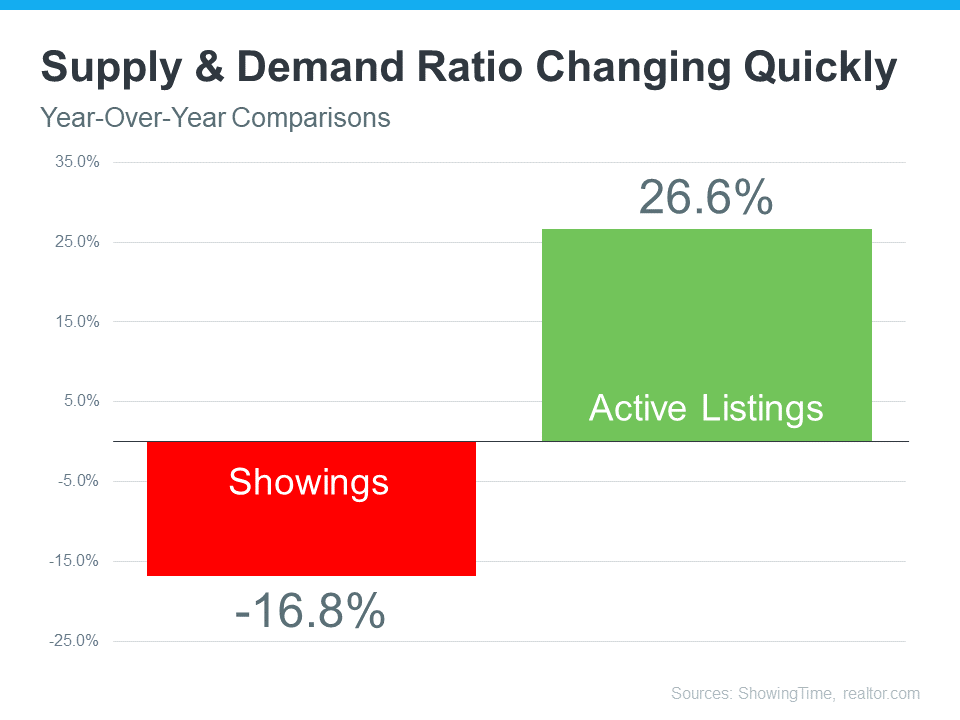
The reality is we're seeing an inflection point in housing supply and demand. According to realtor.com, active listings have increased more than 26% over last year, while showings from the latest ShowingTime Showing Index have decreased almost 17% from last year (see graph below). This is an inflection point for housing because, over the past two years, we've seen a massive amount of demand (showings) and not enough homes available for sale for the number of people that wanted to buy. That caused the market frenzy.

Today, supply and demand look very different, and the market is slowing down from the pace we've seen. This offers proof of the sudden slowdown so many people are feeling.

Is
the Real Estate Market Slowing Down, or Is This a Housing Bubble? | MyKCM

What Experts Are Saying About Home Prices in the Coming Year

Right now, most experts are forecasting home price appreciation in 2023, but at a much slower pace than the last two years. The average of the six forecasters below is for national home prices to appreciate by 2.5% in the coming year. Only one of the six is calling for home price depreciation.

Is
the Real Estate Market Slowing Down, or Is This a Housing Bubble? | MyKCM

When we look at the shift taking place along with what experts are saying, we can conclude the national real estate market is slowing down but is not a bubble getting ready to burst. This isn't to say that a few overheated markets won't experience home price depreciation, but there isn't a case to be made for a national housing bubble.

Bottom Line

The real estate market is slowing down, and that's causing many to fear we're in a housing bubble. What we've experienced in the housing market over the past two years were historic levels of demand and constrained supply. That led to homes going up in value at a record pace. While some overheated markets may experience price depreciation in the short term, according to experts, the national real estate market will appreciate in the coming year.


Posted in Market Updates