That House That’s Been Sitting Could Be Your Best Shot at a Deal

BLOGJune 22, 2026


Open up a home search and you'll see them. Listings that have been on the market for two months. Three. Some longer.

Most buyers scroll right past them, assuming something’s wrong with the house. But that instinct could be costing you, since the longer a home sits, the more motivated the seller usually gets.

Where Some Buyers Are Finding Better Deals

If affordability has been your #1 hurdle to buying, here’s a surprisingly simple strategy that could help you finally get your foot in the door. Start with the homes that have been sitting the longest. That’s often where the best deals are.

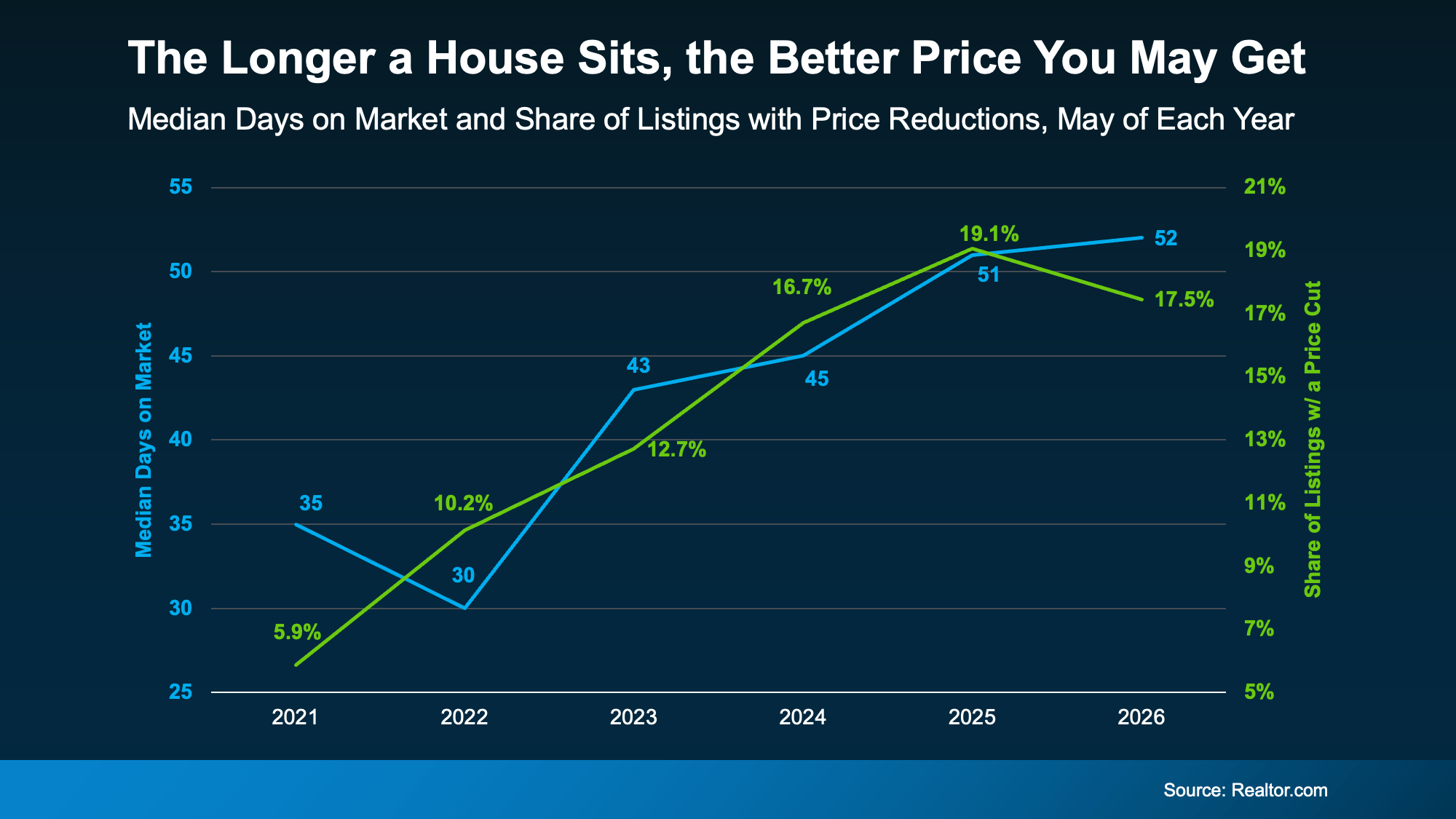
Here’s why. Data from Realtor.com shows there’s a connection between longer time on the market and lower sales prices. Basically, the longer a house sits, the more likely it is that the seller will reduce the price (see graph below):

a graph with numbers and lines

The blue line tracks how long homes stay on the market, while the green line tracks the share of homes getting a price reduction. As one climbs, so does the other.  

And if you focus on these homes that are just sitting and waiting, the opportunity for you is bigger than you may think right now.

Redfin data shows there’s $347 billion worth of stale listings on the market right now – more than ever before for this time of year. So, ask your agent to filter listings for you from oldest to newest. The home that fits your budget might already be there. Just further down the list than you thought.

Lingering Doesn’t Always Mean Something’s Wrong 

Let’s say you do that and something catches your eye. Still, you might be questioning why the home has been sitting in the first place. Just remember, sometimes it has nothing to do with the home itself.

According to Redfin, common causes are:

  • The asking price was set too high to start

  • The home didn’t show well online

  • There are a lot of homes for sale in the area, so it just got buried

So, nothing that’s necessarily a dealbreaker, or even anything that’s wrong with the home itself. If there’s a real issue, a thorough inspection will surface it. And that’s information you can use to negotiate. Not a reason to assume it’s a house worth skipping over.

How To Turn a Lingering Listing into a Win

So how do you capitalize on a lingering listing? According to USA Today, you have two main levers to pull.

The first is price. Work with your agent to study what comparable homes recently sold for, then build an offer around that. Coming in below asking price is fair game when a home has been sitting.

The second is concessions. If a seller won’t budge much on price, they may still help in other ways, like covering some closing costs, repair credits, or even a mortgage rate buydown that lowers your monthly payment.

A local agent has the context to tell which homes are the real opportunities and which are skippable.

Bottom Line

A house sitting on the market isn’t always a glaring red flag. In today’s market, it may be your best opportunity yet.

For help deciding which lingering listings are actually worth a second look, let’s connect.

The information contained, and the opinions expressed, in this article are not intended to be construed as investment advice. Keeping Current Matters, Inc. does not guarantee or warrant the accuracy or completeness of the information or opinions contained herein. Nothing herein should be construed as investment advice. You should always conduct your own research and due diligence and obtain professional advice before making any investment decision. Keeping Current Matters, Inc. will not be liable for any loss or damage caused by your reliance on the information or opinions contained herein.

May 19, 2020

Housing Market Positioned to Bring Back the Economy
Housing Market Positioned to Bring Back the Economy

Housing Market Positioned to Bring Back the Economy | MyKCM

All eyes are on the American economy. As it goes, so does the world economy. With states beginning to reopen, the question becomes: which sectors of the economy will drive its recovery? There seems to be a growing consensus that the housing market is positioned to be that driving force, the tailwind that is necessary.

Some may question that assertion as they look back on the last recession in 2008 when housing was the anchor to the economy – holding it back from sailing forward. But even then, the overall economy did not begin to recover until the real estate market started to regain its strength. This time, the housing market was in great shape when the virus hit.

As Mark Fleming, Chief Economist of First Americanrecently explained:

“Many still bear scars from the Great Recession and may expect the housing market to follow a similar trajectory in response to the coronavirus outbreak. But, there are distinct differences that indicate the housing market may follow a much different path. While housing led the recession in 2008-2009, this time it may be poised to bring us out of it.”

Fleming is not the only economist who believes this. Last week, Dr. Frank Nothaft, Chief Economist for CoreLogic, (@DrFrankNothaft) tweeted:

“For the first 6 decades after WWII, the housing sector led the rest of the economy out of each recession. Expect it to do so this time as well.”

And, Robert Dietz, Chief Economist for the National Association of Home Builders, in an economic update last week explained:

“As the economy begins a recovery later in 2020, we expect housing to play a leading role. Housing enters this recession underbuilt, not overbuilt…Based on demographics and current vacancy rates, the U.S. may have a housing deficit of up to one million units.”

Bottom Line

Every time a home is sold it has a tremendous financial impact on local economies. As the real estate market continues its recovery, it will act as a strong tailwind to the overall national economy.

Posted in Market Updates
May 18, 2020

#1 Financial Benefit of Homeownership: Family Wealth

#1 Financial Benefit of Homeownership: Family Wealth

#1 Financial Benefit of Homeownership: Family Wealth | MyKCM

While growing up, we were taught by our parents and grandparents that owning a home is a financially savvy move. They explained how a mortgage is like a “forced savings plan.” When you pay rent, that money is lost forever. When you make a mortgage payment, much of that money accumulates as equity in the home. So, what exactly is equity?

The equity in your home is the amount of money you can sell it for minus what you still owe on the mortgage. Every month you make a mortgage payment, and every month a portion of what you pay reduces the amount you owe. That reduction of your mortgage every month increases your equity.

A recent study by CoreLogic explained that homeowners gained substantial equity over the last twelve months, and are essentially sitting on large sums of cash in their homes. In the study, Frank Nothaft, Chief Economist for CoreLogic explained:

"The CoreLogic Home Price Index recorded a quickening of home price gains during the fourth quarter of 2019, helping to boost home equity wealth. The average family with a mortgage had a $7,300 gain in home equity during the past year, and a total of $177,000 in home equity wealth."

For most families, their home is their largest financial asset. This increase in equity drives the net worth, or family wealth, of the homeowner. Renters are not earning that benefit. Instead, they’re building the net worth of their landlord.

Bottom Line

Home price growth will moderate during the pandemic. But once a cure is available, most experts agree that home values will again begin to appreciate at levels similar to what we’ve seen over the last several years. In the long run, our family elders will be proven correct: owning a home is a savvy financial move.

Posted in Market Updates
May 15, 2020

2020 Homeowner Wish List [INFOGRAPHIC]

2020 Homeowner Wish List [INFOGRAPHIC]

2020 Homeowner Wish List
[INFOGRAPHIC] | MyKCM

Some Highlights

  • In a recent study by realtor.com, homeowners noted some of the main things they would change about their homes to make them more livable.
  • Not surprisingly, more space, an updated kitchen, and a home gym rose to the top of the list.
  • If you're thinking of selling this year, having these items in your listing might make your house more desirable than ever to potential buyers.


If you have any questions or need help with anything, please visit our Support Center or email us at support@keepingcurrentmatters.com.

See you in the Member Area,
David

David Childers

David Name

VP, Content & Marketing

Keeping Current Matters


Update Your Email Preferences
 | View the Web Version | Opt Out of Emails
Keeping Current Matters 7204 Glen Forest Dr Suite 204 Richmond, Virginia 23226 United States

Posted in Market Updates
May 14, 2020

Will the Housing Market Turn Around This Year?


Will the Housing Market Turn Around This Year?

Will the Housing Market Turn Around This Year? | MyKCM
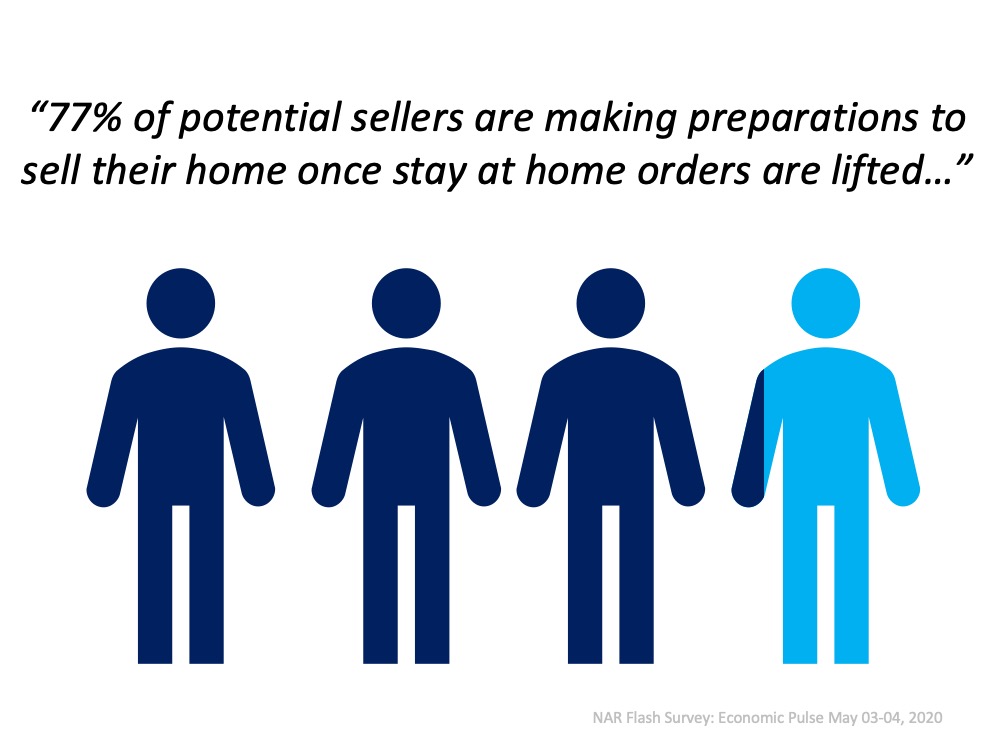
Today, many people are asking themselves if they should buy or sell a home in 2020. Some have shifted their plans or put them on hold over the past couple of months, and understandably so. Everyone seems to be wondering if the market is going to change and when the economy will turn around. If you’re trying to figure out what’s going to happen and how to play your cards this year, you’re not alone. This spring in the 2020 NAR Flash Survey: Economic Pulse, the National Association of Realtors (NAR) has been tracking the behavior changes of homebuyers and sellers. In a reaction to their most recent survey, Lawrence Yun, Chief Economist at NAR, noted the beginnings of a turn in the market:
“After a pause, home sellers are gearing up to list their properties with the reopening of the economy…Plenty of buyers also appear ready to take advantage of record-low mortgage rates and the stability that comes with these locked-in monthly payments into future years.”

What does the survey indicate about sellers?

Sellers are positioning themselves to make moves this year. More than 3 in 4 potential sellers are preparing to sell their homes once stay-at-home orders are lifted and they feel more confident, which means more homes will start to be available for interested buyers.Will the Housing Market Turn Around This Year? | MyKCMJust this week, Zillow also reported an uptick in listings, which is great news for the health of the market:
“The number of new for-sale listings overall has shown improvement, up 5.9% last week from the previous week. New listings of the most-expensive homes…are now seeing the biggest resurgence, up 8%. The uptick is likely a sign sellers are feeling more confident because of improving buyer demand, as newly pending sales have also jumped up during the same period.”

What does the survey note about buyers?

The recent pandemic has clearly impacted buyer preferences, showing:
  • 5% of the respondents said buyers are shifting their focus from urban to suburban areas.
  • 1 in 8 Realtors report changes in desired home features, with home offices, bigger yards, and more space for their families becoming increasingly important.
  • Only 17% said buyers stopped looking due to concerns about their employment or loss of a job.
As we’ve mentioned before, buyer demand is strong right now, and many are simply waiting for more inventory to become available so they can make a move, especially as the country begins to reopen.

Bottom Line

If you’re thinking about putting your house on the market, let’s connect today. There’s a good chance an eager buyer is looking for a home just like yours.


The information contained, and the opinions expressed, in this article are not intended to be construed as investment advice. Keeping Current Matters, Inc. does not guarantee or warrant the accuracy or completeness of the information or opinions contained herein. Nothing herein should be construed as investment advice. You should always conduct your own research and due diligence and obtain professional advice before making any investment decision. Keeping Current Matters, Inc. will not be liable for any loss or damage caused by your reliance on the information or opinions contained herein.
Posted in Market Updates
May 13, 2020

A Surprising Shift to the ‘Burbs May Be on the Rise

A Surprising Shift to the ‘Burbs May Be on the Rise

A Surprising Shift to the
‘Burbs May Be on the Rise | MyKCMWhile many people across the U.S. have traditionally enjoyed the perks of an urban lifestyle, some who live in more populated city limits today are beginning to rethink their current neighborhoods. Being in close proximity to everything from the grocery store to local entertainment is definitely a perk, especially if you can also walk to some of these hot spots and have a short commute to work. The trade-off, however, is that highly populated cities can lack access to open space, a yard, and other desirable features. These are the kinds of things you may miss when spending a lot of time at home. When it comes to social distancing, as we've experienced recently, the newest trend seems to be around re-evaluating a once-desired city lifestyle and trading it for suburban or rural living. George Ratiu, Senior Economist at realtor.com notes:
With the re-opening of the economy scheduled to be cautious, the impact on consumer preferences will likely shift buying behavior…consumers are already looking for larger homes, bigger yards, access to the outdoors and more separation from neighbors. As we move into the recovery stage, these preferences will play an important role in the type of homes consumers will want to buy. They will also play a role in the coming discussions on zoning and urban planning. While higher density has been a hallmark of urban development over the past decade, the pandemic may lead to a re-thinking of space allocation.

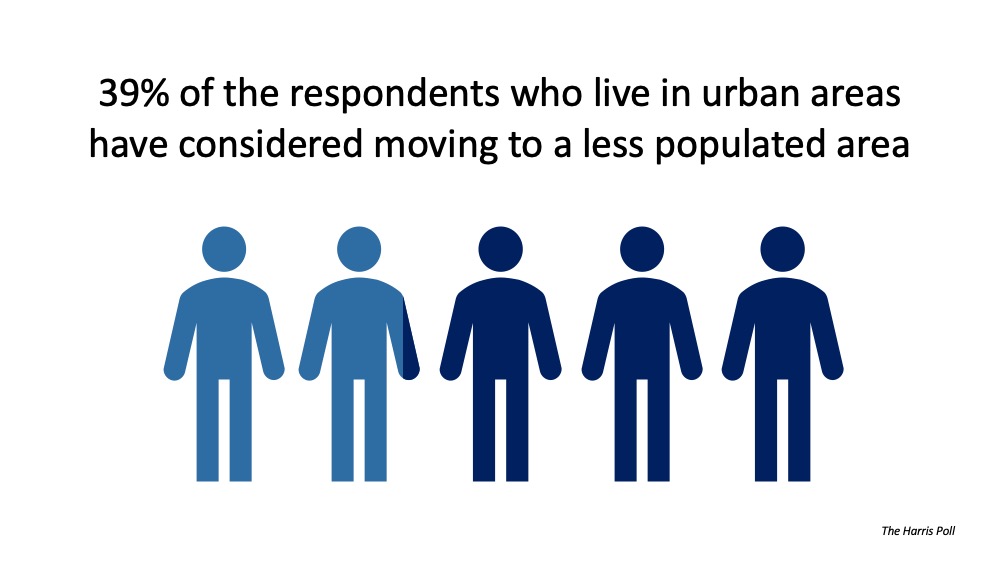
The Harris Poll recently surveyed 2,000 Americans, and 39% of the respondents who live in urban areas indicated the COVID-19 crisis has caused them to consider moving to a less populated area.A
Surprising Shift to the ‘Burbs May Be on the Rise | MyKCMToday, moving outside the city limits is also more feasible than ever, especially as Americans have quickly become more accustomed to – and more accepting of – remote work. According to the Pew Research Center, access to the Internet has increased significantly in rural and suburban areas, making working from home more accessible. The number of people working from home has also spiked considerably, even before the pandemic came into play this year.

Bottom Line

If you have a home in the suburbs or a rural area, you may see an increasing number of buyers looking for a property like yours. If you're thinking of buying and don't mind a commute to work for the well-being of your family, you may want to consider looking at homes for sale outside the city. Let's connect today to discuss the options available in our area.


If you have any questions or need help with anything, please visit our Support Center or email us at support@keepingcurrentmatters.com.

See you in the Member Area,
David

David Childers

David Name

VP, Content & Marketing

Keeping Current Matters


Update Your Email Preferences
 | View the Web Version | Opt Out of Emails
Keeping Current Matters 7204 Glen Forest Dr Suite 204 Richmond, Virginia 23226 United States

Posted in Market Updates
May 11, 2020

Will Home Values Appreciate or Depreciate in 2020?

Will Home Values Appreciate or Depreciate in 2020?

Will Home Values Appreciate
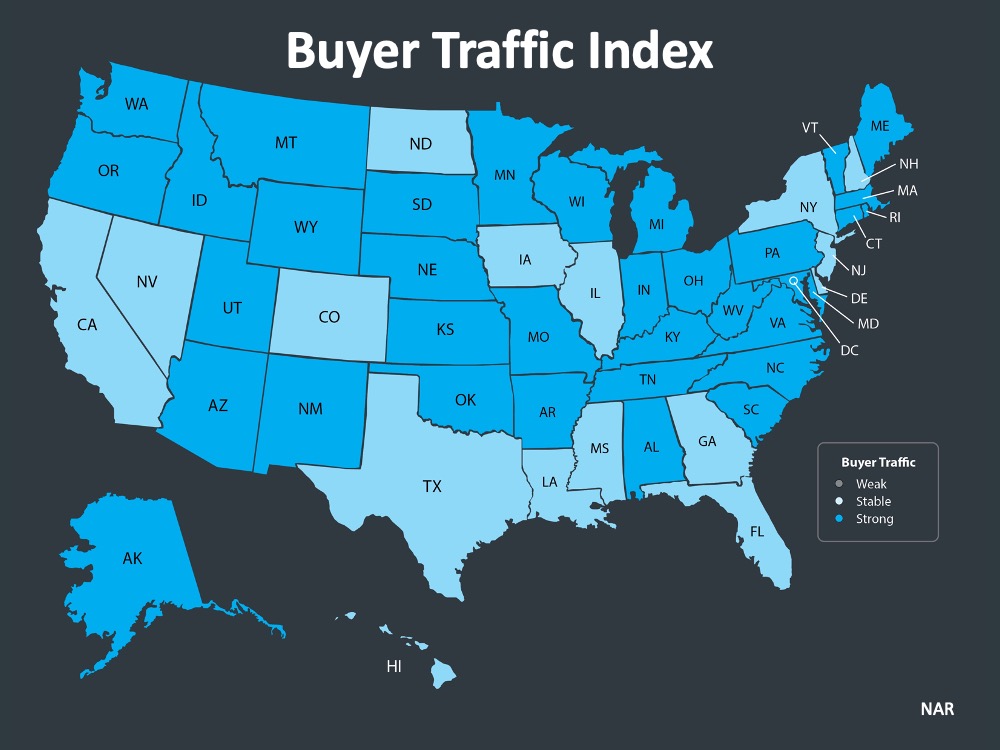
or Depreciate in 2020? | MyKCMWith the housing market staggered to some degree by the health crisis the country is currently facing, some potential purchasers are questioning whether home values will be impacted. The price of any item is determined by supply as well as the market's demand for that item. Each month the National Association of Realtors (NAR) surveys over 50,000 real estate practitioners about their expectations for home sales, prices and market conditions for the REALTORS Confidence Index. Their latest edition sheds some light on the relationship between seller traffic (supply) and buyer traffic (demand) during this pandemic.
Buyer Demand

The map below was created after asking the question: How would you rate buyer traffic in your area?Will
Home Values Appreciate or Depreciate in 2020? | MyKCMThe darker the blue, the stronger the demand for homes is in that area. The survey shows that in 34 of the 50 U.S. states, buyer demand is now ‘strong' and 16 of the 50 states have a ‘stable' demand.

Seller Supply

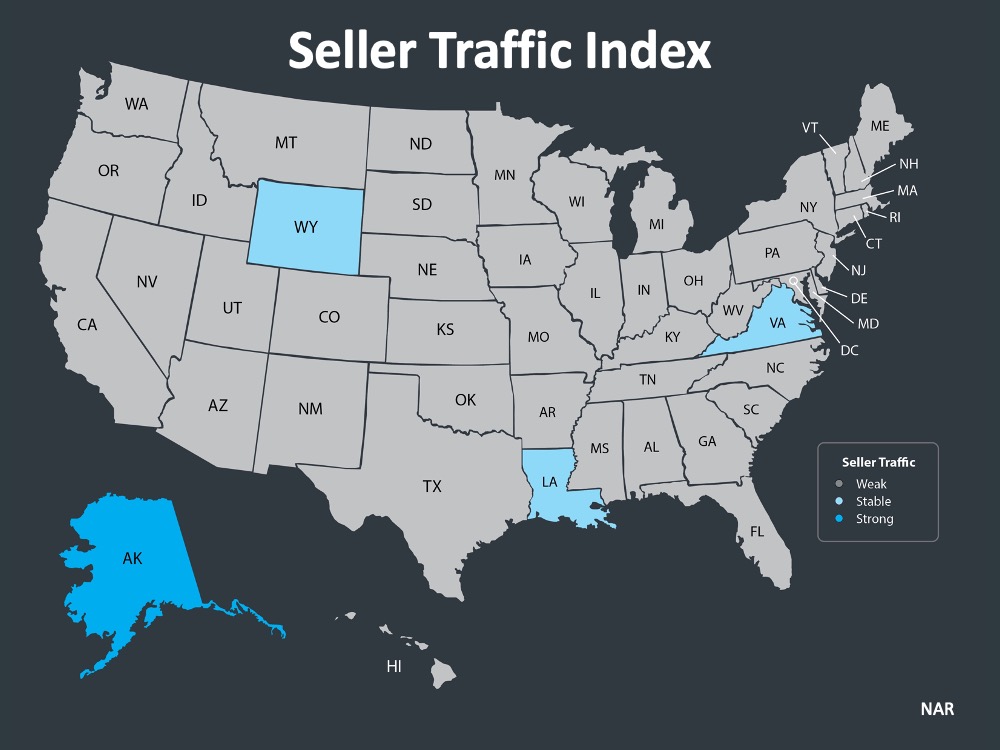
The index also asks: How would you rate seller traffic in your area?Will
Home Values Appreciate or Depreciate in 2020? | MyKCMAs the map above indicates, 46 states and Washington, D.C. reported ‘weak' seller traffic, 3 states reported ‘stable' seller traffic, and 1 state reported ‘strong' seller traffic. This means there are far fewer homes on the market than what is needed to satisfy the needs of buyers looking for homes right now. With demand still stronger than supply, home values should not depreciate.

What are the experts saying?

Here are the thoughts of three industry experts on the subject: Ivy Zelman:
We note that inventory as a percent of households sits at the lowest level ever, something we believe will limit the overall degree of home price pressure through the year.
Mark Fleming, Chief Economist, First American:
Housing supply remains at historically low levels, so house price growth is likely to slow, but it's not likely to go negative.
Freddie Mac:
Two forces prevent a collapse in house prices. First, as we indicated in our earlier research report, U.S. housing markets face a large supply deficit. Second, population growth and pent up household formations provide a tailwind to housing demand.

Bottom Line

Looking at these maps and listening to the experts, it seems that prices will remain stable throughout 2020. If you're thinking about listing your home, let's connect to discuss how you can capitalize on the somewhat surprising demand in the market now.


If you have any questions or need help with anything, please visit our Support Center or email us at support@keepingcurrentmatters.com.

See you in the Member Area,
David

David Childers
David Name
VP, Content & Marketing
Keeping Current Matters
david@keepingcurrentmatters.com


Update Your Email Preferences
 | View the Web Version | Opt Out of Emails
Keeping Current Matters 7204 Glen Forest Dr Suite 204 Richmond, Virginia 23226 United States

Posted in Market Updates
May 8, 2020

A Day When Americans Can Return to Work [INFOGRAPHIC]


A Day When Americans Can Return to Work [INFOGRAPHIC]

A Day When Americans Can
Return to Work [INFOGRAPHIC] | MyKCM

Some Highlights

  • Taking a moment to reflect upon what we've heard from historical leaders can teach us a lot about getting through the many challenges we face today.
  • We’re all eager for the day when every American can safely return to work. That day is coming. Timing is everything. Patience is essential.
  • Our courage, strength, and unparalleled resilience will get us there.


If you have any questions or need help with anything, please visit our Support Center or email us at support@keepingcurrentmatters.com.

See you in the Member Area,
David

David Childers
David Name
VP, Content & Marketing
Keeping Current Matters
david@keepingcurrentmatters.com


Update Your Email Preferences
 | View the Web Version | Opt Out of Emails
Keeping Current Matters 7204 Glen Forest Dr Suite 204 Richmond, Virginia 23226 United States

Posted in Market Updates
May 6, 2020

Why Home Equity Is a Bright Spark in the Housing Market

Why Home Equity Is a Bright Spark in the Housing Market

Why Home Equity is a Bright
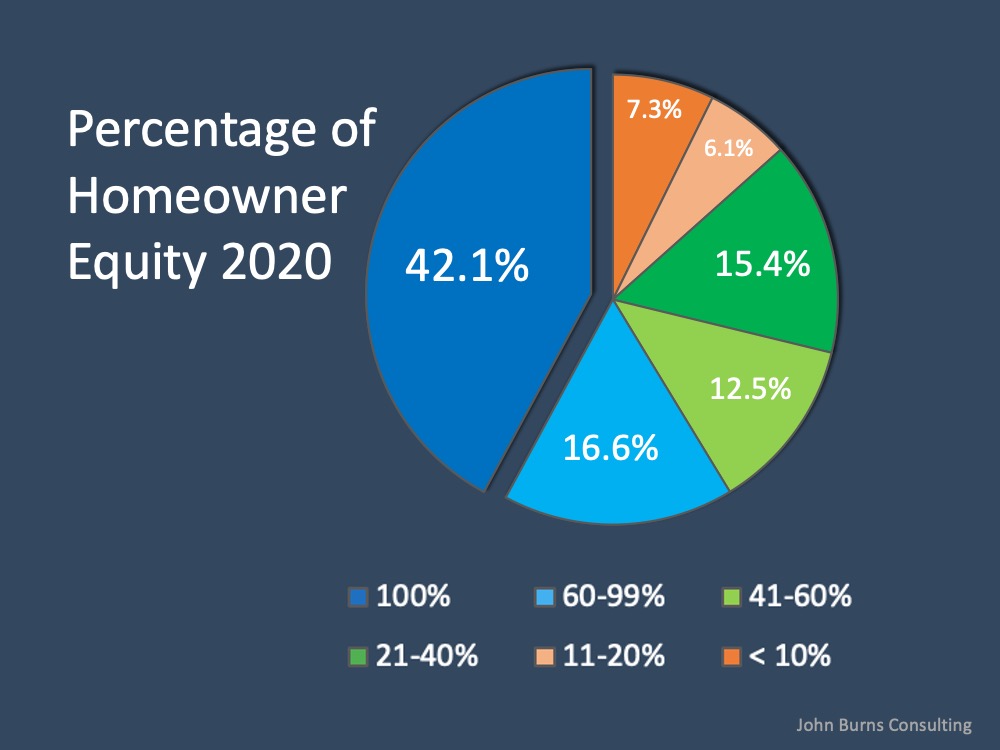
Spark in the Housing Market | MyKCMGiven how we have seen more unemployment claims than ever before over the past several weeks, fear is spreading widely. Some good news, however, shows that more than 4 million initial unemployment filers have likely already found a new job, especially as industries such as health care, food and grocery stores, retail, delivery, and more increase their employment opportunities. Breaking down what unemployment means for homeownership, and understanding the significant equity Americans hold today, are important parts of seeing the picture clearly when sorting through this uncertainty. One of the biggest questions right now is whether this historic unemployment rate will initiate a new surge of foreclosures in the market. It's a very real fear. Despite the staggering number of claims, there are actually many reasons why we won't see a significant number of foreclosures like we did during the housing crash twelve years ago. The amount of equity homeowners have today is a leading differentiator in the current market. Today, according to John Burns Consulting58.7% of homes in the U.S. have at least 60% equity. That number is drastically different than it was in 2008 when the housing bubble burst. The last recession was painful, and when prices dipped, many found themselves owing more on their mortgage than what their homes were worth. Homeowners simply walked away at that point. Now, 42.1% of all homes in this country are mortgage-free, meaning they're owned free and clear. Those homes are not at risk for foreclosure (see graph below): Why
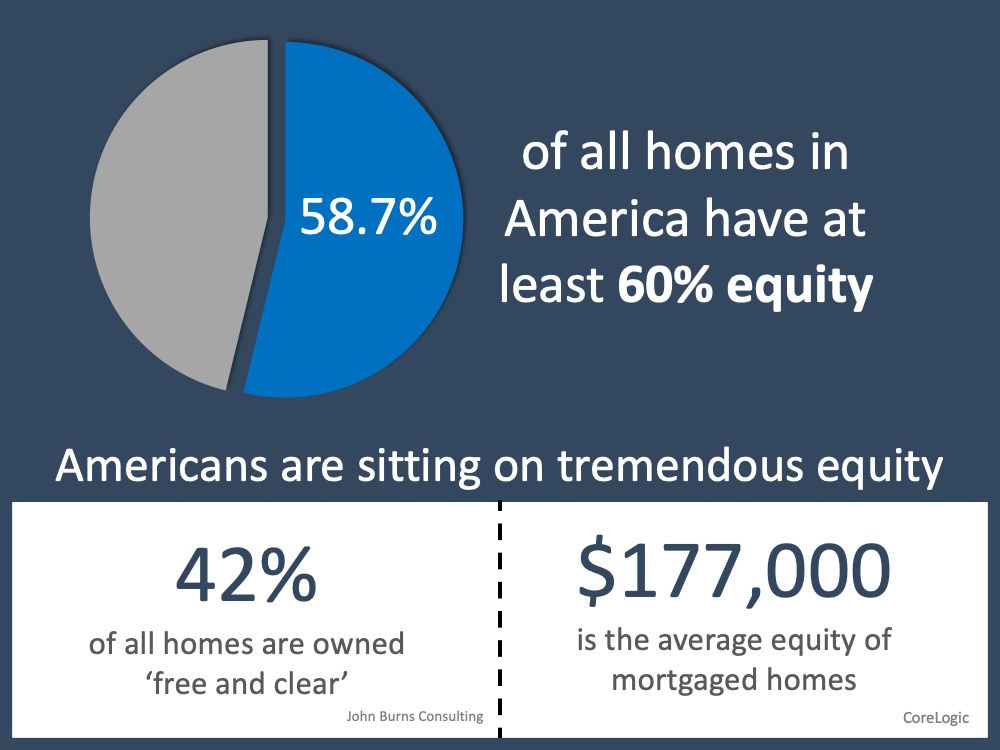
Home Equity is a Bright Spark in the Housing Market | MyKCMIn addition, CoreLogic notes the average equity mortgaged homes have today is $177,000. That's a significant amount that homeowners won't be stepping away from, even in today's economy (see chart below):Why
Home Equity is a Bright Spark in the Housing Market | MyKCMIn essence, the amount of equity homeowners have today positions them to be in a much better place than they were in 2008.

Bottom Line

The fear and uncertainty we feel right now are very real, and this is not going to be easy. We can, however, see strength in our current market through homeowner equity that has not been there in the past. That may be a bright spark to help us make it through.


If you have any questions or need help with anything, please visit our Support Center or email us at support@keepingcurrentmatters.com.

See you in the Member Area,
David

David Childers
David Name
VP, Content & Marketing
Keeping Current Matters
david@keepingcurrentmatters.com


Update Your Email Preferences
 | View the Web Version | Opt Out of Emails
Keeping Current Matters 7204 Glen Forest Dr Suite 204 Richmond, Virginia 23226 United States

Posted in Market Updates
May 5, 2020

Confused About the Economic Recovery? Here's Why.

Confused About the Economic Recovery? Here's Why.

Confused About the Economic
Recovery? Here's Why. | MyKCMAs we continue to work through the health crisis that plagues this country, more and more conversations are turning to economic recovery. While we look for signs that we've reached a plateau in cases of COVID-19, the concern and fear of what will happen as businesses open up again is on all of our minds. This causes confusion about what an economic recovery will look like. With this in mind, it's important to understand how economists are using three types of sciences to formulate their forecasts and to work toward clearer answers.
  1. Business Science – How has the economy rebounded from similar slowdowns in the past?
  2. Health Science – When will COVID-19 be under control? Will there be another flareup of the virus this fall?
  3. People Science – After businesses are fully operational, how long will it take American consumers to return to normal consumption patterns? (Ex: going to the movies, attending a sporting event, or flying).

Sam Khater, Chief Economist at Freddie Mac, says:

Although the uncertainty of the crisis means forecasts of economic activity are more unclear than usual, we expect that most of the economic damage from the virus will be contained to the first half of the year. Going forward, we should see a recovery starting in the second half of 2020.”

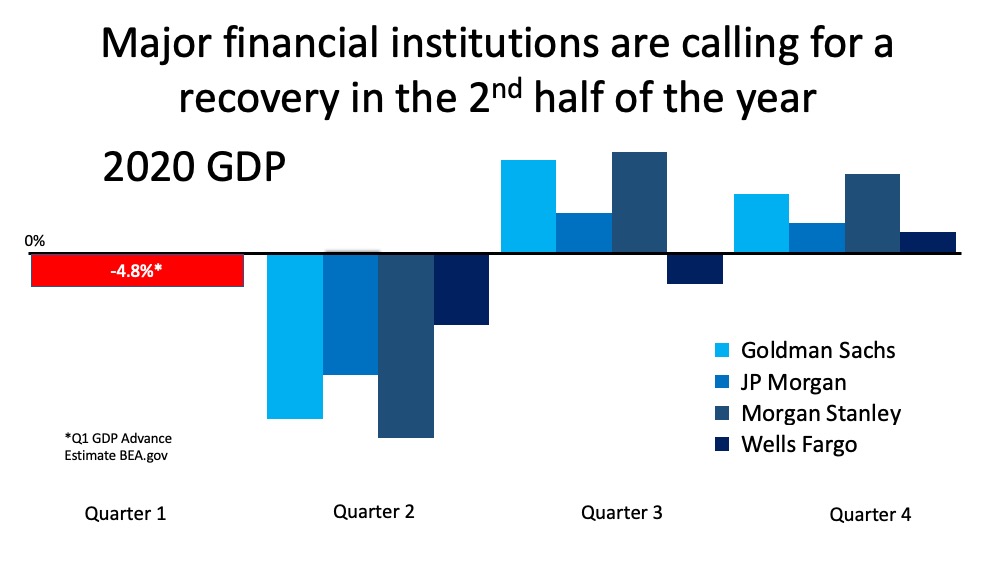
This past week, the Bureau of Economic Analysis released the advanced estimate for Gross Domestic Product (GDP) for the first quarter of 2020. That estimate came in at -4.8%. It was a clear indicator showing how the U.S. economy slowed as businesses shut down and consumers retreated to their homes in fear of the health crisis and of contracting COVID-19.Confused About the Economic Recovery? Here's Why. | MyKCMExperts agree that the second quarter of 2020 will be an even greater slowdown, a sign more businesses are feeling the effects of this health crisis. The same experts, however, project businesses will rebound, and a recovery will start to happen in the second half of this year.

Bottom Line

As time goes on, we'll have more clarity around what the true economic recovery will look like, and we'll have more information on the sciences that will affect it. As the nation's economy comes back to life and businesses embrace new waves of innovation to serve their customers, the American spirit of grit, growth, and prosperity will be alive and well.


If you have any questions or need help with anything, please visit our Support Center or email us at support@keepingcurrentmatters.com.

See you in the Member Area,
David

David Childers

David Name

VP, Content & Marketing

Keeping Current Matters


Update Your Email Preferences
 | View the Web Version | Opt Out of Emails
Keeping Current Matters 7204 Glen Forest Dr Suite 204 Richmond, Virginia 23226 United States

  •  
Posted in Market Updates
May 4, 2020

U.S. Homeownership Rate Rises to Highest Point in 8 Years

U.S. Homeownership Rate Rises to Highest Point in 8 Years

U.S. Homeownership Rate Rises
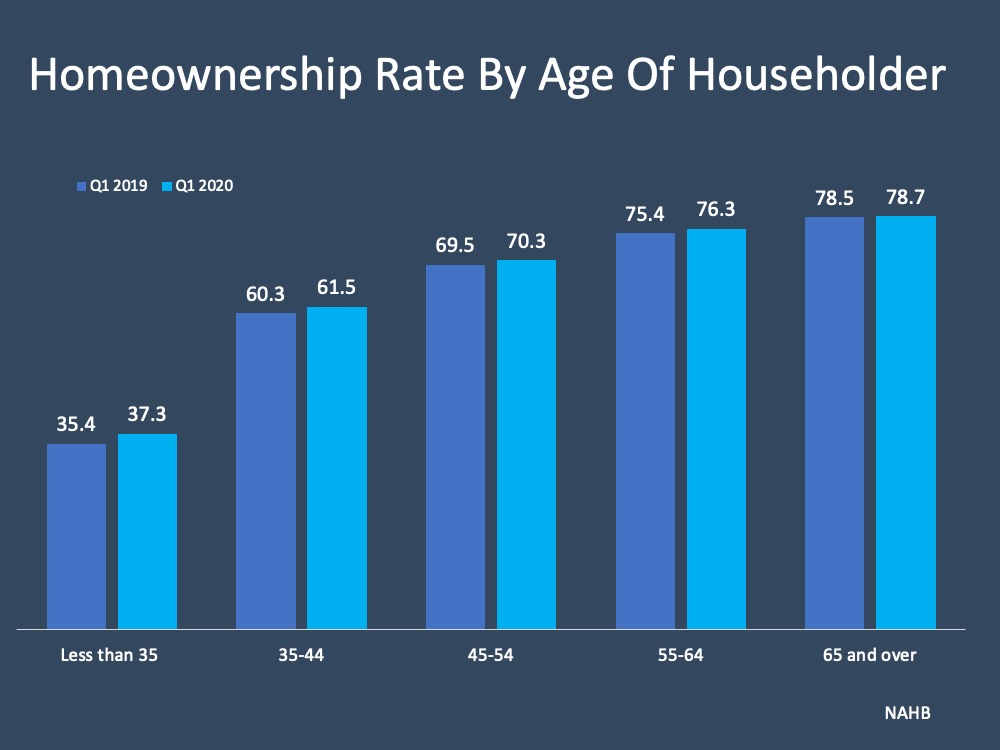
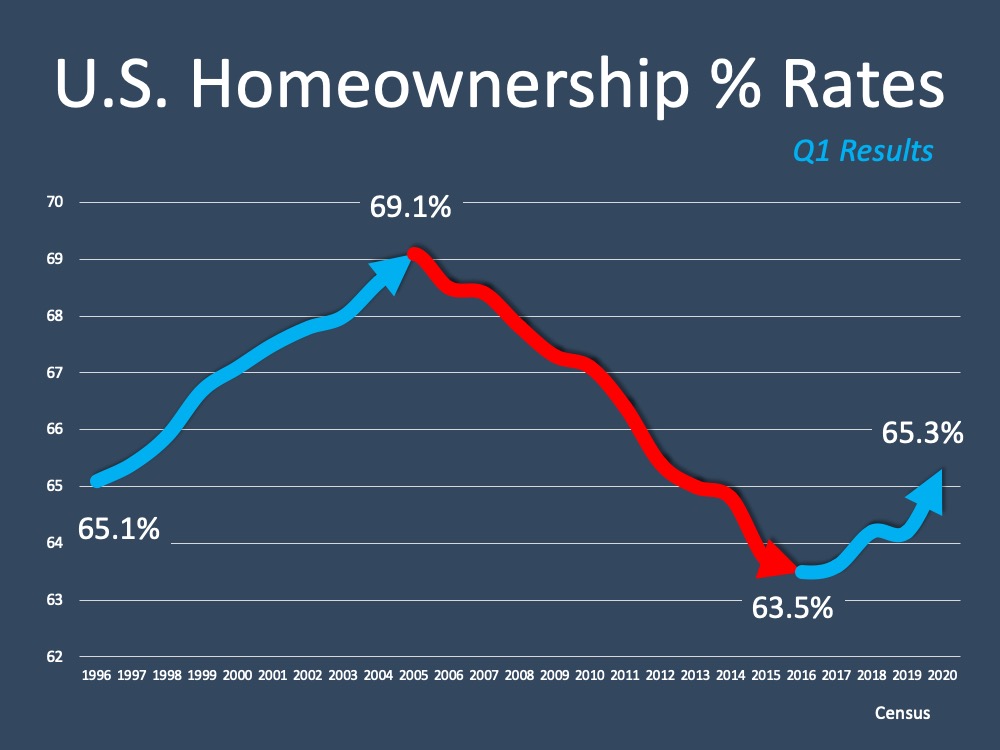
to Highest Point in 8 Years | MyKCMFor nearly two months, most of us have been following strict stay-at-home orders from our state and local governments. It is a whole new way of life that has put our daily lives on pause. On the other hand, many of us have also found a sense of comfort by slowing down and spending time at home, highlighting the feeling of security that comes with having a much-needed safe place for our families to live. The latest results of the Housing Vacancy Survey (HVS) provided by the U.S. Census Bureau shows how Americans place immense value in homeownership, and it is continuing to grow in the United States. The results indicate that the homeownership rate increased to 65.3% for the first quarter of 2020, a number that has been rising since 2016 and is the highest we've seen in eight years (see graph below):U.S.
Homeownership Rate Rises to Highest Point in 8 Years | MyKCMWhy is the rate increasing? The National Association of Home Builders (NAHB) explained:

Strong owner household formation with around 2.7 million homeowners added in the first quarter has driven up the homeownership rate, especially under the decreasing mortgage interest rates and strong new home sales and existing home sales in the first two months before the COVID-19 pandemic hit the economy.

The NAHB also emphasizes the year-over-year increase in each generational group:

The homeownership rates among all age groups increased in the first quarter 2020. Households under 35, mostly first-time homebuyers, registered the largest gains, with the homeownership rate up 1.9 percentage points from a year ago. Households ages 35-44 experienced a 1.2 percentage points gain, followed by the 55-64 age group (a 0.9 percentage point increase), the 45-54 age group (a 0.8 percentage point gain), and the 65+ group age (up by 0.2 percentage point). (See chart below):

U.S.
Homeownership Rate Rises to Highest Point in 8 Years | MyKCMHomeownership is an important part of the American dream, especially in moments like this when many are feeling incredibly grateful for the home they have to shelter in place with their families. COVID-19 may be slowing our lives down, but it is showing us the emotional value of homeownership too.

Bottom Line

If you're considering buying a home this year, let's connect to set a plan that will help you get one step closer to achieving your dream.


If you have any questions or need help with anything, please visit our Support Center or email us at support@keepingcurrentmatters.com.

See you in the Member Area,
David

David Childers

David Name

VP, Content & Marketing

Keeping Current Matters


Update Your Email Preferences
 | View the Web Version | Opt Out of Emails
Keeping Current Matters 7204 Glen Forest Dr Suite 204 Richmond, Virginia 23226 United States

Posted in Market Updates